
Heal Yourself: An Intermittent Fasting Life

The final post of this intermittent fasting (IF) series is here. It has been a great way to kick off 2021. I have reflected on how far I have come since I started practicing IF two years ago, stayed focused on my 2021 goals, and thanks to your feedback, I know I have inspired a few people. A win all around! If you decide to practice IF, I can guarantee is your journey will not look like mine or anyone else’s journey. Our bodies are precious, unique, and have individual healing needs. Please talk to your doctor, I am a blogger and not a medical professional. Let’s dive into what our IF practice has looked like over the last two years and talk about the changes we made to our practice at the start of 2021. If this is the first post you are reading, I recommend you go back to the beginning of the series so everything makes sense. Click here to go back to post #1.

I love to know the ending of a story first, how about you? If you don’t, skip this paragraph. 😂 If you do, let me tell you the best news of all. Since the start of 2021, which was only eight weeks ago, I am down 17 pounds and four inches in my waist. 17 pounds!! What the what!?!? I was looking at my Facebook memories this morning and saw a picture from five years ago when I was wearing a pair of pants that I can fit into again. What an accomplishment. Next goal: Be able to wear pants I was wearing seven years ago when I was at my thinnest! Ok, that’s a big lofty but I have to have a goal, right? ❤️ Brian is down 20 pounds and three and a half inches in his waist. Just look at these pictures! If this doesn’t motivate all of us, I don’t know what will! We have lost about two to two and a half pounds a week, which is normal for the start of most weight loss regimens. The loss will slow down, I am sure of that and am already seeing signs that the slow down is upon us. The punch line is this is not the start or the end of our story.

From January 1st to March 1st, this is the progress we’ve made by being intentional with our IF practice

Life is a journey and this is simply one chapter, so let’s not get too far ahead of ourselves! It has been a long two years of practicing IF before we got to consistent weight loss. When I started practicing IF, I thought it was my miracle weight loss plan. I thought I would lose all my extra pounds in months while enjoying wine, pizza, and burgers. I lost weight in the beginning and I was hooked. At first, I was trying to eat one meal a day but my overconfidence got in the way when I started to randomly, without a lot of preparation or knowledge, trying to go two, three, and even four days without eating. This is typical for me, I get overexcited and overzealous when I start something new. 🤦🏻‍♀️ I burned out fast.

Life is a journey and this is a simply one chapter.

Why did I try going days without eating? Because I was desperately trying to heal my stomach and lose weight. For years, I had been to the ER or at the doctor’s office for excruciating stomach/intestinal pain. I was desperate to heal myself. Fasting helped a lot with my stomach pain but the inconsistency of my IF practice didn’t produce any long-term weight loss.

The theme of our IF practice for 2019 and 2020 was to try it all out, though not intentional. I was going from one meal a day (OMAD) to two meals a day and fasting either 16 or 18 hours while feasting eight or six hours a day (16/8 or 18/6). My body was definitely healing but the inconsistency didn’t help my weight loss. To lose weight, we need to practice IF intentionally which is what we are doing now. The one thing that has been consistent since the start of our practice is that we gave up eating breakfast and we don’t open our “eating window” until after 12 noon most days. This is a huge change for both of us. I have been a breakfast eater forever. I LOVE breakfast! I love all meals, all snacks, and definitely love dessert but that’s another conversation. Haha! Here’s what we’ve learned – breakfast at its root is when one breaks their fast. The first time I heard that my mind was blown! It was around that time when I learned the history of our food guide pyramid and the Kellogg brothers’ contributions to what foods the FDA recommends. Hint: You can blame the Kellogg brothers for grains being at the bottom of the pyramid. You would think science would drive those decisions but instead, money drove them. I would encourage you to do your own research. It will change what you believe about our FDA and their food guidance. You will be completely disappointed in our government. All of the books I have read and referenced in this blog series are listed at the bottom.

The beauty of fasting is its flexibility to the individual and adaptivity to your individual lifestyle. If you go on vacation, have a bad day, work first or third shift, or just need a break, fasting is flexible to when you can eat and adaptive to what comes up in your life. You can’t be in a hurry to lose weight. You may lose fast, or lose a lot at first, or your body may need more time to heal the inside. Many people when they start fasting build up their practice and even though our consistency hasn’t been intentional, we have been building up to where we are today. If you are just starting, fast for an amount of time you are comfortable. Maybe just fast for 14 hours, then move up to 16 hours, and so on.

My biggest suggestions when you are starting out practicing IF would be to (1) eat two meals and don’t snack, (2) fast clean which means only unsweetened tea, coffee, or water (lemon or lime added is ok) when you’re fasting, (3) try to keep your carbs and sugar lower, and (4) take a break or cut back on alcohol because it works against weight loss goals. I am not suggesting going keto, rather I am suggesting you find a regimen that works for you. The bottom line is it easier to fast when your body is not craving foods like carbs, sugar, or even alcohol. If you are fasting for 14 or 16 hours, at least half of that time you are sleeping! If you can work up to fasting 18 hours a day, that would be a huge process but don’t be in a hurry. The goal is to practice fasting forever. This is not a quick weight loss scheme, I can promise you that! Your body may be like ours and have a lot of healing to do before it’s ready to trust you. My body needed to trust I wouldn’t go back to the ridiculous 1,200 calorie diet. Heck, I needed to let go of all “diet” mentalities. Once my mind and body trusted me again, I needed to learn to be consistent and intentional with my IF practice without all of the extremes. Then my body began to heal my menopause symptoms, thyroid, blood pressure, PSOC, etc.

The next thing you should know about fasting is this – mixing up your practice is good for your body as long as you are consistent and intentional. Maybe most of the time you eat lunch and dinner, but sometimes you eat breakfast and lunch. Maybe one month you fast 16 hours a day but the next month you fast 20 hours in a day, again mixing it up. Trust the process which leads me to where we are today.

After two years of unintentionally trying every fasting combination, we have finally found a combination that works for us to start making real weight loss progress. Two years ago we watched a BBC documentary entitled, Eat, Fast, and Live Longer, on YouTube. But it wasn’t until we watched it again this year, ready for a change, that things we learned connected for us. The documentary is about Michael Mosley, a journalist and former doctor, who after receiving some bad health news, tried several fasting regimens to see what worked for him. He is not “fat” but wanted to work on getting healthier (to heal on the inside) and felt that fasting may be his ticket to a longer life. In the end, he determined eating five days a week while fasting (eating 500 calories or less) two days a week was a good regimen for him. If you read Dr. Jason Fung’s books, he talks about alternate day fasting (ADF) where you fast three days a week and four days a week you eat two meals a day. Fung (books are listed at the bottom) talks about ADF being the best for those who are struggling with obesity, diabetes, menopause, blood pressure, cancer, and so much more. To clarify, Mosley and Fung differ on what you eat on your fasting days and I encourage you to read/watch everything that’s out there on the subject.

Brian and I decided to not eat on our fasting days. Honestly, counting calories and only having 500 brought up too many “dieting” issues for me. We do use what Fung calls, “training wheels” on our fasting days. I enjoy dill pickle juice (click for a link to the brand I buy) and we both enjoy bone broth for “dinner” on our fasting days. We also enjoy peppermint tea on fasting days because it’s an appetite suppressant. If you follow Fung’s recommendation for fasting days, keep your salt and electrolytes up to avoid headaches. You can take a pinch of salt under your tongue anytime you need to do so. Here is a link to our electrolytes. We have been adding these drops to our water for years because you lose a lot of salt and electrolytes when hiking, especially in the heat. I would encourage you to work up to ADF so you don’t burn out on fasting. We could not have practiced ADF two years ago. It’s not easy in the beginning and we both still have hard days. We have different theories on why we have hard days, it’s too early for conclusive reasons. It could be because it’s still a new practice, because of a higher carb meal, or maybe we didn’t eat enough the day before a fasting day. However, it’s worth it. My energy level has greatly improved. I only need six-seven hours of sleep now, when I used to need eight-nine hours of sleep to feel good. Don’t misread – I still love to sleep in but I don’t need to in order to feel good! I didn’t know we could feel better than we have for the last two years but we do. Tip: My favorite fasting day ritual is to take a bath with epsom salts, baking soda, lavender oil, and of course bubbles!

Here we are in 2021, Brian and I turn 50 this year. We have seen fasting heal so many ailments that come with aging and being overweight. It was time to try ADF. It was time to be intentional with our practice and we needed to do it together. However, there was no way either of us was ready to start 2021 with fasting 3 days a week. We were coming off the holidays and 2 weeks in the RV with all the food, sweets, and alcohol we needed. 🤦🏻‍♀️ By the way, that is not 3 days in a row of fasting but rather it’s spread out over a week.

In January we started with fasting only on Saturdays while eating one meal a day every day but Sunday. On Sunday we ate two meals a day after a 42 hour fast. By January 22, we were ready to move to fasting two days a week on Wednesdays and Saturdays. Saturdays were chosen so we can fast together. On February 22, we moved to fasting three days a week on Tuesdays, Thursdays, and either Saturdays or Sundays. The days will adjust as needed if something comes up. The nice part is when we start camping in mid-March, we are not fasting on our camping days, just our travel day back home. We are just finishing our first week of fasting three days a week, send us good thoughts going forward. We plan to continue this practice until we leave for the summer, then pull back to fasting two days a week while we are on our summer trip.

The next big “test” will be our camping trip in late March. We plan to fast two days that week, maybe just on our travel days. We will enjoy some alcohol that week. We enjoyed a small amount twice in February and will a couple of times in March. The point of not drinking for three months was to assist us in resetting, breaking bad habits, and focusing on our 2021 goals. It’s time to loosen the reins a bit to see the role alcohol will/will not play in our lives in order to meet our weight loss goals.

What’s next for us? To continue to be intentional and consistent with our IF practice. As of writing this, we are less than three months away from leaving on our 70 day East Coast vacation. Summer fun will be here before we know it. My hope is the same as it is every year: Don’t gain weight and have a ton of fun! Since we started IF, we typically only gain a few pounds over the summer and I hope that doesn’t change. I want to be more comfortable in my skin before we leave, take smaller size clothes, be able to wear them comfortably all summer, and feel good in my bathing suit because I plan to wear it most of the summer! ☀️

I will probably write a recap blog in a month or two to update how we are doing. I will certainly come back to this topic from time to time. If there is something specific you want me to talk about, leave a comment. We are planning to start doing some live streams this summer on our YouTube channel where Brian will cook up a delicious meal. Subscribe to our YouTube channel and click the bell (🔔) to get notified when we post new videos or go live! We will answer your fasting questions, camping/travel questions, or anything else during our live streams. If you want to start practicing intermittent fasting, below are all of the resources I recommend and have cited throughout this blog series. I hope this series has helped open your eyes to what intermittent fasting is and what it is not. The goal is to take care of ourselves because we only get one chance with the body we are given. Live long and live well.

To go back and re-read post #6 in this series, the lessons we have learned from intermittent fasting, click here. To start the series over again, click here.


*We are a participant in the Amazon Services LLC Associates Program, an affiliate advertising program designed to provide a means for us to earn fees by linking to Amazon.com and affiliated sites.

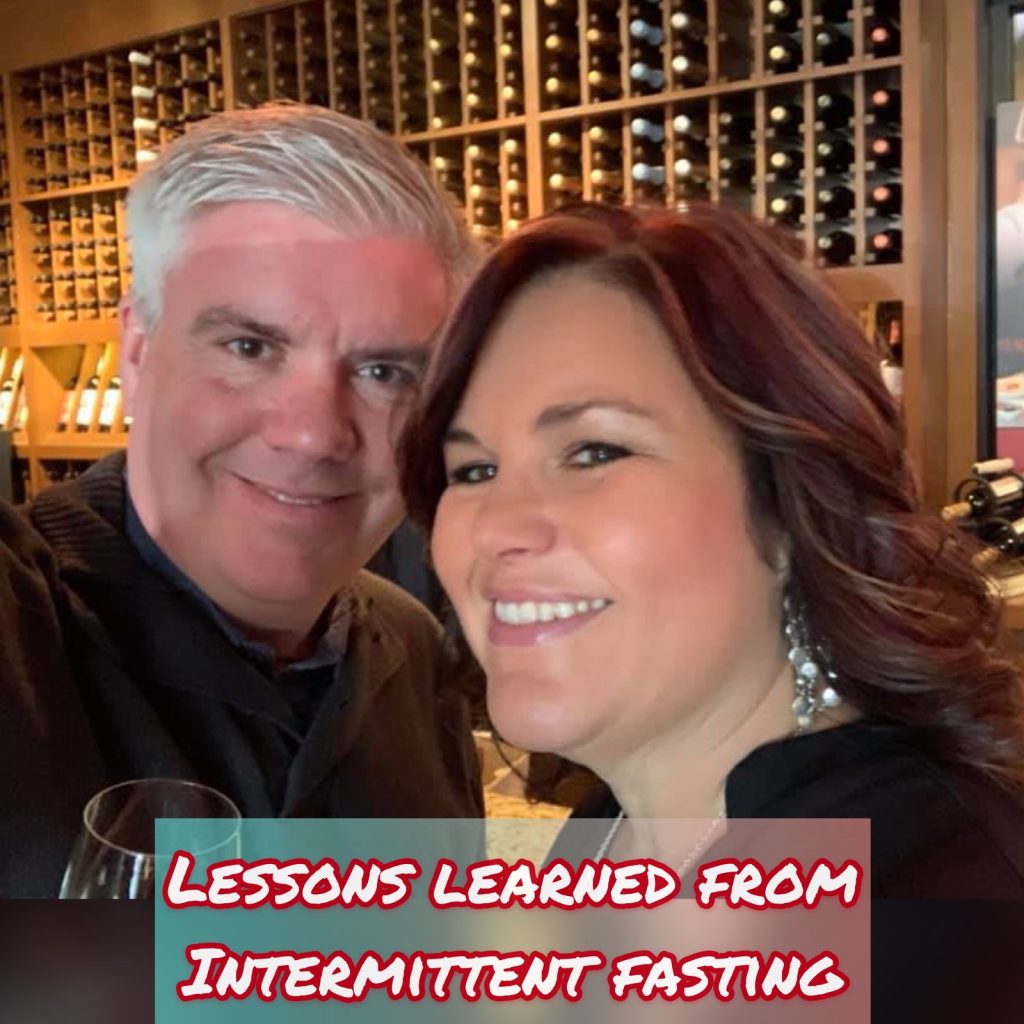
IF Series, Part 6: Lessons Learned from Intermittent Fasting

Before I can start this post, you have to know I have been dreading this topic. In short: I am conflicted. I am questioning my decision to even talk about our lessons learned. I wonder who am I to talk about intermittent fasting (IF) when I haven’t lost weight? UGH. Who am I to talk about IF when most days I am just praying I am doing it “right.” UGH. Who cares what I have learned when I haven’t lost any weight. It’s taken me three weeks to write this post. It led to some bad eating days over the topic. Yet here I am persisting and that reflects the essence of who I am. I persist at everything. It doesn’t matter what the topic or activity, I persist. Ultimately through IF, I have learned a lot about myself, what makes me happy, and I have done significant healing. It may not have been what I wanted to learn two years ago when I started IF but I believe the lessons I’ve learned will stay with me forever. With that, let’s persist.

I’ve met a lot of diets I loathed within weeks of starting them, sometimes less. The thought of the cabbage soup diet still gives me nightmares. Counting points, counting calories, never eating carbs again, putting food in pre-portioned boxes, 3-day detox diets, and meal prepping, honestly, all give me a massive headache. I am not judging anyone else’s journey, this is about my journey and mine alone. Simply stated, I want to not eat and then eat without gaining weight. Guess what? That can happen with intermittent fasting (IF). There is magic in allowing your body time to rest between meals. If there was a magic pill for healthy living, one thing I know beyond a shadow of a doubt, intermittent fasting is that magic pill. Our bodies used to get a lot of rest when we only ate 2 or 3 meals a day, before the creation of the “snack” lifestyle. Thank you, Nabisco, and all the rest of you delicious snack companies (insert sarcasm). To give your body time to process, digest, and let go of food before you eat again, is one of the best gifts you can give your body. Most of the major religions practice fasting and it has been around since the beginning of time (for reasons we don’t need to worry about today). Brian and I have been practicing IF for two years and it has created the most freeing, most rewarding relationship we have ever had with food. We have learned a lot about IF and that’s what I am going to talk about today.

During our two years practicing IF, we did not start losing weight until we made more changes to our practice. I am confident that is in part because our bodies were healing from the inside out. It’s exciting to see how the outside is now changing. I will talk about what we are currently doing in my next and last blog post for this series. However, this series hasn’t been about weight loss but rather freedom from food and improving our overall health. We have learned a lot about our bodies over the last two years. Most importantly I needed to know if I could practice intermittent fasting forever before I depended on it for weight loss. But let’s get into what I have learned so far.

Lesson 1: Hormone Balance and Healing can Happen with IF I had a hysterectomy at 40 and though they didn’t take my ovaries, I was kicked into peri-menopause within the first year. First I developed hot flashes. I remember giving an important presentation while practically undressing because of my hot flashes. Teaching was another challenge, I was always either undressing or adding extra layers, quite inappropriate and ridiculous either way. 😂 I developed night sweats that would leave sweat stains on my sheets, horrible brain fog that made me think I was losing my mind, and then there were my mood swings. Holy cow was I moody, just ask Brian! I was taking progesterone and all that did was help me gain weight. Before I started IF, I was a hormonal mess. It took about 6 months on IF before I realized that my hot flashes were gone and my night sweats were over, never to be seen again! 🙌🏼 I didn’t stop taking my progesterone until late last year and I should have stopped earlier because my mood is a million times better without taking anything. I turn 50 this year and my hormones are more under control than they ever have been in my entire life. I don’t know if menopause will get worse before I am through it but I am symptom-free and feel amazing. I know it is because of practicing IF because that is the only change I made two years ago.

Not only have my hormones become better balanced, but my inflammation and arthritis pain are gone. My inflammation flairs up when I am consuming too much wine, but overall, since I started IF, I have seen a lot less inflammation. I had terrible arthritis in my hands from too much computer work but the pain has been gone for about a year. Brian’s back and joint pain have also been greatly reduced and we have both lowered our prescription medication doses with our doctors’ guidance. If you decide to start practicing IF, see your doctor. My doctor has been along with me throughout this entire journey and she can tell you just how much healing my body has since over the last two years.

Since the start of 2021, as I said, we have made more changes and improved the consistency in our IF practice. We also took a break from alcohol. We are currently on week 7 of 12 weeks without alcohol (though we did indulge on Valentine’s Day with a nice bottle of red wine). With the addition of our changes the one health issue that persisted has healed – my blood pressure. I have struggled with high blood pressure for about four years and as of this week, I have stopped taking my blood pressure medication. It will continue to be monitored for a long while but I am thrilled to see my blood pressure self-regulate. That single “fix” is all the motivation I needed to write this blog post.

Lesson 2: Release from Food Addiction & Improved Food Digestion This is an interesting lesson because I think I will always be a food addict but I definitely have a better handle on what I eat, when I eat, and determining what foods are “window worthy,” which means determining if a food is worth eating in the smaller window I have open for feasting. I decide what I want to eat and I don’t feel guilty because my food choice isn’t on “the diet” because there is no “diet.” When guilt is gone, food tastes better and decisions about what to eat become easier. This is still not a perfect practice but I am not striving for a perfect “diet” but rather a healthy relationship with food. I’m getting there.

The changes I needed to make were bigger than just what I ate, I needed to stop eating so often because my digestive system was a wreck. I stopped eating gluten in January 2013 and that helped my digestion quite a bit but I still had struggles. I was in the emergency room three times between 2015-2018 because of digestive problems. The only thing that worked to eliminate the problems was to have a clear liquid diet for 24-48 hours. When I did that, my digestive system settled down. When I found IF, I knew the thought of not eating for a small time period would be perfect for me. And it was! I haven’t been to the ER for digestive issues since I started IF in late January 2019. My digestive system is still sensitive but I don’t have near the problems I used to have with it and it only gets better with time. ❤️

Lesson 3: Control over Weight Fluctuations & Hunger Signals I am thrilled that yo-yo dieting is gone forever. I still can’t believe we haven’t had any significant weight fluctuations since we started IF. We have gained some weight during a vacation or a week of too much wine, too long of an eating window, etc. but it comes off so easy once we pull back on the food/wine and tighten up our eating window. If you’re a skinny person or don’t have a food addiction, you understand the ebb and flow of small weight changes. I never understood this phenomenon. I have always been either losing a significant amount of weight because of a diet I was on or gaining weight because of hormones and overeating. I have never experienced the middle without huge ups and downs until I started practicing IF. A lot of people lose significant weight practicing IF. I have not lost a lot of weight yet but I know that my body needed to heal on the inside first and I needed to be ok with living at my current weight. Honestly, I needed to trust IF wouldn’t fail me if I ate burgers, pizza, and drank wine which are the normal “forbidden foods” on a diet that cause people to gain weight when they go off the diet.

After I read Bert Herring’s, The Power of Appetite Correction, I realized how wrong the myths we believed about being hangry were and how hunger comes in waves. Did you know that you don’t have to eat when your stomach rumbles? Before IF, I thought I always had to eat when my stomach rumbled or I’d get hangry. Hunger isn’t constant but rather a wave that will dissipate if you ignore it. My stomach rumbles and now I understand I don’t need to react to it. Sometimes our bodies make noises but it doesn’t mean they need immediate attention. I highly recommend reading Herring’s book to gain control over hunger signals.

Lesson 4: Learning to Love Exercise Again You don’t lose weight in the gym but you can love taking care of your body – this took me several years to understand. I want my body to move and move well for a long time to come. I want to hike the Camino and climb big mountains for the rest of my life and that means I have to keep my body moving throughout the entire year. I don’t consider exercise to be riding my bike around a town, walking the Camino, or hiking outdoors, those are just part of what I enjoy doing for fun. I spent a long time loathing the gym and going anyway to finally creating an exercise/meditation space at home that makes me smile and welcomes me in without judgment. This space has helped me learn to love exercising and taking care of myself again. My home gym is my private space. I can go when I want, for how long I want, or I don’t have to go. Now, I love hopping on my treadmill to break up my day, getting in a workout to clear my mind, and I even occasionally enjoy lifting weights. Nobody cares how loud and off-key I sing or what show I am watching on TV, and that helped me learn to love exercising again. When I can’t climb a mountain or bike under the warm sun, I can still keep moving because I want to do it.

Lesson 5: Trusting the Process This is a tough one and a lesson I am still learning. I am still trying to stop punishing myself for weight problems. I know that food is no longer the enemy and neither is wine. I don’t know why my weight loss is so much harder than what it is for others except I am a life-long diet and metabolism abuser. From everything I read, those are the people that have it the worst when it comes to losing weight. Also, I am going through menopause and my body needs my patience. For those reasons, I have faith in the process. If I am at this weight for the rest of my life, I will be ok. As long as I can remain active, I am ok. If I lose weight, I am ok with that too! Gin Stephens, the author of several books including her most recent, Fast, Feast, Repeat, always says that people come to IF for the weight loss but stay for the health benefits. I came for the weight loss, didn’t lose much but regained my health and now I am staying for the weight loss. I always have to do things the more complicated way. 😂

Lesson 6: Change is Good What is the definition of crazy? Doing the same thing over and over again expecting different results. I have been dieting my entire life. It has never worked for a lifetime. It was time for a big change. It wasn’t time to lose weight but rather to stop making the same decisions over and over again expecting different results. It was time to heal. IF has allowed for change, healing, and self-discovery but only because two years ago I was all in for the unknown process, the unknown journey of intermittent fasting. I was more than ready for change and I was over dieting forever. In 2021, I am still ready for change but to say I am still practicing the same “diet” for more than two years is a miracle. I have never stuck around for the same diet for this long. I know why too – because it’s not about what I eat but rather when I eat. Hallelujah!

In the final blog post of this series, I am going to talk about what our eating/fasting regimen has looked like for the last two years and the changes we have made for 2021. I am not going to say that those changes are the reason we are losing weight but they sure have motivated us! Here are a few pictures that keep us going! The photo on the far left is January 6, 2021, the next is February 6, 2021. For Brian, the left photo is February 21, 2021, and the right is July 30, 2020. It’s time this weight loss train moved into high gear and we are loving it! Come back for the next blog and I will tell you all about it!

Just look at the changes in our face since we made changes to our IF practice in 2021!

To go back and re-read post #5 in this series, click here. To go back and re-read this series from the start, click here. To read the final post in this series, come back! Subscribe to our blog to get an email when the blog is posted.


*We are a participant in the Amazon Services LLC Associates Program, an affiliate advertising program designed to provide a means for us to earn fees by linking to Amazon.com and affiliated sites.

IF Series, Part 3: The Prison of Guilty Eating

Food is not in a pill. It’s not in a juice, a bar, a powder, a diet label, and it definitely is not in a pill. Food is real. It is crunchy, flavorful, chewy, colorful, and can bring people great joy. We need food to live and it is meant to be enjoyed. If you eat something because a diet plan tells you to eat it and it doesn’t bring you joy, I get it. I have been eating foods that I don’t enjoy for too long. Guilt and food describe my life in short. Until January 2019 when I decided to try eating without guilt.

Food is meant to be enjoyed.

I wish I could remove all guilt. Unlike other life experiences, guilt doesn’t do us any good. It makes some of us eat more. It can make us crave unhealthy food and drink. We think food/drinks will make us feel better, remove the guilt, but it does nothing but make us feel worse. This is the story of my entire life – eat, feel guilty, eat more, drink something to ignore the guilt, continue this never-ending cycle.

Disclaimer: We talk openly about food addiction and are well aware of our keenness for food. We continually work to redefine our food relationship. We don’t have an addiction to alcohol. We have traveled the world, and unlike in the US, most of the world takes a different view on alcohol. It’s ok to have a glass or two of alcohol with dinner, maybe have an occasional night with more. It’s not ok when your body craves it, can’t get enough of it, and you can’t stop drinking when you start. I lived with an alcoholic. It was painful to watch the destruction. I never wish that addiction on anyone. Brian and I love to enjoy good wine, creative cocktails, and we know our limits. We consciously take time off from alcohol. For example, we typically take 4-6 weeks off at the start of the year for a good cleanse. As of this post, we are on week 4 of “dry January,” we haven’t decided when we will start drinking again, and I promise, we will be talking more about alcohol in another post. For now, back to food!

When I found intermittent fasting (IF), the prison walls of guilt eating started to crumble. They still stand but there are huge cracks in my prison cell. To read about how my IF journey started, click here and read post one in this series. I don’t know if I will ever be paroled from guilt. I feel guilty for what comes out of my mouth, what goes into my mouth, and much more. If you don’t struggle with guilt, I wholeheartedly commend you. I am not here to talk to you about where my guilt comes from, my therapist holds the key to that web, but I do want to tell you about how the prison walls started cracking and the bars began to open. Though I haven’t always practiced IF “correctly,” I have seen I can eat one or two meals a day without my warden, guilt.

I vividly remember when I started IF in mid-January 2019 because I gave myself permission to eat whatever I wanted as long as I only ate one meal a day. I was in love with my new regimen. For the first time in my life, I ate whatever I wanted without guilt. It was like the warden let me have a taste of the great outdoors. Mind you, Brian had not started IF but he was thrilled when I would text him and ask him to bring home pizza. He was curious as to how I was eating our favorite foods for dinner and losing weight. I am confident it is why he so quickly jumped into practicing IF himself. Who wouldn’t? Since we were already denying ourselves wine because it was “dry January,” then pizza, tacos, and burgers were the perfect substitutes. Another Disclaimer: I am not a medical doctor, rather I am just sharing our journey. If you read the first two blogs in this series, you know that we haven’t practice IF “correctly,” and ultimately, we didn’t lose any long-term weight but we did maintain our weight which was, at the time, a major victory.

Something was working with this practice of intermittent fasting. I lost weight in the beginning, Brian did too. What we now understand is that it wasn’t our time for weight loss. First, we had much to learn about eating without guilt. We had to in essence give ourselves permission to just eat because we had been dieting since our marriage started. But let’s get back to 2019. February came too fast, we started to add wine back in with many evening meals. March and April came even faster and we got busy with Brian’s musical (something we produce together for Brian’s high school students). We loosened up the one meal a day and started having a snack and a meal. Then summer came. If you don’t know, we spend our summers adventuring either in our RV or on the Camino. In 2019 we walked the Camino which you can read about here. We planned to walk 10-15 miles a day so we worried that we needed to eat more. We still practiced IF but we only skipped breakfast. Further, we drank way too much of that beautiful Spanish wine and indulged in too many plates of mouthwatering Portuguese pastries. We were on a two-month holiday and it was wonderful.

However, once those habits changed to a wider eating window it was excruciating to go back to one meal a day. In fall 2019 we stuck with eating two meals a day and have been practicing that ever since. In 2020 we continued to fast for about 18 hours a day, eating lunch, snacks, and dinner in a 6-hour window. You would think it would lead to weight loss if you have read about intermittent fasting but you don’t yet know what we ate in that window. 🤣 I’m getting there.

For the most part, our previous weight loss success was by following Weight Watchers. We learned we should eat 6 or 7 times a day to “keep our metabolism up.” That’s a truckload of crap, people! A truckload of full-on crap! All that eating plan did was make me feel deprived, tired, and upset that I would only ever eat tiny, unsatisfying meals. The worst of it: Not only did we believe we needed 6-7 meals a day but we told others they did too. We told people breakfast is the most important meal of the day. More crap! I want to genuinely apologize to each person we fed that information to in the past. I am deeply sorry. Breakfast means to “break your fast.” It is not the most important meal of the day, that is just what cereal makers want us to believe. Read this blog on Dr. Jason Fung’s website, or this one on the calorie debacle, and then read his books (linked below).

Why do we still practice intermittent fasting if we haven’t lost weight? Because we both feel a thousand times better than we did on weight watchers or not following any eating plan at all. We eat real food. We eat food that feeds the soul. We eat food without guilt. In 2020 we tried eating Keto. It’s ok but I love bread. I already have to eat gluten-free for my gut health. I have been gluten-free since 2013 and my gut is much happier. Managing my PCOS and Hashimoto’s well means being gluten-free but that’s another story, for now, back to bread… mmmm! We lowered our carbs and were feeling good but we both refuse to ever go back to counting anything. We are not now, nor ever, going to count calories, carbs, fat, or anything. We want to eat (feasting), we want to not eat (fasting). That’s it. We never again want to agonize over anything or any number again. We did that for too long and we weren’t happy. But yes, we started settling into a decent low carb life, we were feeling good, and then COVID happened in late March 2020.

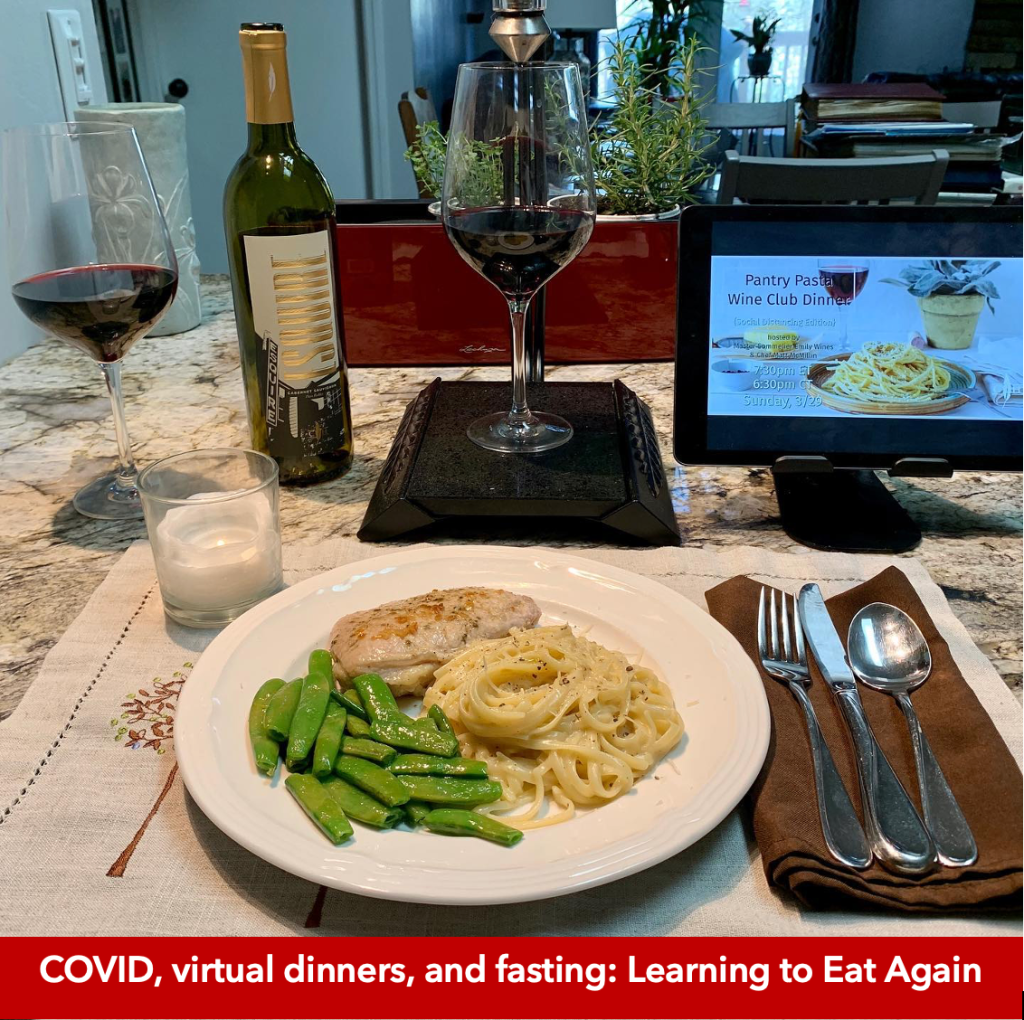
COVID cocktail hour while our Governor provided daily briefings

Here’s how the rest of 2020 eating looked: Open our eating window with a cocktail hour, eat lunch, continue the evening with more cocktails or wine, eat a hearty dinner, and maybe have a dessert. In our six-hour eating window, we enjoyed delicious food and mouth-watering drinks. We managed our feelings and isolation the only way we knew how – to eat and drink. But that’s ok. Our world was experiencing a major crisis, we were all coping. Ultimately our clothes got a bit tighter, we were putting a band-aid on our feelings, and the happy train left the station without us. Something was different though. We weren’t gaining weight as fast as we would have in the past. Every time we pulled back on the cocktails, cut out the snacks and dessert, tighten up our feasting window, our bodies said thank you and we dropped a couple of pounds back off. We didn’t miss the lesson here but summertime was upon us. We spent the summer in our RV traveling out West avoiding people as much as possible while still adventuring in our national parks. We continued our somewhat ridiculous eating and drinking in a six-hour window but because we were doing a lot of walking and hiking, our clothes loosened up a bit more. YAY! We finished our summer trip at pretty much the same weight that we had started it, how often can you say that after vacation? Especially one that is two months long. Not us.

Intermittent fasting was working, there is no doubt about it. However, both of our doctors reminded us that we needed to give our livers a break and be a bit more thoughtful about what we ate. My blood pressure was high, Brian was diagnosed as pre-diabetic. It was time to put on the brakes and rethink our priorities just in time for Christmas indulgences. It was time to start with the basics about IF again so we turned to audiobooks and podcasts while driving to Tennessee to spend a quiet holiday in the RV. We listened to Eve Mayer’s book, Life in the Fasting Lane. We listened to Dr. Fung’s podcast. We worked on setting S.M.A.R.T. goals, focused on reminding ourselves why we love IF, and figured out how to do it better.

I am learning to walk out of my guilt prison. I am learning to lose while winning!

The prison walls of guilt have been crumbling since we started IF in 2019. In order for them to be gone forever, I have to learn how to balance between eating what I want, eating what is good for me, and figuring out what I can live with forever. I have learned to eat without guilt but learning to eat well and lose weight is a process. I have learned how to maintain weight and that is our biggest win thus far on our two-year IF journey. A win I am proud of because I never maintained my weight before on any diet plan. I was never happy on any diet plan – period! Losing weight is easy when you are on a diet but maintaining that loss when you are living the rest of your life is an entirely different challenge. If you have followed our journey from the very beginning, you understand we intimately know the weight maintenance challenge. Learning to lose weight again, well that is our 2021 plan and we are set up for success. We’re not getting into the details of what’s happening yet because I need to see how much “sticks” before I can speak on it intelligently. However, I will tease you by saying something is working. As of this post, Brian and I are already down quite a bit of weight, our blood glucose numbers are better, my blood pressure is already normalizing, and our waists are smaller. I like looking in the mirror again – the biggest win of all so far. One day at a time. I am on the happy train and I have no intention of getting off again.

If you are thinking about starting intermittent fasting, or maybe you are already practicing if but not getting anywhere, I challenge you to read about it. Get the facts from those who have been there or are the experts. Do not just listen to me. Others have so much more to teach you. Do not follow my eating habits! Start with Dr. Fung’s book, The Ultimate Guide to Intermittent Fasting. It is life-changing. I am reading it again and I can’t believe how much I forgot or skipped over because I wasn’t ready for this change in 2019. He also wrote the books, The Obesity Code and The Diabetes Code. They are outstanding! I am also re-reading Gin Stephen’s books, Delay, Don’t Deny and Feast Without Fear. Gin put a new book out in 2020 that I can’t wait to dive into Fast. Feast. Repeat.

Come back next week when I talk about how this gym rat got fat again. 🤣 Last week I talked about out-running the yo-yo diet phenomenon with over-exercising. Next week I will talk about how I balance good exercise habits without guilt warden showing up when I don’t exercise “enough.” I promise I will talk about IF and our relationship with alcohol after that post; I am going to explore how wine is a metaphor for living well. Then we will reflect on what we have learned during our first two years practicing IF. Finally, at that point, I think I will be ready to talk about where we are in 2021. If you want me to talk about something specific related to our journey of living well and in good health, leave a comment or email me.

Thank you for coming along on this journey of self-reflection. Subscribe to our website to get notified when we post new blogs. I pray these blog posts help you on your own journey to good health and even better living. Ultimately we have one life to live. The goal should be to live it well.

To go back and re-read post #2 in this series, click here. To read post #4 in this series, click here.


*We are a participant in the Amazon Services LLC Associates Program, an affiliate advertising program designed to provide a means for us to earn fees by linking to Amazon.com and affiliated sites.

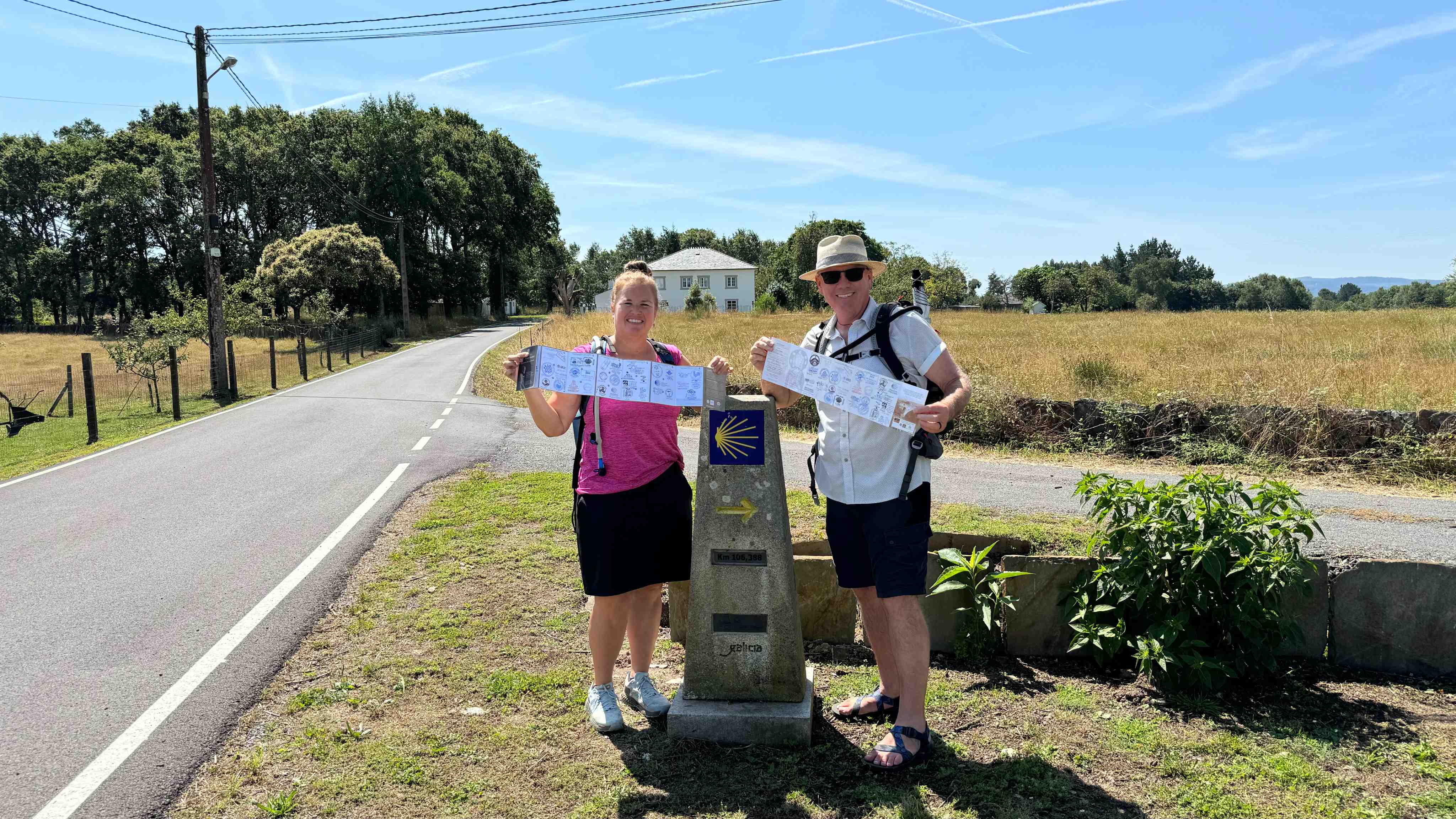
★ 25 years guiding ★ 48 U.S. states ★ 10 countries ★ 3,000+ Camino miles