Camino Portuguese from Porto to Santiago: 2027 Small Group Guided Coastal & Spiritual Route

Imagine beginning your pilgrimage in Porto, Portugal, sipping port wine along the Douro River — and ending weeks later in Santiago de Compostela, standing before the cathedral you walked nearly 170 miles to reach.

July 16 – August 2, 2027 (with the option for two supplemental days), we are leading a small-group walk on the Camino Portuguese from Porto to Santiago, combining the breathtaking Coastal Route with the deeply meaningful Spiritual Variant. This journey blends Atlantic views, medieval towns, Galician forests, unforgettable cuisine, and the kind of community that only forms when you walk together toward something sacred.

Participants will have the option to sign up for one or both trips (if you are brave enough to spend that much time with the Colemans). If you walk both trips, we offer a 5% discount on your total trip cost. Both trips will include luggage service, private rooms with double occupancy, and the option for taxi service if needed on any given day. Message us for the single supplement if you are traveling solo and don’t want to room with anyone. This trip is limited to 12 participants. We specialize in small-group experiences to cultivate lasting relationships, deepen cultural immersion, access off-the-beaten-path experiences, and reduce environmental impact. You can read about the Tomar to Porto trip here.

You can express interest in either trip by completing this form

Below is what you can expect daily on this trip, walking from Porto, Portugal, to Santiago de Compostela, Spain. At the end of the blog post, you can read what is included in the trip, what is excluded, and the cost breakdown.

The Daily Itinerary from July 16-August 2, 2027

For this trip, our group will walk 269.4 kilometers (167.4 miles). We will walk 14 days of the 18-day trip (or 21 days if you add the supplemental days). We will average walking 19.23 kilometers (11.9 miles) a day. There’s something powerful about walking your way to Santiago — especially when the journey begins beside the Atlantic and winds through fishing villages, medieval towns, vineyards, and forested hills. This Camino Portugués route combines the Coastal Way with the Spiritual Variant, giving you the very best of Portugal and Galicia.

July 16, 2027, Day 1, Arrive in Porto, Portugal
If you arrive in Porto today, we suggest arriving as early as possible to explore the hilly, riverside city. As a group, we will enjoy a port house tour and a port tasting in the late afternoon. We will also enjoy dinner together. This will be a dinner with those who are walking in our first group from Tomar to Porto, and those who are just arriving in Porto.

July 17, 2027, Day 2, Spending a Full Day in Porto
This day will include another tour of a porthouse, a port tasting, and time to explore on your own. You’ll want to explore the churches, the porthouses, and even the Harry Potter bookstore! In the late afternoon, we will have a shell ceremony to help get our minds ready for the pilgrimage, followed by dinner as a group. 

July 18, 2027, Day 3, Walking from Porto to Vila Chã
Leaving the city, the Camino quickly leads us to the coast. Boardwalk paths hug the Atlantic as waves crash nearby — an unforgettable way to start the pilgrimage. This is a long day because it takes a bit to get out of Porto. There will be the option to take a taxi ahead to shorten your day. It is one of the three longer walking days; fortunately, it’s relatively flat. We overnight in Vila Chã, a quiet fishing village where the pace of life instantly slows.
Mileage: 26.9 kilometers

July 19, 2027, Day 4, Walking from Vila Chã to Aguçadoura
Today continues along sandy beaches and wooden walkways. We pass traditional fishing platforms and small coastal communities before arriving in Aguçadoura, known for its dunes and wide-open shoreline. This walk is all about easy walking and big views — a great day to settle into the Camino rhythm. Today you will have the opportunity to leave your burdens (or shells) on the Caminho Shell Bar “wall.” If you are lucky, you will see a working windmill.
Mileage: 18.4 kilometers

July 20, 2027, Day 5, Walking from Aguçadoura to Marinhas
The Camino turns slightly inland, weaving between coastal paths and rural farmland. We end the day in Marinhas, just outside Esposende, where cafés and pastelarias reward us for our miles. Oh, the pastries, I hope you are not coming to lose weight because those pastries are extremely tempting!
Mileage: 17.7 kilometers

July 21, Day 6, Walking from Marinhas to Viana do Castelo
One of the most scenic days in Portugal. We cross rivers, walk quiet paths, and arrive in the elegant city of Viana do Castelo. This day is special because of the history, architecture, and a lively town in the evening. Before we enter Viana do Castelo for a rest day, we cross an Eiffel Bridge.
Mileage: 21.3 kilometers

July 22, Day 7, Rest Day in Viana do Castelo
Those who want can take the funicular or climb to the Basilica of Santa Luzia for jaw-dropping views over the coast. This byzantine gothic church was completed in 1946. This is a gorgeous place for a rest day. Settle in and enjoy this beautiful city in Portugal.

July 23, Day 8, Walking from Viana do Castelo to Caminha
This is your second-longest walking day, but you just enjoyed a beautiful rest day (if you did in fact rest!). The Camino traces the coastline again before heading toward the mouth of the Minho River. We arrive in Caminha, a charming border town where Portugal and Spain meet. Tonight, you will enjoy a sunset over the river and a sense of crossing into something new.
Mileage: 26.3 kilometers

July 24, Day 9, Walking from Caminha to Vila Nova de Cerveira
We love to balance the long walking days with the shorter ones. It gives you the opportunity to challenge yourself and then recover. Today, you have a shorter, gentler walk along the Minho River inland. Art installations, vineyards, and peaceful paths lead us to Vila Nova de Cerveira, known for its creative spirit and relaxed atmosphere.
Mileage: 13.1 kilometers

July 25, Day 10, Walking from Vila Nova de Cerveira, Portugal, to Tui, Spain!
We cross the border into Spain today — a big Camino milestone. After crossing the bridge over the Minho River, we arrive in Tui, home to an impressive hilltop cathedral and medieval old town. You are lucky because on this trip you will experience the wonderful cuisine of Portugal and the delicious cuisine of Spain, specifically in the region of Galicia.
Mileage: 19.2 kilometers

July 26, Day 11, Walking from Tui to O Porrino
The Camino heads inland through forests, villages, and industrial areas — a reminder that pilgrimage isn’t always postcard-perfect, but always meaningful. O Porriño welcomes us with friendly bars and pilgrim energy.
Mileage: 18.3 kilometers

July 27, Day 12, Walking from O Porrino to Redondela
A beautiful ascent followed by a scenic descent with sweeping views of the Vigo estuary. We arrive in Redondela, famous for its viaducts and welcoming pilgrim scene. You will enjoy a gorgeous sunset over the water.
Mileage: 15. 5 kilometers

July 28, Day 13, Walking from Redondela to Pontevedra
Today we will enjoy stone paths, forest trails, and historic bridges that guide us into Pontevedra, one of Galicia’s most beloved cities. Its old town is lively, walkable, and full of charm.
Mileage: 20.2 kilometers

July 29, Day 14, Walking from Pontevedra to Armenteira
Today, we leave the main Camino to begin the Spiritual Variant — often described as one of the most meaningful sections of the entire route. A steady climb takes us into the hills and to the Monastery of Armenteira, surrounded by forests and silence.
Mileage: 21 kilometers

July 30, Day 15, Walking from Armenteira to Vilanova de Arousa
We descend through the stunning “Ruta da Pedra e da Auga” (Route of Stone and Water), following rivers, old mills, and mossy bridges all the way to the coast. Vilanova de Arousa welcomes us back to the sea. This is one of the most beautiful walking days in Spain!
Mileage: 23.6 kilometers

July 31, Day 16, Walking from Vilanova de Arousa to Padron
A highlight of the Spiritual Variant: we travel part of today by boat, retracing the legendary route of St. James’ remains up the river. After docking, we walk into Padrón, famous for its peppers and Camino history.
Mileage: just a couple of kilometers of walking and a gorgeous boat ride

August 1, Day 17, Walking from Padron to Santiago de Compostela
The final walk. The last, long walk. Emotions run high as we pass through forests, villages, and finally into Santiago. The first glimpse of the cathedral towers is unforgettable. The walk into Santiago is absolutely epic. You came alone or with a partner, but you leave with a band of pilgrim friends.
Mileage: 25.6 kilometers

August 2, Day 18, Rest Day in Santiago de Compostela
This will be a busy “rest day” with much to see and do. We will start our day getting our compostelas, then head over to hear the stories of the Portal of Glory, followed by a rooftop tour of the cathedral. There is a mass at noon for pilgrims, where you can stick around afterwards to tour the inside of the cathedral. After dinner, we will enjoy a traditional Queimada ceremony and find the shadow pilgrim who only comes out after dark. This will be a late night as it’s still light out at 10:00 p.m.!

August 3-5, Day 19-21, Bus Trip and Overnight in Finisterre and Back to Santiago for One More Night
These are supplemental days because we know not everyone has the time to add on a few more days. But for those who want to go to the end of the Earth, we have the opportunity. The cost of the supplemental days is $450.

To complete our pilgrimage, we travel west by bus to the Atlantic coast and the legendary Cape Finisterre. Here, pilgrims have long come to burn old clothes, reflect, and symbolically begin anew at the edge of the world. But please don’t burn your clothes, as it’s illegal now! We will hunt for scallop shells on the beach and enjoy some shopping in the village. At 6:30 p.m., we will walk together the final 3 kilometers to the lighthouse to see the zero-kilometer marker and enjoy a final meal together. After dinner, we will watch the sunset and then walk the 3 kilometers back to the village. Tomorrow we will transport you back to Santiago, where you can enjoy one more day of tourism and shopping. We will arrive in Santiago at about noon.

On this final day in Santiago, we will explore Abastos Market (the traditional fresh market and home to Michelin-rated restaurants), tour the Pilgrims Museum (on your own), have more time to tour the cathedral museums, and enjoy a tapas dinner. You will depart home on August 5, 2027.

Why Walk the Camino with Cruisin’ with the Colemans?
This experience is for travelers who want the Camino without the stress of going it alone — but still with all the meaning. Our group trips are designed around:

  • Thoughtfully paced walking days
  • Built-in community and support
  • Time for reflection and fun
  • Cultural immersion beyond any guidebook
  • Boutique travel, this means (as applicable) a small group with uniquely curated experiences, small hotels in the perfect location, a small group of travelers, dinners with multiple courses, and always a few surprises created just for the group.
  • Groups are always limited to 12 participants

If you’ve been drawn to the Camino but wanted to experience it with connection, guidance, and intention, this walk was created for you.

What’s Included in the Trip:
– Lodging in private rooms of two people per room with private bathrooms (though if we stay in a house or small apartments, you may share bathrooms with other members of our group). Check-in is typically about 3 p.m. You can expect a range of lodging experiences from us. We will place you in accommodations close to the action so you won’t spend your time traveling or walking into the city. We cannot ever guarantee air conditioning, and, even when it’s included, we cannot ensure its quality. It’s Europe, where air conditioning is not the standard.
– All breakfasts, which are pretty simple in Europe, typically include a pastry, coffee, and juice.
– All dinners with multiple courses. Water and wine are included with dinner. A typical European dinner begins at 8 p.m. and lasts about 2 hours. We encourage you to eat a late lunch, enjoy a restful siesta, and have an afternoon snack.
– The optional opportunity to attend mass daily, as available.
– Daily luggage transfer. Luggage is limited to 30 pounds and a bag/suitcase no larger than 25″ tall. You will receive a document with a suggested packing list and will be encouraged to hand-wash your laundry throughout the trip. Washing machines are occasionally available.
– Taxi transfer on any day you are struggling and need to move ahead to walk fewer kilometers. Plans for the taxi are made by 8 p.m. the night before.
– Your pilgrim shell (the symbol of this pilgrimage) and your credential.
– Participation in a port wine tour and tasting.
– Tours along the route that will be outlined in detail during our online meetings.
– Two online meetings with your group, help with securing your airfare, and on-demand phone or video calls with us.
– We will be both filming video and taking photos throughout the trip, so loved ones can follow you on our social media channels. You will receive a Google Drive link after the trip with all the pictures we took and the edited videos we published.

What’s Not Included in the Trip:
– Airfare
– Transportation to/from the airport
– Lunch, snacks, and cocktails throughout the day

Cost of the Trip:
– $4,300 per person in a double occupancy room. There is a $200 early-bird discount if you sign up before October 31, 2026.
– Returning travel participants always receive a $200 discount, regardless of when they sign up, and the ability to sign up first for a future trip (can not be combined with the early-bird discount).
– If you choose to walk both trips, you will receive a 5% discount off your total cost for both trips (can be combined with another offer).
– After October 31, you can get an additional $100 discount for referring a friend (that is $100 off for you and $100 off for your friend).
– Payment plans will be arranged and agreed upon, with the final payment due by April 30, 2027
– This trip is capped at twelve people.
– Credit cards are accepted with a 3.6% credit card fee (this is the charge we get from using Square). Payments are accepted without a fee via Venmo, Zelle, electronic check, or paper check by mail.

To Secure Your Spot:
Registration will open on April 1, 2026. For the month of March 2026, registration is open only to those who have pre-registered or traveled with us in the past. If you are interested in this trip, the first step is to please complete our group travel interest form. Once we have ensured you are a good fit for our group travel experiences, and registration is open, a $500 non-refundable deposit is required.

Camino Portuguese from Tomar to Porto: 2027 Guided Small-Group Walk in Portugal

In July 2027, we are leading a small-group walk on the Camino Portuguese from Tomar to Porto, one of Portugal’s most beautiful and lesser-traveled pilgrimage routes. This 16-day guided journey combines meaningful walking, cultural immersion, unforgettable meals, and boutique lodging — all without the stress of planning it yourself. If you’ve dreamed of walking the Camino in Portugal but want connection, support, and thoughtful pacing, this experience was designed for you.

We are leading two groups in the summer of 2027. The first group will walk the Camino Portuguese from Tomar to Porto, the focus of this blog post. The second group will walk from Porto to Santiago de Compostela. Both trips will include walking, gaining a better understanding of the culture from locals, learning a bit about the history of the region we will be walking in, and, of course, developing an appreciation for the food of Portugal. Our trips are about more than just walking; we are building community and appreciating culture in the places we travel to. We are not rushing to a destination; rather, we are slowing the walk, taking a rest day, enjoying a Fado de Comibra concert, and savoring the port wine of Porto. You can read about the Porto to Santiago trip here.

Participants will have the option to sign up for one or both trips (if you are brave enough to spend that much time with the Colemans). If you walk both trips, we offer a 5% discount on the total cost. Both trips will include luggage service, private rooms with double occupancy, and the option for taxi service if needed on any given day. Message us for the single supplement if you are traveling solo and don’t want to room with anyone. This trip is limited to 12 participants. We specialize in small-group experiences to cultivate lasting relationships, deepen cultural immersion, access off-the-beaten-path experiences, and reduce environmental impact.

You can express interest in either trip by completing this form

Below is what you can expect daily on this trip, as we walk from Tomar to Porto. At the end of the blog post, you can read what is included in the trip, what is excluded, and the cost breakdown.

For this trip, our group will walk 210 kilometers (130 miles). We will walk 13 days of the 16-day trip. We will average walking 17.52 kilometers (10.9 miles) a day. Some journeys are about the destination, others are about who you become — and who you walk with — along the way. Walking the Camino Portuguese from Tomar to Porto invites you to slow down, move with intention, and experience Portugal the way pilgrims have for centuries.

July 1-17, 2027 Itinerary – Walking from Tomar to Porto

July 1, 2027, Day 1: Meet Us in Tomar, Portugal
You will fly into either Lisbon or Porto, and then take a train to Tomar for the start of our journey. You will arrive around mid-afternoon and have plenty of time to wander the village, take a short nap, and then enjoy your first Portuguese dinner with your group. Our plan is to have dinner at a medieval-style restaurant that is unlike any other. See this video from our 2019 pilgrimage to enjoy views from the festival and the restaurant.

July 2, 2027, Day 2: Enjoy the Festival in Tomar and Get to Know Your Group
Today, we will enjoy Festa dos Tabuleiros, a harvest festival with origins dating back to the 13th century, held once every four years. We should be able to enjoy the butler’s parade today and the street decorations. We will also walk up to the Convento de Cristo, a Knights Templar castle, where we will hold our shell ceremony and officially begin our pilgrimage.

July 3, 2027, Day 3: Your First Walking Day from Tomar to Alvaiázere
We will all begin today, taking a taxi to our official start in Calvinos. You don’t have to take this taxi; however, it will make for a 30.9-kilometer day if you walk the entire day. We will save 11 kilometers by starting with the taxi, which makes for a more reasonable day. Once we start walking, there will be a bit of a climb, but then the countryside quickly opens up, giving us space to settle into the Camino mindset.
Mileage: 20 kilometers

July 4, 2027, Day 4, Walking from Alvaiázere to Ansião
A few rolling hills and wide landscapes define today’s walk. The pace is steady, the conversations feel natural, and the sense of community in the group starts to form. Ansião welcomes us with small-town charm and everything we need to rest well.
Mileage: 14.5 kilometers

July 5, 2027, Day 5: Walking from Ansião to Rabaçal
Today feels timeless. We walk through forest paths and quiet farmland, far from crowds and distractions. Rabaçal is small, peaceful, and perfectly suited for an evening of reflection and connection. There is a small Roman museum in town for those who have the energy to enjoy it.
Mileage 18 kilometers

July 6, 2027, Day 6: Walking from Rabaçal to Cernache
A scenic walk, mainly downhill, through rural Portugal brings us to Cernache. This shorter day allows time to slow down, journal, explore, or simply enjoy being present with the group. Partway through the day, there is another Roman museum that some may want to visit. In Conínbriga, we will not only see a Roman museum but also explore Roman ruins dating back to 139 B.C.E. It was occupied until 468 AD.
Mileage: 17.6 kilometers

July 7, 2027, Day 7: Walking from Cernache to Coimbra
We approach Coimbra, one of Portugal’s most iconic cities. Crossing into the historic center and seeing the university rise above the river is a powerful Camino moment. Tonight, we celebrate how far we’ve already come together.
Mileage: 12.5 kilometers

July 8, 2027, Day 8: Coimbra Rest Day
Today we won’t be walking, but we will put many kilometers under our feet as we explore the hilly city of Coimbra. It’s a university town with a ton of charm. We will end our day with a Fado de Coimbra show, and of course, our daily family dinner.

July 9, 2027, Day 9: Walking from Coimbra to Mealhada
I hope you rested a bit yesterday because today is a big day. Fortunately, it’s relatively flat today, but it’s a long one. Leaving the city behind, we return to quiet roads and countryside walking. Mealhada is famous for its local delicacy, leitão, making it a perfect place to enjoy a relaxed group dinner and plenty of laughter. The people you will meet on this trip will be friends for a lifetime.
Mileage: 22.4 kilometers

July 10, 2027, Day 10: Walking from Mealhada to Águeda
An easier, flatter day takes us into colorful Águeda, known for its creative spirit and vibrant street art. It’s a joyful reminder that the Camino offers delight as much as depth. This is one of several of my favorite places in Portugal! I can see you now sitting on a swing down by the Rio Águeda in the late afternoon.
Mileage: 25.4 kilometers

July 11, 2027: Day 11: Walking from Águeda to Albergaria-a-Velha
Today brings long, peaceful stretches through forests and farmland. This is classic Camino walking — meditative, grounding, and deeply satisfying. Albergaria-a-Velha offers a warm, quiet, and welcoming stop for the night.
Mileage: 16.3 kilometers

July 12, 2027, Day 12: Walking from Albergaria-a-Velha to Oliveira de Azeméis
Rolling terrain and small villages guide us north. The miles feel lighter now as the group moves in rhythm. Oliveira de Azeméis is relaxed and authentic — a place where Camino friendships truly solidify.
Mileage: 19.8 kilometers

July 13, 2027, Day 13: Walking from Oliveira de Azeméis to São João da Madeira
We continue through northern Portugal’s heartland, passing cafés, neighborhoods, and green spaces. São João da Madeira brings energy and comfort, with plenty of time to enjoy the evening together. This is a shorter day, so people can resupply or just enjoy another city along the Camino Portuguese. We will end the day at our favorite restaurant on the Camino with our favorite restaurant owner. This will be a night you will remember for a long time after the trip.
Mileage: 9.4 kilometers

July 14, 2027, Day 14: Walking from São João da Madeira to Grijó
A gentler day takes us through familiar Camino landscapes — quiet roads, shaded paths, and moments of conversation and silence. Grijó, with its beautiful monastery, feels like a fitting pause before the final day.
Mileage: 19 kilometers

July 15, 2027, Day 15: Walking from Grijó to Porto
Our final walk carries us into Porto, where the Douro River and the city’s unmistakable energy greet us. Ending the Camino here is emotional, celebratory, and unforgettable. We don’t just arrive — we arrive changed.
Mileage: 15.1 kilometers

July 16, 2027, Day 16: Rest Day Porto
Today, we will enjoy a bit of touring in Porto. This day will include a tour of a porthouse, a port tasting, and time to explore on your own.

July 17, 2027, Day 17: Supplemental Day in Porto ($300 supplemental day)
There is so much to explore in Porto, and if you have the time to stay an extra day, you will have a lot to do and see! We will be welcoming our group that will walk from Porto to Santiago. If you want to join us for both trips, this supplemental day will be included in the total cost of both trips at no extra charge. Today we will explore another port house – that’s worth staying for all in its own! 

We began as individuals. We finish as a Camino family.

Why Walk the Camino with Cruisin’ with the Colemans?
This experience is for travelers who want the Camino without the stress of going it alone — but still with all the meaning. Our group trips are designed around:

  • Thoughtfully paced walking days
  • Built-in community and support
  • Time for reflection and fun
  • Cultural immersion beyond any guidebook
  • Boutique travel, this means (as applicable) a small group with uniquely curated experiences, small hotels in the perfect location, a small group of travelers, dinners with multiple courses, and always a few surprises created just for the group.
  • Groups are always limited to 12 participants

If you’ve been drawn to the Camino but wanted to experience it with connection, guidance, and intention, this walk was created for you.

What’s Included in the Trip:
– Lodging in private rooms of two people per room with private bathrooms (though if we stay in a house or small apartments, you may share bathrooms with other members of our group). Check-in is typically about 3 p.m. You can expect a range of lodging experiences from us. We will place you in accommodations close to the action so you won’t spend your time traveling or walking into the city. We cannot ever guarantee air conditioning, and, even when it’s included, we cannot ensure its quality. It’s Europe, where air conditioning is not the standard.
– All breakfasts, which are pretty simple in Europe, typically include a pastry, coffee, and juice.
– All dinners with multiple courses. Water and wine are included with dinner. A typical European dinner begins at 8 p.m. and lasts about 2 hours. We encourage you to eat a late lunch, enjoy a restful siesta, and have an afternoon snack.
– The optional opportunity to attend mass daily, as available.
– Daily luggage transfer. Luggage is limited to 30 pounds and a bag/suitcase no larger than 25″ tall. You will receive a document with a suggested packing list and will be encouraged to hand-wash your laundry throughout the trip. Washing machines are occasionally available.
– Taxi transfer on any day you are struggling and need to move ahead to walk fewer kilometers. Plans for the taxi are made by 8 p.m. the night before.
– Your pilgrim shell (the symbol of this pilgrimage) and your credential.
– Participation in a port wine tour and tasting.
– Tours along the route that will be outlined in detail during our online meetings.
– Two online meetings with your group, help with securing your airfare, and on-demand phone or video calls with us.
– We will be both filming video and taking photos throughout the trip, so loved ones can follow you on our social media channels. You will receive a Google Drive link after the trip with all the pictures we took and the edited videos we published.

What’s Not Included in the Trip:
– Airfare
– Transportation to/from the airport
– Lunch, snacks, and cocktails throughout the day

Cost of the Trip:
– $3,995 per person in a double occupancy room. There is a $200 early-bird discount if you sign up before October 31, 2026.
– Returning travel participants always receive a $200 discount, regardless of when they sign up, and the ability to sign up first for a future trip (can not be combined with the early-bird discount).
– If you choose to walk both trips, you will receive a 5% discount off your total cost for both trips (this discount can be combined with another offer).
– After October 31, you can get an additional $100 discount for referring a friend (that is $100 off for you and $100 off for your friend).
– Payment plans will be arranged and agreed upon, with the final payment due by April 30, 2027
– This trip is capped at twelve people.
– Credit cards are accepted with a 3.6% credit card fee (this is the charge we get from using Square). Payments are accepted without a fee via Venmo, Zelle, electronic check, or paper check by mail.

To Secure Your Spot:
Registration opens April 1, 2026. For the month of March, registration is open only to those who have pre-registered to walk with us. If you are interested in this trip, the first step is to please complete our group travel interest form. Once we have ensured you are a good fit for our group travel experiences, a $500 non-refundable deposit is required.

Tested in Europe: A Hiking Clothing Review Blog

When we spend a summer hiking in Europe, it’s essential to have a few high-quality, easy-to-hand-wash, quick-drying clothing items that look good when wandering through European villages and cities in the evening. We don’t carry much because we don’t want to haul large suitcases along the cobblestone streets, but we need clothes that breathe, are easy to manage, and can withstand handwashing and drying on a clothesline.

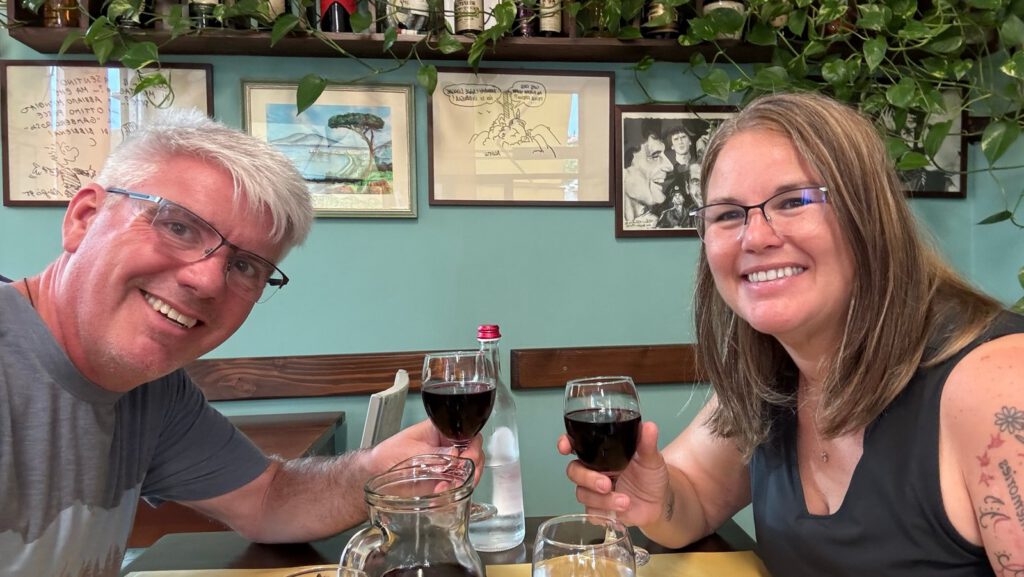
Cheers! Brian is wearing a Belong shirt, and I am wearing a Kühl dress

It doesn’t matter whether I am taking a backpack or a small suitcase; the goal is the same: I only pack lightweight, breathable, high-quality pieces that roll up small and don’t wrinkle, saving space for my favorite luxury items. We spent the summer of 2025 in Italy, Spain, and Portugal, walking the Way of St. Francis in Italy, leading a group on the Camino Frances in Spain, and spending time with friends in Portugal at the end of our two-month trip. During the summer, Brian and I carried two clothing brands: Kühl and Belong, which I will review for durability, breathability, and the style factor.

Brian is wearing a Belong shirt and shorts

Why did we choose these two brands? We have a local outfitter store, Base Camp Outdoors Co., that carries the Belong brand, which we had not previously heard of until we shopped in their store. We loved the look, and the clothes held up well in our pre-Europe tests. We’ve teamed up with our outfitter store to offer our readers a discount code, which is featured a bit later in the blog. Kühl reached out to us to review a few pieces of our choosing, which was perfect because we already loved the brand and had been wearing their clothing for years.

Wearing our Belong t-shirts and holding the Testimoniums we earned from walking the Way of St. Francis

Belong Designs
This is a smaller company based in Colorado with sustainability practices that we can stand behind. Brian had with him a pair of shorts, a t-shirt, and a button-down shirt. He loved wearing the shorts in the evening, to bed, and even hiked comfortably in them. The button-down shirt looked great when he dressed up for the evening, and he loved the breathability while hiking. We both took Belong t-shirts with us. The design on the t-shirt looked great and is nice for everyday wear; however, we both struggled with the breathability of the t-shirt when hiking. Though made of polyester and rayon, they acted more like a cotton t-shirt than a good tech shirt. They felt heavy and “sticky” when hiking. However, I cannot say enough about how much I love wearing our Belong t-shirts when we are not hiking. You can shop all of our favorite items at Base Camp Outdoors Co. Use “COLEMAN15” for 15% off your hiking gear.

I am wearing my Belong t-shirt and Kühl skort. Brian is wearing his Kühl shirt and zip-off shorts

Kühl Clothing
Kühl has been making clothing since 1983 and is based in Salt Lake City, Utah. We have been wearing their performance hiking pants for years. Brian has been wearing their button-down shirts for years, too. Speaking of Brian, pictured above, he took with him a non-tech material button-down shirt (Intriguer) and a pair of convertible hiking pants (Renegade). He owns a button-down Kühl shirt made of tech material, which he wore on our 2024 trip (photo below). He doesn’t like to wear the same shirt multiple years in a row because we are on camera so much. 

Brian is wearing his Kühl shirt in 2024

He absolutely loved his pants. However, it was so hot this summer that he only wore the legs of the pants one day. Haha! They were comfortable and hand-washed well. The non-tech shirt was great for off-days (non-hiking days) and evenings. They hand-washed easily and didn’t wrinkle. Both looked great on him! 

Wearing my Kühl dress

I swear I am the hard-to-please and hard-to-fit girl. Please tell me you can relate! I took a Kühl sleeveless Vantage dress and the Revivr skort. Everyone complimented me on the dress, pictured above. I didn’t feel as cute as I wanted to, but I struggle with the cute factor (no, I am not fishing for compliments, but I always appreciate them. Haha). The dress was about 1” too short for me, I am 5’6”, and I like my dresses to fall just above my knee. I know it looks like that in the photo, but due to the elastic waist, it rode up a bit. The one thing that surprised me about the dress, though it was probably in the description, was the built-in bra. It was a pain, and I always had to wear my own bra in addition to it. My favorite part of the dress was the pockets! Great job, Kühl!! Girls love pockets! 

The Revivr skort looked adorable! I loved how it fit and how it looked. It was a medium grey color, had great pockets, and a draw-string. The only thing I didn’t like about the skort was the “shorts” part of it. They were not fitted like cycling shorts, so they rode up more often than I want to admit. 

Summary:
We will continue to wear both brands, and now we have a better understanding of their limitations. Belong is an excellent brand with clothes that hand-wash well, look great all the time, and the t-shirts are best for non-hiking days. Kühl is also a great brand with clothes that hand-wash well and look great all the time. I wish they had a tall line of dresses. 

Would you like to travel with us? We will be taking two groups to walk the Camino next year. In June 2026, we are walking from Greccio to Rome, Italy. In July 2026, we are walking from Samos to Santiago de Compostela, Spain. Join us! More details can be found here.

Side note: I wish companies would make cute hiking shirts for curvy women with larger chests. I struggle with looking cute on and off the trail in the same clothes. Brian has it easier. If you have a favorite clothing brand that I need to check out, please comment below!

*Disclaimer: We paid for our Belong clothes, though the store offered us a discount. They didn’t ask for a blog and have no control over the content. Kühl sent us the clothes at no charge. They asked for a blog, but have no control over our content.

Greccio to Rome, Italy: 2026 Group Travel Experience Details

This trip is almost sold out. If it sold out before you read this blog post, click here to join the waitlist.

If you have always wanted to wander through the region of Lazio, see the Eternal City, and explore the Roman Ruins, this is the trip for you! Brian and I have walked through Italy and can tell you it’s so magical. First, you can’t beat the food! We love it so much that we’re including a gnocchi, pasta-making, and cannoli cooking class! Second, the region of Lazio. This region is known for its rolling hills, volcanic lakes, and gorgeous plains.

The trip itself is the perfect blend of what we are best known for – walking and getting to know the area and food where we travel. You will have eight walking days, two days to explore Rome, and an optional third day to explore Rome further. 

The character of the villages makes me smile every day on pilgrimage

June 18, 2026, Day 1: Fly into Rome and Travel to Greccio
We will arrange your travel from Rome (the city you should fly into) to Greccio, the town that will be our home base for a couple of days. Don’t worry, when you fly into Rome, you won’t see anything that “gives the city away,” and your walk into the city will still be magical. We will spend the evening in Greccio getting to know each other and preparing for the adventure ahead.

June 19, 2026, Day 2: Warm-Up Walk in Greccio to the Sanctuary
With everyone a bit jet-lagged, we will take it easy on our first full day together. We will walk to the sanctuary that is home to the first live nativity. This is where we will officially begin our walk and have our tau ceremony (similar to a shell ceremony). Everyone will receive their pilgrim credential and tau necklace on this day. The Greek letter tau (T) is the sign of Saint Francis and has become the symbol of this pilgrimage route. During our time in Rieti, you may decide to enjoy a tour of the underground salt road. On this day, we will meet with a local expert who will discuss what to expect on the journey to Rome.
Mileage: 4.4 kilometers

June 20, 2026, Day 3: Greccio to Rieti
Surrounded by forested slopes and spiritual quiet, you descend toward the Velino River Valley, eventually arriving in Rieti. Known as the “navel of Italy,” this small city is rich with Franciscan history, ancient Roman ruins, and Renaissance architecture. Rieti has been known as the geographic center of Italy since ancient Roman times. It’s the perfect place to reflect on the journey ahead.
Mileage: 21.6 kilometers

June 21, 2026, Day 4: Rieti to Poggio San Lorenzo
Leaving the city, you follow quiet country roads and trails into the Sabine hills. Olive groves and vineyards will have you drooling to taste their olive oil and wine. The route to Poggio San Lorenzo winds through rolling terrain with nonstop views. Today we will cross a 1600-year-old Roman bridge! This tiny village, once a Roman outpost, still holds remnants of its ancient past. The evening here is tranquil, ideal for enjoying simple local fare and stargazing.
Mileage: 21.4 kilometers

June 22, 2026, Day 5: Poggio San Lorenzo to Ponticelli
You walk through open countryside and historic farmland toward Ponticelli Sabino, a hamlet nestled among fields and hills. Here you’ll encounter authentic rural life and a slower pace. The route will include quiet paths paralleling the ancient Via Salaria, a Roman road that once connected Rome to the Adriatic Sea.
Mileage: 20.2 kilometers

June 23, 2026, Day 6: Ponticelli to Montelibretti
Today’s walk brings a mix of wooded areas and open views of the approaching Tiber Valley. As you reach Montelibretti, you’ll notice a shift from remote villages to more connected towns. Perched on a hilltop, Montelibretti offers a picturesque historic center with sweeping views.
Mileage: 12 kilometers

June 24, 2026, Day 7: Montelibretti to Monterotondo
Now entering the greater area of Rome, your path passes through olive groves and suburban farms as you make your way to Monterotondo. This bustling hill town has a lively historic center and a strong connection to Rome’s past, with Baroque palaces and winding lanes. The hope is that by now you have enjoyed a lot of olive oil from these beautiful groves! You’ll sense the capital city drawing near, yet the small-town warmth remains relevant.
Mileage: 23.7 kilometers

June 25, 2026, Day 8: Monterotondo to Monte Sacro
Today, you cross into Rome’s urban landscape, arriving in the neighborhood of Monte Sacro, named for the hill where plebeians once staged political revolts in Roman times. Despite being within the capital’s limits, this area retains pockets of greenery and historical interest. You’ll rest here before the final stretch into the heart of the Eternal City.
Mileage: 18.7 kilometers

June 26, 2026, Day 9: Rome – Monte Sacro to the Eternal City
Your pilgrimage concludes in Rome, a city that seamlessly blends ancient wonder with modern vibrancy. You’ll walk the cobbled streets to marvel at landmarks as we make our way to the Eternal City. Who knows, maybe we will see the Pope (not guaranteed!).
Mileage: 15.2 kilometers

Staircase in the Vatican Museum

June 27-28, 2026, Days 10-11: Two Days Exploring Rome
There is so much to explore in Rome! Our first day will explore the sacred side of the city, including time to explore the Vatican Museum and the Sistine Chapel. You will have the option to climb the dome (for an additional $100), and we will arrange the tickets for you. Our second day will focus on Italian cuisine, with a small group class dedicated to learning how to make pizza and pasta, and a special dinner at a hidden gem of the city. During both days, with your hop-on/hop-off bus pass, you can visit quieter spiritual sites like San Francesco a Ripa or the Basilica of San Giovanni in Laterano. Whether you’re exploring bustling piazzas or finding solace in quiet chapels, Rome is a fitting culmination to your journey.

June 29, 2026, Day 12: Rome – Supplemental Day ($300 additional)
You won’t be able to see all of Rome in just two days. On this supplement day, we will provide your breakfast, dinner, and final night’s lodging while exploring ancient Rome. We will tour the Forum, Palatine Hill, and the Colosseum, including a tour of the dungeons and floor of the arena, along with several piazzas. We will leave a coin in Trevi Fountain to ensure we all make it back to Rome! Following an evening bus tour, we will enjoy a final dinner at one of our favorite local restaurants, specializing in a wide variety of homemade pastas. If we are lucky, we’ll get to watch the chef make the next day’s pasta! Note: While we are in Rome, our lodging is close to the Trevi Fountain. Everywhere in the City Center of Rome, lodging is expensive. The supplemental cost covers our expenses for your lodging, breakfast, dinner, and tickets.

What’s Included in the Trip:
– Transportation to the start of our walk and back to the airport at the end of our trip.
– Lodging in private rooms of two people per room with private bathrooms (you may share bathrooms with other members of our group). Check-in is typically about 3 p.m. You can expect a range of lodging experiences from us. We will place you in accommodations close to the action so you won’t spend your time traveling or walking into the city. We cannot ever guarantee air conditioning, and even when it’s included, we cannot ensure its quality. It’s Europe where air conditioning is not the standard.
– All breakfasts, which are pretty simple in Europe, typically include a pastry, coffee, and sometimes juice.
– All dinners with multiple courses. Water and wine are included with dinner; cocktails are on your own. A typical European dinner begins at 8 p.m. and lasts about 2 hours. We encourage you to eat a late lunch, enjoy a restful riposo, and have an afternoon snack.
– Daily luggage transfer. Luggage is limited to 30 pounds and a bag/suitcase no larger than 25″ tall. You will receive a document with a suggested packing list and will be encouraged to hand-wash your laundry throughout the trip. Washing machines are rarely available.
– Taxi transfer on any day you are struggling and need to move ahead to walk fewer kilometers. Plans for the taxi are made by 8 p.m. the night before.
– A local expert to talk about the region and the significance of the Way of St. Francis.
– Your tau necklace (the symbol of this pilgrimage) and your credential.
– Your testimonium from Vatican City at the end of your pilgrimage.
– Participation in a pizza and pasta-making class in Rome.
– Tour the Vatican Museum and Sistine Chapel.
– Enjoy a hop-on/hop-off bus pass to explore the city.
– A special gift from us.
– Three online sessions with your group, help with securing your airfare, and on-demand phone or video calls with us.
– We will be filming both video and photos throughout the trip so loved ones can follow you on our social media channels. You will receive a Google Drive link after the trip with all the pictures and videos we took.

What’s Not Included in the Trip:
– Airfare
– Lunch and snacks throughout the day
– Cocktails
– Tickets for tours in Rome that are not included in the trip

Cost of the Trip:
– $3800 per person in a double occupancy room with a $200 discount if you sign up before November 15, 2025
– After the early bird discount, you can get a $100 discount for referring a friend (that is $100 off for you and $100 off for your friend).
– Payment plans will be arranged and agreed upon, with the final payment due by April 1, 2026
– This trip is priced for ten participants. If we sell out with twelve people, everyone will receive $200 off their final payment. We will not take more than twelve people on this trip.

To Secure Your Spot:
If you are interested in this trip, the first step is to please complete our group travel interest form. 
Once we have ensured you are a good fit for our group travel experiences, a $500 non-refundable deposit is required.

Would you like to see the other trip we are offering in 2026? Please read about our July trip, where we are walking in Spain from Samos to Santiago by clicking here.

Updated: 12/16/25

Samos to Santiago, Spain: 2026 Group Travel Experience Details

This trip is sold out, but don’t stress, click here to join the waitlist!

Join us on a life-changing journey as we walk the final, most scenic stretch of the Camino de Santiago—starting in the peaceful monastery town of Samos and ending at the mystical shores of Finisterre, once thought to be the “end of the world.” Our group pilgrimage follows the historic Camino Francés, winding through the vibrant Galician villages of northern Spain. 

The trip itself is the perfect blend of what we are best known for – walking and getting to know the area and food where we travel. You will have seven walking days, a day to explore Santiago de Compostela, a day to enjoy the peaceful seaside village of Finisterre, and an optional second day to explore Santiago further before returning to the reality of home.

If you want to see our videos from our 2025 group, click here.
If you want to see our videos from the last 100 kms (the section our group walks) from our 2023 Camino, click here.

July 6, 2026, Day 1: Fly into Madrid and Travel to Samos
We will arrange your travel from Madrid (the city you should fly into) to Samos, the town that will be our home base for the first couple of days. We will spend the evening getting to know each other, preparing for the adventure ahead, and adjusting to the time change.

We will be taking photos/videos throughout the trip, posting them to our social media channels for the ultimate memory book of your trip.

July 7, 2026, Day 2: A Rest Day in Samos
We will begin in the tranquil embrace of the Benedictine Monastery of Samos, where pilgrims have found rest and meaning for centuries. We’ll set intentions and gather for a communal welcome. This is where we will officially begin our walk and have our shell ceremony. Everyone will receive their pilgrim credential and shell on this day. We will enjoy a tour of the monastery, wander through the quiet village to settle our minds, and enjoy our first pilgrim dinner before the labor of walking begins tomorrow.

July 8, 2026, Day 3: Samos to Sarria
The most popular starting point for the Camino, this bustling town brings fresh energy as we join pilgrims from all over the world walking the final 100 km to Santiago. Most groups who are only walking 100 km begin here, but after today, you will quickly realize why we chose to start in Samos.
Mileage: 14.5 kilometers

July 9, 2026, Day 4: Sarria to Portomarín
This will be one of two challenging days. This will be your hilliest day, with tomorrow being your longest day. Today’s walk will be filled with people, shops, and plenty of snacks! At the end of the day, we will cross the Miño River into a picturesque town rebuilt stone by stone after the old village was flooded. We’ll relax over a hearty Galician meal and take in views from the church square.
Mileage: 22.1 kilometers

July 10, 2026, Day 5: Portomarín to Palas de Rei
This is your longest day (but don’t worry, you will have the option to taxi ahead if needed), and it’s definitely less hilly than yesterday. This area is the rural heartland of Galicia with ancient Roman roots. We’ll enjoy scenic woodland paths and the ruins of Castro Castromaior. This is a small detour on the route, and we will help ensure you don’t miss it!
Mileage: 24.5 kilometers

July 11, 2026, Day 6: Palas de Rei to Melide
After two longer walking days, the next two days will be quite a trip as we slow back down to take in the scenery! Melide is a lively town known as the pulpo (octopus) capital of Galicia. We’ll encourage you to gather at a local pulpería at lunch for an unforgettable shared meal.
Mileage: 15 kilometers

July 12, 2026, Day 7: Melide to Arzua
Today, we encourage everyone to pack snacks and sit down at one of the many picnic benches along the walk to watch the pilgrims go by. Shortly before Arzua, we will encourage everyone to dip their feet in the water under the last Roman bridge of the Camino. Famous for its creamy cheese and rolling landscapes, Arzúa offers quiet countryside paths and cozy evening reflections. Tonight we will enjoy pizza at one of our favorite spots in Arzua.
Mileage: 13.9 kilometers

July 13, 2026, Day 8: Arzua to O Pedrouzo
The final stop before Santiago, where anticipation builds, and we’ll take time to honor the journey and prepare for the emotional arrival.
Mileage: 19.1 kilometers

July 14, 2026, Day 9: O Pedrouzo to Santiago de Compostela
Walk together into the grand Plaza del Obradoiro, where the majestic cathedral welcomes pilgrims with open arms. Celebrate your accomplishment, attend the Pilgrim’s Mass, and explore this vibrant, spiritual city. If we’re lucky, we will see the famous Botofumeira swing at Mass!
Mileage: 20 kilometers

July 15, 2026, Day 10: Rest Day in Santiago de Compostela
This will be a busy “rest day” with much to see and do. We will start our day getting our compostelas, then head over to hear the stories at the Portal of Glory, followed by a rooftop tour of the cathedral. There is a mass at noon for pilgrims, where you can stick around afterwards to tour the inside of the cathedral. Tonight will be dinner and a show as we witness a demonstration of a traditional Galician dinner and listen to a presentation about the history of the region and its relationship with the Camino by a local expert. After dinner, we will enjoy a traditional Quimnada ceremony and find the shadow pilgrim who only comes out after dark. This will be a late night as it’s still light out at 10:00 p.m.!

The Zero Kilometer Marker at Cape Finisterre

July 16, 2026, Day 11-12: A Bus Trip to the Seaside Village of Finisterre
To complete our pilgrimage, we travel west by bus to the Atlantic coast and the legendary Cape Finisterre. Here, pilgrims have long come to burn old clothes, reflect, and symbolically begin anew at the edge of the world. But please don’t burn your clothes as it’s illegal now! We will hunt for scallop shells on the beach and enjoy some shopping in the village. At 5:30 p.m., we will walk together the final 3 kilometers to the lighthouse to see the zero-kilometer marker and enjoy a final meal together. After dinner, we will watch the sunset and then walk the 3 kilometers back to the village. Tomorrow we will transport you back to Santiago, where you can enjoy one more day of tourism and shopping, or you can catch a flight home. We will arrive in Santiago at about noon.

July 17, 2026, Day 12: Supplemental Day in Santiago de Compostela ($250 supplemental)
We will arrive back in Santiago at about noon, where we will arrange your transportation to either the train station, airport, or hotel. If you want to spend one final day in Santiago with us, it’s going to be a good one! Tonight is the first night of the festival, so there will be lots of parties in the park and the various plazas. If you didn’t see the Botafumeira swing at the pilgrims’ Mass, it’s likely to swing tonight, as it’s the first night of the festival. Today, we will explore Abastos Market (the traditional fresh market and features Michelin-rated restaurants), tour the pilgrims museum (on your own), have more time to tour the cathedral museums, and enjoy a tapas dinner.

This journey is more than a walk—it’s a shared experience of connection, contemplation, and discovery. Whether you’re walking for personal growth, spiritual renewal, or adventure, this group pilgrimage offers space for all. Come with your questions, your hopes, your stories—and leave with something deeper.

What’s Included in the Trip:
– Transportation to the start of our walk and back to the airport at the end of our trip.
– Lodging in private rooms of two people per room with private bathrooms (though if we stay in a house, you may share bathrooms with other members of our group). Check-in is typically about 3 p.m. You can expect a range of lodging experiences from us. We will place you in accommodations close to the action so you won’t spend your time traveling or walking into the city. We cannot ever guarantee air conditioning, and even when it’s included, we cannot ensure its quality. It’s Europe where air conditioning is not the standard.
– All breakfasts, which are pretty simple in Europe, typically include a pastry, coffee, and juice.
– All dinners with multiple courses. Water and wine are included with dinner. A typical European dinner begins at 8 p.m. and typically takes about two hours. We encourage you to eat a late lunch, enjoy a restful siesta, and have an afternoon snack.
– The optional opportunity to attend mass every day.
– Daily luggage transfer. Luggage is limited to 30 pounds and a bag/suitcase no larger than 25″ tall. You will receive a document with a suggested packing list and will be encouraged to hand-wash your laundry throughout the trip. Washing machines are rarely available.
– Taxi transfer on any day you are struggling and need to move ahead to walk fewer kilometers. Plans for the taxi are made the night before by 8 p.m.
– A local expert to talk about the region and the significance of the Camino de Santiago.
– Your pilgrim shell (the symbol of this pilgrimage) and your credential.
– Your Compostela at the end of your pilgrimage.
– Participation in a food demonstration class in Santiago.
– Tour the Museum, Portal of Glory, and enjoy a rooftop tour in Santiago.
– A special gift from us.
– Three Zoom sessions with your group, help with securing your airfare, and on-demand phone or Zoom calls with us.
– We will be filming both video and photos throughout the trip so loved ones can follow you on our social media channels. You will receive a Google Drive link after the trip with all the pictures and videos we took.

What’s Not Included in the Trip:
– Airfare
– Lunch and snacks throughout the day

Cost of the Trip:
– $2700 per person in a double occupancy room with a $200 discount if you sign up before October 1, 2025
– After the early bird discount, you can get a $100 discount for referring a friend (that is $100 off for you and $100 off for your friend).
– Payment plans will be arranged and agreed upon, with the final payment due by April 1, 2026
– This trip is capped at twelve people.

To Secure Your Spot:
If you are interested in this trip, the first step is to please complete our group travel interest form. 
Once we have ensured you are a good fit for our group travel experiences, a $500 non-refundable deposit is required.

Would you like to see the other trip we are offering in 2026? Please read about our June trip as we walk in Italy from Greccio to Rome, by clicking here.

International Phone Plan vs. eSIM Cards when Traveling Abroad

When we started traveling abroad, international phone plans were outrageously expensive. It was frustrating because it was a little reminder reinforcing the myth that international travel is only for the rich.

We started out swapping our physical SIM cards for European ones, then we moved to eSIM cards but there were always problems with switching over to a European plan. First, unless your friends, family, and business associates know how to get a hold of you, you’re missing out because you will never know you missed those calls or texts. Then there were the loopholes cell phones companies added that your phone had to be paid off (not all companies but some).

Sure, it’s idealistic to say “I’m just going to unplug!” but not always realistic. We’ve been wanting to switch to something new, especially with leading groups, and it wasn’t until the night before we left for Europe on this 2025 trip did we pull the trigger.

Verizon (who is our phone carrier) has a new plan. However, I can’t verify how new. What I can say is even many of the people who work at Verizon didn’t understand the plan. It took three hours on chat and a follow up phone the next day to get this plan figured out.

I have heard T-Mobile has a free international plan, which speaks to how phone companies are making this more accessible. We were not interested in changing phone carriers at the moment.

However, for only $10 more a month from what we were currently paying, we now have an international calling plan. We have unlimited phone calls and text to/from the US from just about anywhere we would travel. We can call/text from within the same country we have traveled to. That is a downside because currently we are in Italy but cannot call Spain, for example. We can only call/text within Italy and back to the US. That’s a minor inconvenience. 

This plan is called the “Ultimate Unlimited” and with autopay it’s $80 monthly. We were on the plan one step down for $70 monthly. 

Here is the confusing part. Verizon has this “International Calling Plan” that is an additional $100 a month. It has all the same features of the Ultimate Unlimited but with a bit more data. I don’t even think I could call Spain while in Italy with this additional plan. We get 15 gigs of data and for an additional $100 a month you get 25 gigs of data. However, with both plans once you go over, they just slow your data down. There is WiFi everywhere. Travel is completely manageable with that much data unless you are here on business but that’s a different conversation.

But wait, there is one more “confusing” part. After three hours on live chat making this switch, Brian calls Spain from the US. We immediately get this text message:

It’s now the day we are leaving and I have to call Verizon. Fortunately the automated system recognizes I was on live chat last night and made changes to our plan so it moves me to the front of the queue and sends me to a more experienced person. Nice job, Verizon.

What we learned is the person who upgraded our plan needed to add the “Global Choice Plan” which is at no additional charge. Well that’s stupid, Verizon. But it’s part of what makes me think it’s a new change in the plan packages. Now we get this message when we land in a new country:

The message when I turned my phone on during our layover in France

So here we are, in Italy, sipping cocktails and remaining connected. Of course, connected when we want to be; we are on vacation for goodness sake. This is a no-mindless-scroll zone. We don’t want to miss the experience but we don’t want to miss the phone calls/texts from those at home either.

If this blog helped you decide what to do before you travel, give it a like and comment. That helps others see this blog post. My hope is it saves someone time and money.

Until next time, take adventures!

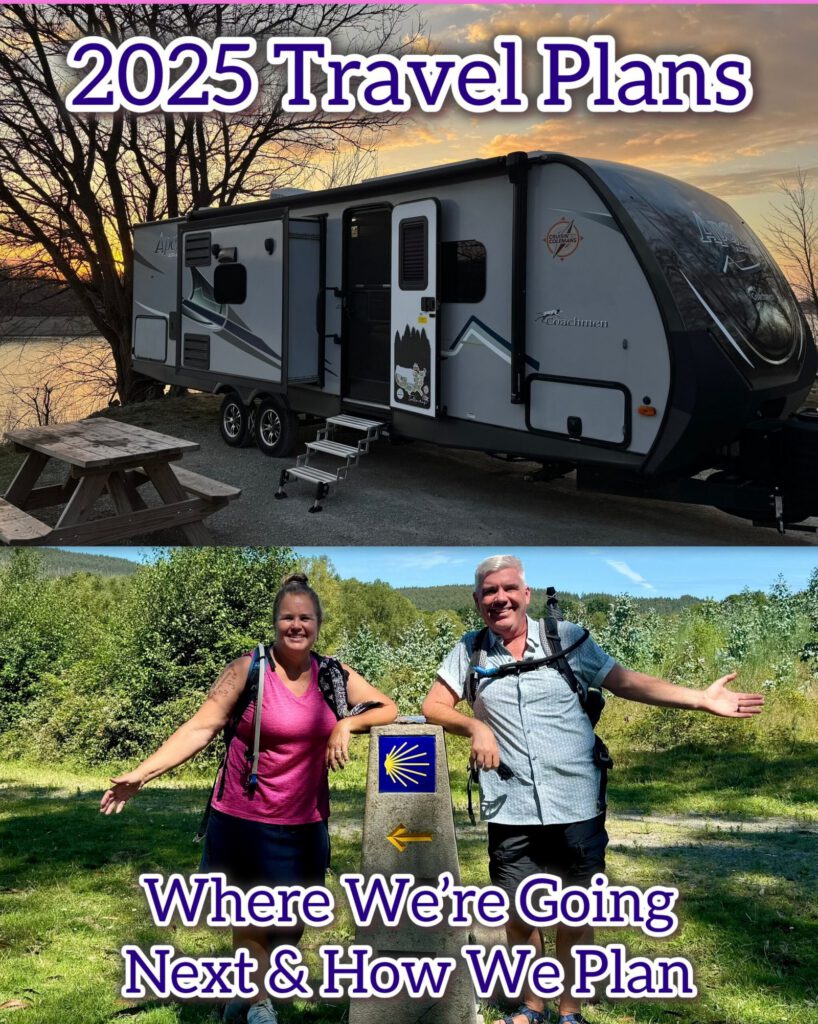
2025 Travel Plans – Where We Are Going Next & How We Plan

By this time of year (end of March), we usually have our travel plans finalized. We love to plan early because it helps us secure the campsites we want and assists with our budget planning. Most importantly, we enjoy planning throughout the school year. The school year is almost over, so it’s uncomfortable not to have our plans in place.

We didn’t know what we wanted to do or where to go; who knew there was a reason! But our travel plans are nearly finalized now! We have planned several RV trips in the Midwest, including one along the Bourbon Trail through Kentucky.

In June, we will walk the Way of St. Francis (La Via di Francesco) from Florence to Assisi. The trail continues to Rome; we are confident we will eventually complete it, just not this year. It will be a challenging walk with significant elevation gain, but we have hiked through Italy before, and the views are breathtaking!  

Photo credit: https://caminoist.org/st-francis-way/


Here’s a quick overview of how we start planning our trips.

What Can We Do
As we are both over 50, one of the biggest factors in deciding what to do and where to go is asking ourselves, “What can we do before our bodies will no longer allow us?” We are acutely aware that we are not getting any younger. I hope we have plenty of years ahead, but you never know where life will take you. We want to keep doing hard things, like hiking through Tuscany or climbing Machu Picchu, before it’s something we can’t do. 

Early Planning Stages
With plans in mind, the real fun begins: we love coming up with what we want to see and do. We start by watching YouTube videos, as it’s enjoyable to observe what others consider important about the area we plan to visit. These videos present genuine experiences, often unrefined, offering a true account of the experience.

Time to Budget
Regardless of where we want to travel, our budget constraints largely determine the destinations we choose. I wish we could live budget-free lives, but that will never happen during our travels. Haha! We begin by considering what we want to spend and then move on to what we need. We include lodging, food, airfare, excursions, potential side trips we may wish to add, and souvenirs. 

Dates and Routes
We look at the calendar and make sure we are making the smartest plans for the time we have to travel. It doesn’t make sense to travel all the way to Europe and spend the most amount of time. We always try to go over there for at least a month. There is so much to do and see in Europe, and your biggest expense is getting there.

Then, we consider which RV routes are sensible. If we have the time, we make plenty of stops along the way, meaning the actual destination isn’t very far. For instance, we don’t have much time for a long trip in June, so planning a Bourbon Trail trip through Kentucky is perfect for us. The destination is only a few hours away, and we’ll be staying at Harvest Hosts, so the stays will be free. If you are an RVer and not a member of Harvest Hosts, sign up here.

Creating a Spreadsheet
We love to create good spreadsheets. We have them for walking Caminos and RV trips with lots of stops. The spreadsheet includes where we are going, the miles/km to get there, what we want to do when we are there, our budget, etc. We are happy to share spreadsheets with you. Just drop us a message.

Trip planning doesn’t have to be a daunting task; in fact, it should be quite fun. It’s like a pre-vacation where your imagination can take you anywhere for free. If you need help, we LOVE to help people plan trips, drop us an email at cruisinwiththecolemans@gmail.com.

If you have any travel questions, send them our way! We love to help others. Who knows, you may inspire our next blog post. We hope you will follow our travels this year. We will highlight them on Facebook, Instagram, and YouTube, making reels and posting photos in real time as we travel.

Until next time – we hope your travels are fulfilling!

Group Travel Frequently Asked Questions

These are frequently asked questions about the Camino de Santiago. This blog post addresses common inquiries regarding preparation for the walk and specific questions for those traveling with us. I have broken it down into four categories: Phones and Wifi, Money and Financial Concerns, Preparations and Daily Concerns, and Social Media. If you have a question not addressed in this blog, please reach out so we can add the question/answer.

Phones and Wi-Fi

  1. Will my phone work?
    1. The easy answer is yes! However, you need to decide what you do for coverage. Because of the cost, we don’t use our regular cell phone plan when we travel to Europe. Instead, we order a European SIM card from Orange right before we leave and activate it when we arrive in Spain. This is the link to their holiday plan. It’s an eSIM, so you can complete this online. Your phone has to be unlocked. Reach out to us if you have questions.
  2. Will there be cell service?
    1. Yes! You will be walking in populated areas with lots of cell coverage.
  3. Will there be wi-fi?
    1. Almost every bar, restaurant, and lodging will have wi-fi. I cannot guarantee it will be fast, but you will have phone access when needed.

Money and Financial Concerns

  1. How much should I budget for lunch and snacks?
    1. This depends greatly on how much you eat and if you are a drinker. Cocktails are a lot more expensive than wine. Water usually comes in a bottle unless you specifically ask for tap water (agua del grifo), but I cannot guarantee that will always work. If you budget 25-30€ daily, that should be plenty (unless you are a cocktail drinker, those can be 5-8€ each). Don’t forget money for souvenirs.
  2. How much cash should I have with me?
    1. You should always keep a small amount of cash, but not too much in case something happens and you lose your wallet. We recommend no more than €100 on hand time.
  3. Will there be ATMs along the way?
    1. You will find ATMs everywhere along the way, but those can have hefty fees if you don’t know what you are doing. Use a bank card that doesn’t have international fees or ATM fees. For cash, we use our Charles Schwab checking account debit card. Schwab does not charge ATM or international fees; they also reimburse you for any ATM fees the other bank charges.
    2. We strongly advise against using currency exchange locations! Although they are visible, they are expensive, and there are much better alternatives for accessing cash.
  4. Beyond the fee, what other expenses should I expect?
    1. The only expenses you should incur are meals throughout the day (second breakfast, lunch, snacks, cocktails), pharmacy needs, and souvenirs.
    2. Tips and gratuities from our group members are appreciated by our tour guides, drivers, and cooking class instructors..
  5. What happens if I can’t go on the trip?
    1. The $500 deposit is non-refundable. We will work on the rest with you. If your travel insurance is active when that decision is made, that is a great way to ensure we are still paid. At a minimum, we expect you to cover any expenses we will be out (museum tickets, etc).

Preparations, Daily Concerns, and Itineraries

  1. What is the schedule going to be like?
    1. We will start our day at about 7 a.m. Your walking will be done between 1-3 p.m. Then it’s time for washing clothes, grabbing a nap, and some self-reflection. We will have dinner at about 7 p.m. as a group. We will not only enjoy a meal but also reflect together. Lights out is about 10 p.m. so we can start again the next day.
  2. What if I have dietary restrictions?
    1. Please let us know ASAP so we can ensure you have breakfasts and dinners that meet your dietary needs. Please understand that a typical breakfast is coffee and a pastry.
  3. Should I have a guidebook with me?
    1. If you get lost, you should have a phone app with GPX tracks to help you find your way. Some people also like a guidebook. Here is an example of one we like to carry with us. Also, note that Google Maps will help you get back on a main road but not necessarily the trail.
  4. Do I need to know the local language?
    1. It’s helpful to have a basic understanding of the language. This will help you greet people properly and order food when you are hungry. Listening to podcasts like Coffee Break or working through lessons on Duolingo are very helpful.
  5. Will there be pharmacies?
    1. You will walk through multiple villages throughout the day, and pharmacies are everywhere. They will have everything you need, just like you would find in a CVS or Walgreens. 
  6. Will there be access to water on the trail? 
    1. Yes! There will be many places to grab water from fountains along the trail. It will be unfiltered water from a fountain. However, the fountains are used by locals and pilgrims alike, and we have not had any issues with them.
  7. Will we all walk together?
    1. Yes and no, that depends on the group. We will let the group decide what they are most comfortable with for the daily walks. We will not leave anyone alone unless they want to walk alone. We may start our day together and spread out throughout the day. Don’t stress – we are there to support you!

Social Media

  1. I want to be off-grid while on the trip; is that possible?
    1. Yes! Tell your friends to follow Cruisin’ with the Colemans on Facebook or Instagram. We will post photos and videos throughout the day on Facebook and Instagram. Additionally, we will be posting daily vlogs on YouTube during the trip. Your friends and family will have a lot to watch without bothering you! 
  2. How do I get the photos you took?
    1. We will share a drive with you containing photos and videos that you can download. They are yours forever! 

I hope this blog answers your questions. However, if it does not, please reach out. Leave a comment below so we can add your question to this post.

Thanks, Michelle & Brian

Preparing for a Hiking Vacation

When we think about vacations, we often imagine relaxation, sightseeing, and indulgence. However, when planning a hiking vacation, it’s essential to shift that mindset to one of preparation and training. Just as we wouldn’t head to an amusement park without some knowledge of the attractions, we shouldn’t embark on a hiking adventure without getting our bodies and minds ready for the journey ahead.

It’s amusing that no one “trains” for a vacation, even when they are headed to places like Disney World, where they’ll walk 6 to 10 miles a day, or Rome, Italy, where they may walk even further in a single day. We just don’t consider training for a traditional vacation. You know, because it’s a vacation; the place you go to relax and unwind.

But if we are planning a hiking vacation, we need to train. We must consider the gear we carry, what clothing to wear, and how to manage ourselves if a problem arises. When hiking, you might find yourself in the middle of nowhere. Do you have a plan? Do you have basic first aid knowledge? There are many considerations. I’m not addressing all of that today (maybe another day). Today, I’m focusing on training to be physically and emotionally prepared.

Understand the Terrain
First, get to know the trails you plan to hike. Research the elevation, terrain type, and estimated distance. Understanding what to expect will help you customize your training regimen. For example, hiking in the Rocky Mountains requires different training than trekking through the Appalachian foothills. A hiking trail like the Camino de Santiago is entirely different. On most routes of the Camino, there are villages every 3-4 miles, which provide a break, a snack, and a distraction that you won’t find on other trails.

“I love hiking, but I don’t love every minute of every hike.”

Building Physical Endurance
Any long-distance trek will challenge your physical abilities, and that shouldn’t scare you; it should excite you to push your limits. We often say, “I love hiking, but I don’t love every minute of every hike.” So why do we still love it even when we don’t enjoy every moment? Because during tough challenges on difficult days, things can be overwhelming; however, when you overcome something you once thought was impossible, the sense of achievement is incredibly rewarding.

  1. Start Walking. The best way to prepare for hiking is to start walking regularly. If you’re not already doing so, aim for at least 30 minutes of walking three to five times a week. Gradually increase the duration and intensity of your walks, aiming for longer distances over time. Set a manageable plan, one that feels attainable for you. This is not about being the fastest or best walker; it’s about improving what you can do today.
  2. Incorporate Hills. Explore local trails or spots with inclines. Walking uphill helps develop the leg strength and endurance necessary for hiking. Take your time on the hills; this isn’t a race. You’re only competing against yourself. If you don’t have hills where you live, then walk on a treadmill and slowly increase the incline.
  3. Cross-training. To boost overall fitness, consider exploring other forms of exercise. Activities such as cycling, swimming, or even strength training can improve your cardiovascular endurance and muscle strength, which are essential for navigating rugged trails. Yoga is excellent for enhancing flexibility, which your muscles will appreciate when they feel tired and tight after a long day of walking. We have a local yoga studio that offers a punch card for drop-ins, so you don’t need a membership.
  4. Practice with Gear. Don’t forget to train with the actual gear you plan to take on your trip. Get used to wearing your hiking boots or shoes, carrying your backpack, and using trekking poles. This way, you’ll break in your equipment and evaluate what adjustments might be necessary. Continue adding weight to your pack as you become comfortable, simulating the gear you’ll carry on your trip. Start with an empty pack, then add water, followed by a bit of clothing, and so on, until you have exactly what you will take on your trip. One thing we do to practice with our gear is add bags of rice to mimic gear and weight.

Mental Preparation
Hiking is not only a physical challenge but also a mental one. Some days, the trail can feel short and beautifully enjoyable, while other days may feel long and even tedious. To prepare yourself, set realistic expectations and establish mental goals for your hikes.

  1. Set Your Intention. Before I start walking, I like to set a daily intention: What do I want to think about today? What do I want to be thankful for today? What do I want to discuss with my partner or my higher power today? This intention helps me focus my mind when the day is long and gives my walk a greater purpose.
  2. Balance Your Mind. Include mindfulness or meditative practices in your training routine. Recognizing that hiking can sometimes be tough will help you stay calm and focused during challenging sections of the trail. While you’re on the trail, you’ll have plenty of time to lose yourself in your thoughts. Is that beneficial for you? Do you prefer music? Be ready for long periods of silence.
  3. Visualize Success. Spend time visualizing yourself completing your hike. Picture the stunning views, the sense of accomplishment at reaching the summit or the destination, and how to manage any physical challenges you might face. This practice can be a powerful motivator. 
  4. Learn Basic Navigation and Safety. Familiarize yourself with map reading and compass skills, or consider taking a wilderness first aid course. Being mentally prepared for emergencies boosts confidence and can make your hiking experience safer and more enjoyable.

Preparing for a hiking vacation is an investment in the great outdoors. It’s an investment in you—the health of your mind and body. By training both physically and mentally before you go, you’ll not only enhance your hiking experience but also ensure that you’re ready for any challenges that arise with confidence and resilience. Remember, it’s about enjoying the journey just as much as the destination. So lace up those hiking shoes, hit the trail right now, and let your adventure begin!

Have a question? Reach out to us! Make sure you subscribe to our newsletter so you know when new blog posts are published!

Do you like what you read today? Please give us a thumbs up, leave a comment, and share it with others!


What Do I Bring on Pilgrimage? Camino Packing List

It’s easy to overpack for a pilgrimage—believe me, I’ve learned from experience! On my first Camino, I carried way too much gear, and it was quite a burden, especially since I had to carry it all on my back. Fortunately, on our planned trips, you’ll have luggage service, so you won’t need to carry everything with you. Even with luggage service, this is not a trip of luxuries. We are on pilgrimage, so we are not carrying much “stuff” with us.

For the trips we lead on the Camino, each person is limited to one backpack or one small suitcase weighing no more than 15 kilograms or 33 pounds to manage the luggage for everyone. However, Brian and I take one suitcase (no more than 15 kilograms) between the two of us. We encourage everyone to pack light! Whether you have luggage service or not, having one backpack that weighs under 15 kilograms (the lighter, the better!) will help you, as it eases the burden of carrying your luggage day after day.

Our two backpacks from our 2019 Camino. This was everything we carried for 2 months in Europe

We believe in the principle of washing and wearing your clothes. What does this mean? It means you are either washing your clothes or wearing them. After hiking for the day, you should shower and wash your clothes. In the evening, you can wear hiking clothes for the next day. Any other clothes would be considered a luxury. You can have luxury items if you keep them in one backpack or suitcase under 15 kilograms (33 pounds). 

Ultimately, this is your trip. We will never tell you exactly what you “should” or “should not” take with you. This blog post offers suggestions and our perspective. Please feel free to use this information as you see fit.

This is our suggested packing list for any of our Camino trips.
Where there are differences between Brian and me, Michelle, we have identified them. These are just suggestions. You have to pack what you feel is best for you! Also, where we travel, you will be able to find what you need in local shops (band-aids, hiking poles, ibuprofen, etc)

  1. Toiletries: toothbrush, soap to wash clothes and body, shampoo, nail clippers, tweezers, comb, hair ties, etc. Some type of washcloth because they don’t use them as we do in the US. Here is the lightweight bag that I carry my toiletries.
  2. Sunscreen
  3. A bandana or something to wipe the sweat off your face. I use this towel as my sweat rag and my washcloth in the shower.
  4. Headlamp if you want to leave before sunrise to walk
  5. Clothesline: We use something like this, with safety pins to hold our clothes on the line
  6. A notebook or something like that for journaling
  7. Towel: When we take a group trip, the places we stay will provide towels. Some people like to have their own towels. This is Brian’s favorite towel, and this is my favorite towel. We carry a towel because sometimes we stay in places that don’t provide towels (outside of group experiences).
  8. European plug adaptor
  9. Portable backpack for evenings to get snacks or groceries or to take your laundry to the laundromat
  10. Sunglasses with UV protection
  11. Lightweight Sunglasses Case that clips on your pack.
  12. A hat: Here is what Brian likes to wear. I have worn my Nike hat but have no particular preferences.
  13. Merino wool lightweight socks are my favorite brand. I take two pairs, and I always have an extra pair in my daypack, so if my feet are sweating, I can change my socks. If your feet sweat a lot, I would suggest three pairs in case your socks don’t dry overnight.
  14. Some like sock liners to help prevent blisters. These are what I wear under my socks.
  15. Hiking shoes—this is quite a debatable conversation. Brian hikes in Chacos all day and wears Croc flip-flops in the evening. I hike in New Balance tennis shoes (a full size larger than my regular tennis shoes). I wear Chacos in the evenings and on shorter walking days. We have hiked for many years in other shoes, but this is what we have hiked in for more than three years. We can talk to you about all of the hiking shoe options, but it’s a decision you have to make.
  16. Some like a sun umbrella when they are hiking in the summer. This is our favorite brand because it’s super lightweight
  17. Lightweight underwear that fits well and has no lace that can rub and irritate the skin and will dry quickly—no cotton underwear! You just need two pairs—remember you are washing and wearing. These are the underwear that Brian wears, and this is the underwear I wear. We don’t buy expensive underwear; we just ensure it’s not cotton!
  18. Bras—ladies, that is up to you! Wear a sports bra during the day and a regular one at night; you decide. I can help if you need ideas. I hate sports bras. I have to pull them over my head because that is hard to do when you are hot and sweaty, so I love this sports bra.
  19. Lightweight jacket for cool evenings or early mornings. Remember, no cotton; this is the brand I prefer to wear.
  20. Rain jacket: You can make this your lightweight jacket if you want to save space. We love Marmot jackets
  21. T-shirts: Brian loves button-down shirts, and I prefer t-shirts. Either way, just make sure you are comfortable. Avoid wearing anything tight; you don’t want to feel self-conscious! Some people like tank tops. The problem with tank tops for hiking is (1) the rubbing from your daypack strap and your bare skin can become uncomfortable, and (2) many churches frown on those who don’t have their shoulders covered. You must have your shoulders covered in Italy to go into a church.
  22. Shawl: Some people like to have a nice shawl with them for cooler nights as a wrap or for churches.
  23. Pants: Brian likes zip-off pants (no more than two pairs). I like skorts and shorts
  24. Sleepwear: Brian sleeps in his underwear. I sleep in my evening dress or t-shirt and underwear. People on the Camino are not modest.
  25. Sleep liner: We travel on Camino in the summer; therefore, a light sleep liner is all we need when sheets are not provided. Sheets will be provided for our group travel experiences. Every albergue we have stayed at has blankets available. However, if you stay somewhere where sheets are not provided, this is our sleep liner.
  26. A swimsuit if you think you might be able to find a place with a swimming pool (on our trips, we always try to find a pool!)
  27. A swim cap. In Europe, people are required to wear a swim cap in most public pools (we have been required to purchase swim caps in some hotels but not all hotels). Brian loves this one because it’s comfortable. I love this one because it has room for all of my hair. It’s not waterproof, but it is comfortable, and that’s what I like about it.
  28. A fly swatter, you will thank me if it’s fly season!
  29. A sink stopper to wash your clothes in the sink. You would be shocked at how many people take or don’t provide a sink stopper.
  30. Some sort of stain remover pen. If you truly have a limited number of clothes, a stain-removing pen will be a blessing, so you don’t have to live with a stained item.
  31. Arnica Montana homeopathic medicine. Pills you put under your tongue that melt in your mouth. These pills help with muscle stiffness, cramping, bruising, and swelling. You can take these up to three times a day.
  32. Anti-chafing cream is a good thing to have if you have parts that rub. Haha!
  33. We always take a bit of Advil and muscle relaxers (non-drowsy script from the doctor).

In your daypack – If you are not carrying a backpack but rather a suitcase and daypacks, this is the daypack I use and the daypack Brian uses. You can carry something smaller, whatever you are most comfortable using. But ensure you have a way to cover your backpack if it rains. You should have the following at a minimum in your pack:

  1. Water bottles, a water bladder, or both. We both like carrying a water bladder to drink from while hiking. We also like a water bottle to make a drink with electrolytes or a flavored drink. Water bladders should only contain water to prevent mold or bacteria from forming.
  2. Water bladder cleaning tab. For a trip that is two weeks or less, you just need one tab to clean your bladder halfway through your trip
  3. Electrolytes. If you are feeling dehydrated, overheated, weak, or sluggish, drinking electrolytes will help. I love this brand of Salt Sticks for quick relief, and this brand for putting in my water bottle.
  4. Snacks. We find snacks in a local grocery store and only buy what we may want for the next day. This can be fruit, trail mix, chips, etc. Whatever makes you happy
  5. You should bring a few toiletries, such as tissues, toilet paper (yes, some places will have toilets without paper!), and maybe ibuprofen.
  6. You could also consider a small notebook if you like to journal with pen and paper or give your number to someone you meet along the way.
  7. Your cell phone charger, if you think you will need it during the day
  8. Your pilgrim shell should be attached to your daypack, as this identifies you as a pilgrim to other people
  9. Bring a fanny pack with your essentials. This includes your pilgrim’s passport (also called a credential), your US passport, and money for the day.
  10. A hat or a sun umbrella
  11. Some sort of stain remover pen. If you truly have a limited number of clothes, a stain-removing pen will be a blessing, so you don’t have to live with a stained item. Have one in your suitcase and one in your daypack unless you are using just a backpack.

AirTags: Be sure to place AirTags in everything from your suitcase to your daypack and even your fanny pack. It might seem like overkill, but you never know when you might misplace something, and you’ll be glad you have your AirTags!

You will find plenty of ATMs along the way. We carry a Charles Schwab card for our ATM transactions. CS reimburses your ATM charges, and there are no upcharges.

What type of SIM card do I need for my phone? We used to use Orange eSIM cards when we traveled abroad; however, we currently have an international Verizon cell plan. Choosing a phone plan involves several considerations. Contact us if you have questions about phone plans and traveling abroad.

If we have forgotten to include something on the list or if you have any questions, please let us know.

Thanks for reading! – Michelle

★ 25 years guiding ★ 48 U.S. states ★ 10 countries ★ 3,000+ Camino miles