Visit America’s National Parks like a Pro. Ten Tips that will help you in any Park.

As we have visited so many popular National Parks over the years, we’ve noticed a few common tricks that will have you touring any National Park like a pro. They are in no particular order.

Avoid Peak Season

As teachers we generally have four times a year that we can travel, Thanksgiving Week, Christmas Break, Spring Break, and Summer Vacation. Those are of course the most common times for every family with kids to travel too and therefore the National Park system is at its most crowded. Yellowstone has double the number of visitors during June, July, and August than the rest of the year combined. Labor Day and Memorial Day weekends are the busiest in any park, state parks included. If you are lucky enough to avoid those times, we highly recommend it. Many parks have special restrictions in place during peak times, such as closing roads to private vehicles and utilizing shuttle systems. This actually may be to your advantage but we have waited in long lines at the end of the day to get back out of the park, which leads us to…

Close to record high heat in Death Valley

Start Early

During peak summer days in the parks out West such as Zion or the Grand Canyon, the days get hot and temperatures can often top 100º. In Eastern and Southern parks, temps may not be as hot but if you’ve ever hiked in 90% humidity you know that it might even be worse than the dry heat of Zion. By entering the park in the 6 or 7 AM hour, not only do we beat the heat, but also the crowds.

Sunrise Point in Bryce Canyon, 6:20 AM. A 13 mile hike followed.

Visit Midweek

If you have to visit during peak seasons, try to plan your park time for midweek. While still busy, some parks estimate that as many as 40% of all park visitors enter on the two days of the weekend. The more remote the park, the less fluctuation there is between weekdays and weekends, but in parks close to major cities such as the Great Smoky Mountains or Olympic, weekends can be crazy.

Waiting to enter Yosemite. Some mornings this line takes an hour or more.

Get Out of the Parking Lot

Getting out of the parking lot may sound obvious, but only 3.5% of the 11.3 million visitors to the Great Smoky Mountains in 2016 walked more than 1 mile from parking lot. With more than 800 miles of trails, you don’t have to walk far to get away from a crowd, even on a busy day. The numbers vary for other parks, but the trend is the same, most people drive in, stop for a scenic view, and keep moving.

Weather can change quickly. At the start of this hike, light jackets were fine but by our lunch break we needed more.

Attend a Ranger Program

Other than nature itself, the National Park Service Rangers are the greatest resource in the Park system. Only 5% of Grand Canyon visitors attended a range program 2013. In most parks, topics may include wildlife, stargazing, photography, history, and more. Depending on the park, Rangers also lead hikes, trail rides, boat tours, and even backpacking adventures. Even if you don’t attend a program, if you are lucky enough to run into a ranger in the park, stop and talk to them. They can always answer questions, recommend activities, or give advice. Many have been stationed at other parks too so ask about their favorites.

Park Rangers are also great at getting that perfect shot in Mesa Verde National Park.

Visit the Gateway Cities and Support the Local Economy

Almost every National Park has at least one gateway city to visit. With restaurants, hotels, and shopping, these towns not only provide you with the things that will make your trip memorable, but they are the backbone of the local economy. Plus talking to the locals is a great way to find out about off the beaten path spots in the park. We would have never visited the out of the way Twin Arch in the Northern segment of Zion had it not been for the recommendation of a local at a restaurant in Springdale. As a result, on a busy summer weekend, we took a full day hike and only ran into a few other hiking parties along the Twin Arch trail.

Moonshine tastings are one of the most popular activities in the Smoky Mountains gateway city of Gatlinburg, TN.

Visit the Lodge

Many national parks have historic visitor centers or lodges that are an attraction unto themselves. National Park lodges offer more than grand views, most feature gourmet food, extra access, and luxurious interiors. El Tovar opened in 1905 as a Harvey House and has been named a National Landmark. The Crater Lake Lodge may be missing the amenities of telephones and TVs in the rooms but the views of the deepest lake in the US more than make up for it. The LeConte Lodge in the Great Smokies lacks electricity and plumbing but after a 5-8 mile hike (depending on the route you choose), the group dinner and sunset over the mountains are all the entertainment you need (but there are board games available in the public rooms. The list of amazing sites goes on and on so even if you don’t spend the night, stop by for a meal, snack, or drink.

Chef driven meal of locally sourced foods at the Mesa Verde National Park Lodge. Top: Queso with corn, black beans, and green chiles; Bottom left: Chicken stuffed with cheese and green chiles, chili mashed potatoes, and poblano cream sauce; Bottom right: Duck with prickly pear jelly, chili mashed potatoes, and grilled veggies. Plus a bottle of Colorado Syrah.

Be Prepared

Do a little research before you go to know what to expect when you’re visiting. All parks now have great websites that list recommended activities, hours, best times to visit, and more. Once you arrive, go to a visitor’s center and pick up a park guide, talk to the rangers, and make a plan to best enjoy the park. If you are planning to hike or participate in other strenuous activities, have appropriate footwear and clothing layers, bring plenty of water and snacks, sunscreen and bug spray, and any other required equipment. If you’re lucky, being unprepared can make for simply an unpleasant experience, but there are dozens of stories where being unprepared resulted in a deadly adventure. If you have any doubts about your abilities on any park experience, opt for safety, ask for advice, and don’t plan more than everyone in your party can handle.

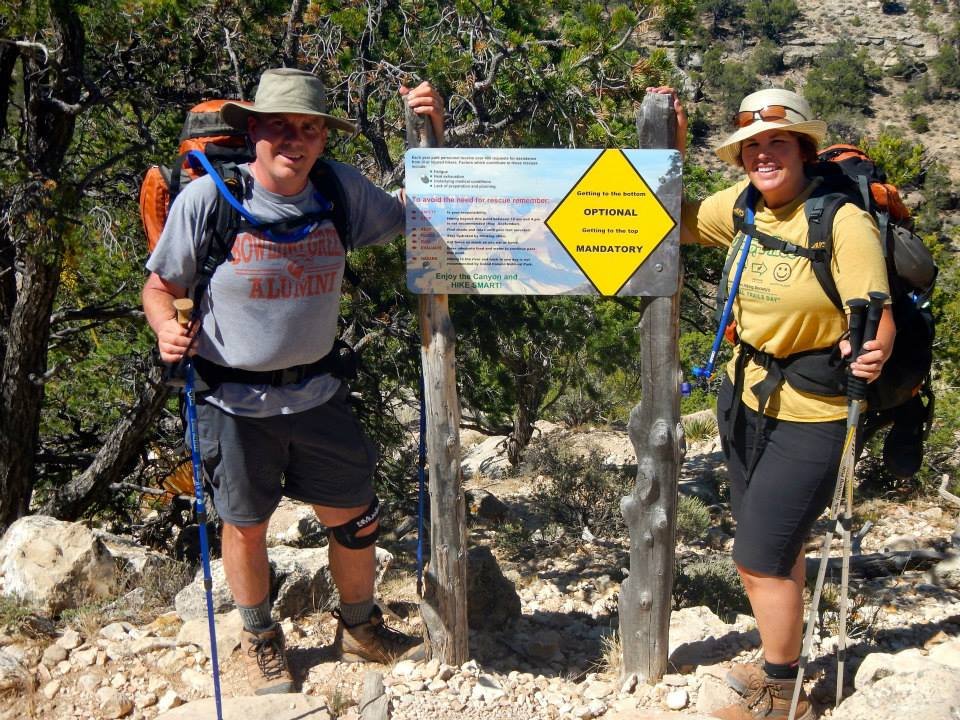
We had to abort a backpacking trip to the bottom of the Grand Canyon because Michelle had a heat stroke. Climbing down is optional, climbing back out is mandatory.

Leave No Trace

Don’t be the person who ruins the park for future visitors. Leave No Trace is a set of guiding principals that anyone who experiences the outdoors should follow. From the national organization’s website, the Seven Principles are:

  • Plan Ahead and Prepare
  • Travel and Camp on Durable Surfaces
  • Dispose of Waste Properly
  • Leave What You Find
  • Minimize Campfire Impacts 
  • Respect Wildlife
  • Be Considerate of Other Visitors
Camping in the pristine wilderness of Olympic National Park. It’s our responsibility to keep it that way.

Don’t Rush

Few National Parks can truly be enjoyed in less than a few days. Planning for a longer stay will deepen not only your appreciation for the nature around you, but allow you to take in everything that a region has to offer. Stop. Look, Listen. Smell, Hug a tree. Lay on the ground and watch the stars or the clouds. Wait for an animal to appear. America’s Best Idea is here for all of us to enjoy, what are you waiting for?

We awoke one morning to this elk eating breakfast over our tent in the Grand Canyon Village campground.

Where is your favorite National Park? Leave us a comment below and make sure you subscribe to see our new content each week.

The 5 Best National Parks and Why You Should Visit Them This Summer

Since the establishment of the first National Park at Yellowstone National Park in 1872 more than 1200 National Parks have been established around the world in more than 100 different countries. “America’s best idea” is certainly a great idea for your travel destinations and Michelle and I have made one of our travel goals to visit each of the U.S. National Parks.

The National Park Service (NPS) manages 418 individual “units” but not all of them are National Parks. They include battlefields, memorials, historic sites, lakeshores, and more. Currently, there are 60 National parks and we have visited 24 of them plus numerous other sites managed by the NPS. So here are, in no particular order, our top five National Parks.

Great Smoky Mountain National Park

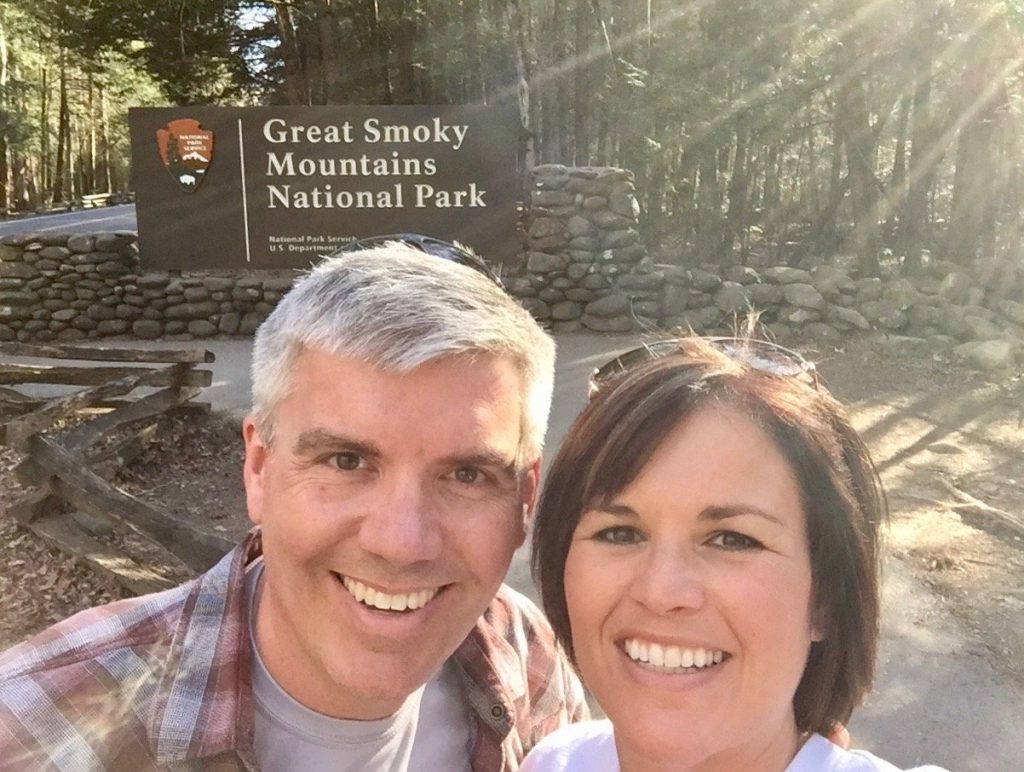
No, the name of the park is not spelled wrong! Though there is great debate in some circles on the spelling of the name, no one can deny that Great Smoky Mountain National Park is a magical place. For us, it is only a five and a half hour drive to the gateway city of Gatlinburg, so the Smokies are an idea long weekend getaway.

One of the many waterfalls along hiking trails within the park.

The area has something for everyone! There is phenomenal hiking anywhere you go in the park, from “scenic overlooks” that usually include a short trail to technical and advanced trails that take all day, anyone can find a trail that will challenge and delight. For backpackers, there are dozens of backcountry campsites accessible on one night or longers trips. And don’t forget the AT! The 2200 mile Appalachian Trail runs for 71 miles along the Tennesse North Carolina border through the middle of the park. Other highlights in the park include Clingmans Dome, an observation tower at the highest point in the park, biking or horseback riding in Cades Cove, nature drives along numerous routes, and wonderful campgrounds spread throughout the park.

Another draw for many families are the gateway cities into the Smokies. Gatlinburg, Pigeon Forge, Sevierville, and Townsend in Tennesee and Ashville and Cherokee in North Carolina are tourist destinations by themselves and some people never leave town (though that’s quite a shame)! From moonshine and wine tastings to shopping, casinos, and zip lining, the region has something for everyone year round.


Acadia National Park

Acadia National Park is simply put one of the most beautiful places that we have ever visited. Every view looks like it should be on the cover of a calendar. The trails are abundant with more than 150 miles stretching along the coast, up mountains, and through pristine forests. There are bike and boat tours available and you can be the first person in the US to see the sun each morning from the top of Cadillac Mountain, the highest point along the North Atlantic Coast.

You can reach the top of Cadillac Mountain by trail or car, but get there early, most mornings there are hundreds of visitors watching the sunrise.

From the quaint town of Bar Harbor, Maine, you can book sea kayak tours, stroll the quiet streets, and eat and sleep in places that look as if they haven’t changed much in the last fifty years (that’s a good thing, really). We only spent a few days in Acadia back in 2010, but it is at the top of our list for a return visit the next time we tour the East Coast.

The view overlooking “the bowl” on Champlain Mountain.

Zion National Park

It’s time to head west where the parks sprawl across deserts, prairies, and mountains. While many people are quick to sing the praises of the Grand Canyon (and it is spectacular), we would direct you to another giant hole in the ground – Zion National Park. Utah’s first National Park is one of it’s most magnificent!

The main canyon has two entrances, one from the city if Springdale and the other through the Mount Carmel tunnel.

Zion’s fifteen-mile long canyon sinks into the plateau to a depth of almost 2600 feet (only a third of the depth of the Grand Canyon) but because of its relatively small size you are always up close and personal with the canyon walls and the views are breath-taking!

The view of the canyon from the top of Angel’s Landing.

The top attraction at Zion is the hiking and these trails are not for the faint of heart. With summertime temperatures often topping 100º, hikers start early. The biggest advantage here is that most trails climb from the canyon floor, meaning you can go as far as you like and then turn back for the “easier” descent back to the road (as opposed to having to climb out of the Grand once you’ve already reached exhaustion). Trails range from moderate to insane with the most extreme hike being to the top of Angel’s Landing, a file mile out and back that climbs nearly 1500 feet straight up a rock that juts from the canyon wall. The trail is only a few feet wide in some spots with sheer drops on both sides and only a chain to hold on to for two-way traffic.

Angel’s Landing’s chains are not for the timid.

Another popular hike is the Narrows. The Virgin River becomes the trail as hikers squeeze through slots in the canyon, climbing waterfalls, and sometimes swimming through deeper segments. The effort is worth it in spots such as Wall Street where the canyon narrows to 20 feet wide and 2000 feet deep.

The Narrows is a popular hike in the summer heat.

The gateway city of Springdale has a Bohemian artist vibe with wonderful shops, restaurants, and much-needed air conditioning.


Glacier National Park

Heading north, we have to send you to Glacier National Park in Northern Montana. Camping, hiking, boating, cross-country skiing, and biking are just some of the popular activities in this inspiring park that shares a border with Canada’s Waterton Lakes National Park.

One of the trails in the Logan’s Pass area of the park.

Driving along Going to the Sun Road is a popular activity and the views are wonderful. Get out along many viewpoints and take a short walk along one of the many trails and you are sure to see wildlife. The lodges throughout the park are historic and an attraction alone.

We witnessed moose, bighorn sheep, mountain goats, bears, and marmots along the many trails we hiked.

Don’t forget to make a trek out to see the dwindling glaciers. Some scientists’ estimate that all of the glaciers in the park may be completely melted within the next ten years, so don’t wait!


Yosemite National Park

Rounding out our list is Yosemite National Park in Central California. Best known for its many waterfalls, Yosemite is a sight to behold. With more than 1200 square miles, this park is remote and anyplace in the park that you choose to visit is going to be a drive, but what a drive it will be!

Spectacular view of Yosemite Valley

Hiking is the main attraction here but rock climbing is also a very popular sport. On any search of a granite wall, you will likely find a tiny speck of a rock climber working his or her way up the rock face. This place is huge in its scale and awe-inspiring at every turn.

Plan ahead because some popular hikes, such as Half Dome, require a lottery entry to win a permit. If you can’t get one of those coveted permits, check out Clouds Rest, a 14 mile out an back hike that will take you through a wide range of Yosemite’s terrain and finish (at the turnaround point) with a stunning view looking down at Half Dome. This is a serious hike and not for those afraid of heights!

From Cloud’s Rest, Half Dome is visible to the right of center.
The hike to Cloud’s Rest can be nail-biting at times.

In the coming weeks, we’ll be talking more about our favorite National Parks with some guides to our favorite hikes and other activities while visiting. Let us know in the comments where you want to hear about from our National Parks Map below.

[wpgmza id=”13″]

Kayaking the Sea Caves of Lake Superior at Apostle Islands National Lakeshore, Bayfield, Wisconsin

One of the coolest things we did this past summer 2018 was to check out the Apostle Islands National Lakeshore by kayak. We were thankful this was scheduled for later in our trip because as of early and mid-July that year, the “sea caves” that we witnessed were still “ice caves.” We were there on a perfect 72-degree day in early August.

The company we chose to go out with was Lost Creek Adventures. They offer half and full day trips, as well as camping tours and SUP tours. We decided on a half day but will definitely do a full day trip next time. The half-day trip does an out and back vs. the full day trip starts in one spot but ends in a different spot so the views are always changing! The full-day trip is $119 a person and the half-day trip is $60 a person. They provide you with a wet suit, tadem seak kayak, basic kayaking instructions and a guide.

Which trip is right for you? If you are not an experienced kayaker, it is important to get some experience before you kayak at a destination location. The non-experienced kayakers can slow the group down significantly because they don’t know how to paddle and don’t have the stamina to keep up. If you have some experience kayaking, definitely try out the half-day trip. And if you are up for an adventure, the full day trip is fantastic and what we really wish we would have done.

If you have read our blog post on the Pictured Rock National Lakeshore, you know we love getting out in a kayak to view these natural wonders made of rock. There is something to be said about overwhelming the senses by getting in the water (or at least in a kayak) and touching the rock, going in a sea cave, and seeing the colors up close. At Pictured Rock they have a lot of colors but they don’t have sea caves. Check out the video below to see what I am talking about when I say, “sea caves.”

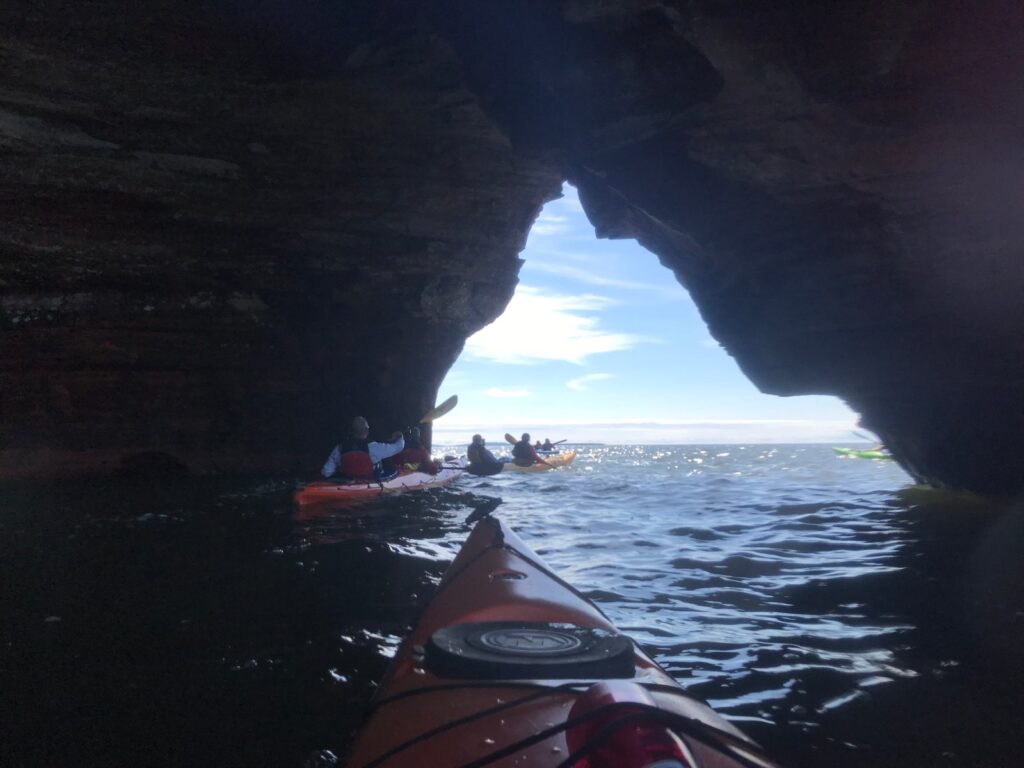
Entering our first sea cave

This was one of several sea caves we kayaked through. Some of the caves were quite narrow, some were open on top but quite high, and some we just zipped in and back out. The way these rocks have formed, and continue to take shape, is something everyone should see. There was one cave Brian and I chose not to go through because you had to lay your body flat against your kayak in order to get inside. We are not that flat and it looked way too intense for us. But everyone who did go it said it was cool, maybe next time for us.

It would be great to experience this in the winter months, which is most of the year in the Upper Peninsula of Michigan. I cannot imagine walking on this water but we sure would try if given the opportunity.

Inside a sea cave

The water was quite choppy, as a matter of fact, the Apostle Islands are known for the weather which is one of the reasons we suggest going out with a guided tour. The weather can change rapidly. It may look like it’s going to be a perfectly calm day but a storm can blow in from seemingly nowhere. We were very lucky that day and just had choppy water. Fortunately, the guide had a few ginger chews to help my unsettled stomach. Next time I will be prepared!

On the half-day tour you either get to see Romans Point or Houghtons Point, depending on the weather and wind. I think, and I should have taken better notes, but I think we went to Houghtons Point. If you can tell from the pictures and know which formation this is, please comment below. Thanks!

Inside a narrow cave with breathtaking color and height

This is someplace everyone should visit and there is more to do than just sea kayaking. We camped at Buffalo Bay Campground and Marina where there is also a hotel and casino, you can find out all about the campground, hotel, marina, and casino at the Legendary Waters website. We loved this campground! We were within a short walk from the hotel where we could use the showers, the indoor/outdoor hot tub, and the swimming pool. They only have 34 RV sites so I would encourage you to book early in the summer. You can rent canoes and pedal boats at the marina.

We fell in love with the little town of Bayfield, Wisconsin even though we had very little time there. There was shopping, a marina, and fantastic food! We spent most of our time in Joanne’s Scandinavian Store, grabbed lunch at The Fat Radish which had outstanding local food, and made sure to get out National Parks stamp at the Apostle Islands Visitors Center. We will definitely go back to Bayfield!

We hope this has inspired you to want to visit the Apostle Islands National Lakeshore. If you do, tag us in a photo at #cruisinwiththecolemans. If you have already been there, tell us what you liked during your visit!

Until next time, keep cruisin’!

My Favorite Things: Eating on the Camino de Santiago

You may not know this about me but I love food. I mean that I REALLY love food. Any time we travel, I spend a decent amount of time looking for local specialties and the best places to eat. That does not mean that we spend a lot of money on food. Yes, sometimes we will go to a fancy restaurant and drop a couple of Benjamins for a really nice dinner but some of our favorite and most memorable meals have been at dives that don’t know who Zagat is. With that in mind, my first Monday morning post that isn’t a recipe of the week is going to cover my favorite subject… FOOD!

Some of the most frequently asked questions we hear about the Camino deal with food. Do you have to carry your food? What’s the food like? How expensive is food? What if I have dietary concerns? What if I’m a picky eater? I hope to answer all of those questions here and assure you that you will not starve while walking on the Camino de Santiago, no matter how picky or restrictive your diet is.

First off, Michelle and I both try to live a relatively healthy lifestyle. We like to eat fresh, non-processed food as much as possible. We try to avoid excess sugar, but we will eat an occasional dessert and we both share a love of wine and cocktails. Michelle must eat gluten-free because of her Hashimoto’s disease (an autoimmune thyroid disease).

Going into the Camino, we knew that we were not going to be worried about counting calories. While walking 13 plus miles per day in the extreme heat that we were going to be burning plenty of them. One day I did do my best guess at tracking calories because I was curious and came up with over 3000. That said, we came back from Spain at nearly the same weight that we left home. The challenge was adjusting to not eating as much food as we had been used to while on the Camino and we each gained weight upon our return.

Upon arriving in Madrid after a long overnight flight, we were both starving. Once we navigated the Madrid subway and made our way to the Atocha train station it was time to find some food. We had done a little research ahead of time and new that there was a counter service fast food place that had gluten-free breakfast items. After a little searching, Michelle had a chocolate croissant and egg and cheese sandwich and I had a taste of my first bocadillo (not gluten-free). Our first meal was a success

Chocolate croissant, egg and cheese sandwich (both gluten-free), and breakfast bocadillo (not gluten-free) at the Atocha train station.

Finding food on the Camino is rarely a problem. Most days pilgrims pass through several villages and there is almost always at least one bar or cafe, and usually, several options are within feet of the marked path. Many albergues offer a pilgrim’s meal at dinner time for a small additional charge (€5-10). Before talking about dinner though, let discuss meals in Spain and how that fits into the pilgrim’s schedule.

Our first pilgrim’s meal in St. Jean Pied-de-Port

Breakfast in Spain is usually the smallest meal of the day and rarely consists of much more than toast (tostada) with butter and jam, pastries, and cafe con leche (espresso with steamed milk). Michelle sometimes was able to get rice cakes but often had to make do with a little fruit or an egg. Among the pilgrims we know, this is called “first breakfast” and you’ve probably already guessed that means “second breakfast” can’t be far behind. First breakfast was onfton included in the price of lodging.

First breakfast at a bed and breakfast in SJPdP.
Gluten-free breakfast option, if you’re lucky

Once we got through the Pyrenees, Spain was getting record high temperatures and in order to beat the heat, we were often leaving our albergue before 6 am. As a result, we needed to purchase breakfast the night before since most places to eat didn’t open until 6:30 or 7:00 a.m. Our breakfast of choice became a snickers bar and Monster as we walked in the dark. Not the best choice, but it helped in a pinch and we have a few ideas to help us when we are back on the Camino this June 2019.

After walking 5-8 km, most mornings we would come to our first village of the day and usually would run into a group of pilgrims sitting outside a bar or cafe eating second breakfast. Choices of food would range from tortilla and bocadillo to a more traditional “American” breakfast of fried eggs and bacon. We often spent less than €10 for second breakfast with two Coke Zero.

Lunch in Spain can be tricky for Americans. Lunch is typically the largest meal of the day and is often eaten at home but for pilgrims, everything closes down around 2 p.m. and doesn’t reopen until after 5 p.m. for siesta. If you arrive at your final destination for the day during that time, you will often not be able to find food because EVERYTHING is closed. We would typically get a similar meal to our second breakfast or if we were lucky, some tapas. Often by this time of the day, we would enjoy some amazing Spanish wine or beer if we were within the last 5k of our walk. The price here was often about the same as second breakfast, around €10 including wine.

Once we were done for the day, it was time to check into our albergue, hand wash our laundry, shower, and take a little nap. We were usually pretty hungry at this point and would often get a snack. Our go-to became a bottle of wine and Doritos for €5-8. So our not-so-processed lifestyle had gone out the window, but when you’re hungry you’ll eat anything!

Wine is often less expensive than soda. We often saw 750 ml bottles in the mercado for less than €1

Dinner in Spain is often not served until 8 pm or later, long after most pilgrims have crashed into bed. Luckily, along the Camino, most villages work hard to serve the needs of pilgrims and dinner is available after 5 pm. When an albergue offers a communal meal it is usually at a set time and if you miss it, there’s no food for you. Fortunately, there is never a shortage of bars and restaurants to serve every food need for the average pilgrim. We ate a wide variety of regional and local specialties from ranging from €8 to much higher. The most economical dinner option is the pilgrim’s meal or menú del día. This dinner was usually three courses and included wine or bottled water (learn to ask for “agua del grifo” or tap water). The first course could be soup, salad, or even pasta. The second course was usually some kind of meat with fried potatoes. The final course would consist of dessert. I was always sure to ask for “especialidad de la casa” or the house special. I was able to try such unusual dishes as tuna ragu, garlic soup, home-made cheeses, and even chicken curry. We did spend a little more on dinner many nights with our total usually coming in at about €20-30 for two bringing our food total for the day to under €60 per day for two people. If you want to know more about our Camino budget, check out Michelle’s post here.

There are a couple of foods that I have to mention because they are too amazing to leave out. Once in Galicia, seafood is found nearly everywhere, is the freshest that I’ve every eaten, and very inexpensive by American standards

Many restaurants, bars, and even hotels will often serve wine or other alcoholic beverage that they make in house. Orujo, Patxaran, and Vermouth are popular regionally, make for a nice aperitif, and were served after dinner gratis in some places!

Sometimes you just need to eat something familiar and in larger cities, you may run across American fast food. We saw KFC, Burger King, McDonald’s but only stopped once because they had gluten-free buns!

We never cooked our own meals, but many pilgrims do. Markets, supermarkets, and even farmer’s markets are prevalent but be warned, in smaller villages most are closed during siesta and on Sundays. This is a great way to save money and get to know other pilgrims.

If you have special dietary concerns, most restaurants will work with you to accommodate our restrictions. Make sure you learn the names of your allergies in Spanish so you can communicate with the server. Vegetarians will probably have the greatest difficulty as Spaniards love their meat, but we did run across many vegetarians who said they were far from starving. Michelle did not have too many problems eating “sin gluten” and only got sick once during our entire time in Spain from cross contamination.

Tarta de Santiago is a staple of the Camino and this almond cake is naturally gluten-free when made properly. Often in bars it isn’t.

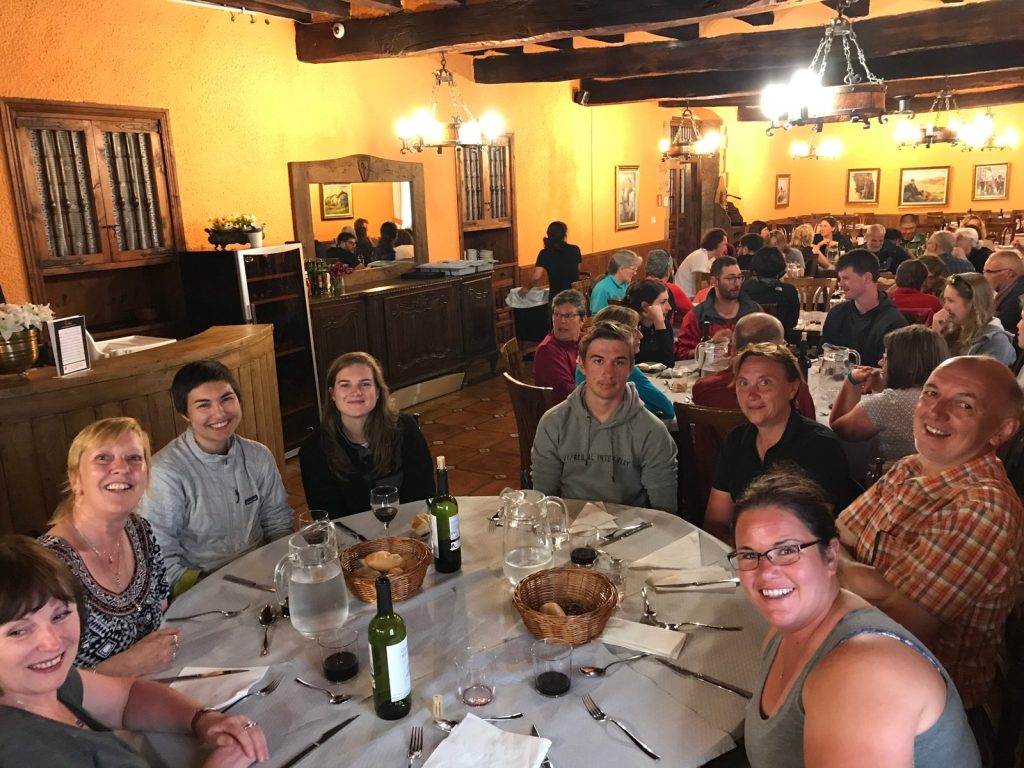
Never pass up an opportunity to eat a communal dinner, we met wonderful friends and had a great time, even when the food was only mediocre.

Communal dinner in Roncesvalles – the food wasn’t the best but the company was fantiastic

Finally, I can’t recommend enough to use common sense when eating in Spain, just as you would anywhere in the states. If an establishment looks dirty or seedy, don’t go in or leave. We never had any problems and NEVER felt unsafe while in Spain, but there were times we decided not to go into a bar or down a certain street because it didn’t look like our scene. Another thing to be wary of is looking for fresh food. We often didn’t go into places because they had a sign like this outside. All of the food pictured is premade, frozen food that is just reheated. Food is so inexpensive in Spain, why waste your time eating a frozen meal?

If you have additional questions about food or any other subjects on the Camino, let us know in the comments below. If you’ve been, what was your favorite meal?

Rock Bottom: Why I Almost Quit My Camino

When I look through the Facebook group, American Pilgrims on the Camino, I feel like I am the only one who wanted to quit. I know there are those who needed to quit because of physical problems, but somedays it feels like I am the only one who wanted to quit. Let me set it up for you.

Michelle on the Meseta after trying her first Tart de Santiago. She is all smiles.

We had been planning our Camino for about 6 years. We couldn’t contain our excitement the closer it got to our departure date. I, Michelle, am a Professor of Communication so the thought of interacting and engaging with people from all over the world filled me with joy. We are hikers with 10 years of hiking experience including quite a bit of long-distance day-hiking and some backpacking so we were looking forward to the physical elements of the walk. I was a bit anxious about the food because I have an auto-immune disease, can’t eat gluten, and I am a bit of a picky eater but hate to admit it. Though I tried to have an open mind and share Brian’s enthusiasm for embracing food culture, I quietly struggled with the thought of it. Though it took forever to get there, June 2017 arrived and we set off on the Camino filled with excitement and a small case of anxiety.

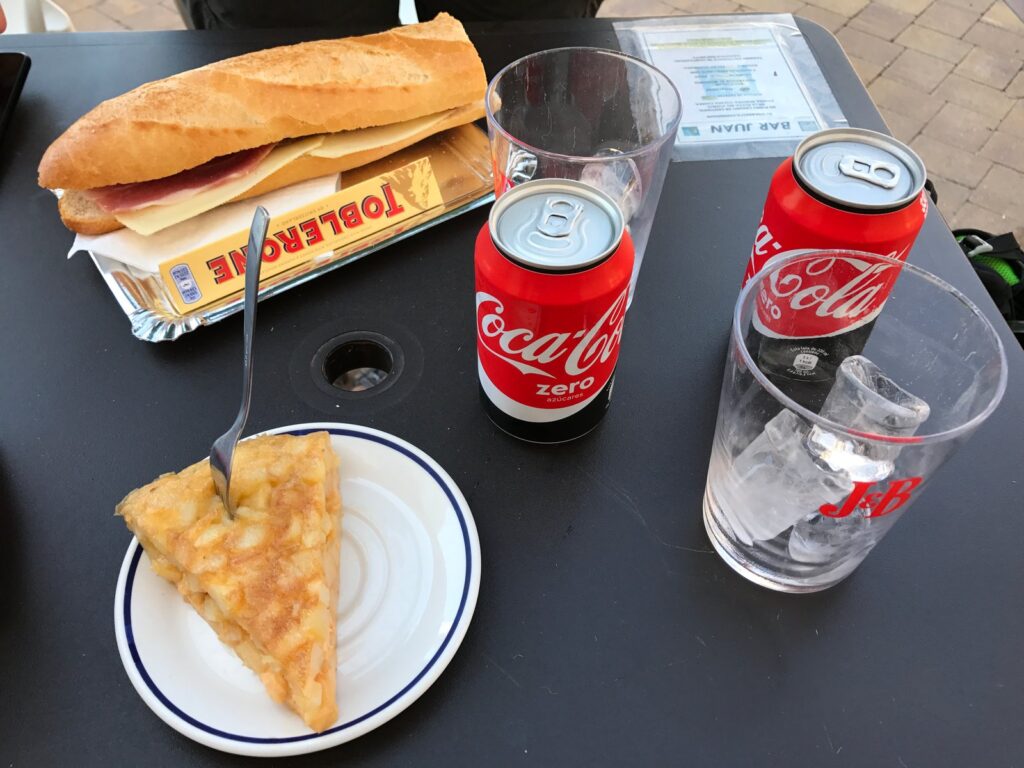
“Second breakfast” Spanish tortilla for Michelle, Bocadillo for Brian, Toblerone to share, and Coca-Cola light

I took the photo above of our first “second breakfast” as it’s affectionately called on the Camino. Second breakfast is what you have after hiking about 5-10 km. First breakfast is typically bread and coffee. So begins my first challenge, I can’t eat bread and I don’t drink coffee. I wish I liked coffee, I do, it’s just not my flavor so I usually found a Monster energy drink at a store the night before and started my day with it. Next, I initially loved Spanish tortilla. It’s eggs and potatoes, what’s not to love. On a side note, Brian wasn’t a big fan of bocadillo, he called it a baseball bat of bread with a thin layer of ham and cheese. Fortunately, Brian usually had a lot of other choices. But this isn’t why I wanted to quit the Camino.

Hiking early in the morning to beat the heat

Challenge number 2, oh how we both hate early mornings. We had to leave our albergue by about 5:30 – 6 a.m. for most of our Camino because Spain was experiencing record heat. When we didn’t leave so early in the morning the heat was so bad we had to quit early so leaving early was a better alternative. But this isn’t why I wanted to quit the Camino.

Laundry, Camino style

Then there is doing the laundry by hand, day after day. After a long day of hiking in the heat, all I wanted to do was take a nap. Brian had to talk me into showering and washing the clothes with him before passing out on the bed. Some days it took a lot of convincing. But that is not why I wanted to quit.

I don’t know where my husband got so much energy but his drive to see every inch of every town after hiking an average of 13 miles a day and hand washing our laundry astounded me. He was so happy – all the time – happy. I was tired, exhausted, crabby and weak. That is why I wanted to quit the Camino but I hadn’t hit rock bottom yet. I felt so inadequate. It wasn’t Brian’s fault.

I also felt very isolated. I didn’t have anyone else to talk to on the Camino. We were hiking together, so yes we had each other, but after Pomplona, we went for several days without meeting anyone who spoke English. Feeling isolated in our room one night I even looked up flights. I was ready to max out a credit card and fly home the next day. Brian convinced me to give it one more day and if I wanted to quit he was ready to come home with me. What? He would quit too! Ugh, the pressure of not wanting to end his Camino. But I agreed to give it one more day and I was convinced we were going home.

I really don’t remember the next day except that it wasn’t as hot, the shade was plentiful, the hills weren’t too bad, and we walked into a town to have second breakfast only to find a group of pilgrims all speaking English. The signs were everywhere, I knew by the end of the day we were to continue walking on the Camino.

I was re-establishing a good rhythm on the Camino again until our third day on the Meseta and our 17th day of walking. The Meseta is a week-long stretch of flat hiking from Burgos to León where you feel like you can see the entire week ahead of you because it is so flat. It is also normally the hottest part of the Camino but for us, it was the coldest, wettest, and windiest part. We had awful winds, up to 25 mph.

Then we walked into Carrión de los Condes. When we arrived, we walked into a convent where cloistered nuns were sitting in the back singing. It left us speechless. A fellow pilgrim was sitting in a pew, crying, so I sat with her. Later that evening she saw us again and she told her friend that we were her angels. Apparently, we helped her out a few different times but didn’t realize what we did was so meaningful.

“The singing nuns” who asked that we don’t show their faces

That evening we met a different order of nuns who are affectionately called, “the singing nuns.” We knew this was an evening we could not miss. There was also a priest who we had been following on and off all day. We first met him chanting in a church earlier that day. He brought us to our knees in that church. That evening he led mass and we learned he was from Poland, delivering the mass in Latin, Spanish, and English. Wow.

The best part of the evening was when the nuns asked everyone why they were walking the Camino. When they learned we were walking to celebrate our 10 year wedding anniversary, they dedicated a song to us. Sobbing in an overcrowded room full of strangers, I realized this was my rock bottom. I knew I needed to continue on the Camino. I had to complete this walk. I felt so broken and so energized all at the same time. We left that room full of friends to find our dinner and ran into a group of Spaniards celebrating a reunion. They invited us to dance with them. I wanted a do-over with the energy I was feeling that evening. I started my Camino over again the next morning, renewed.

It was that evening when we opened ourselves up, sharing our story with strangers, that everything changed. From that day forward we met friends from all over the world, people we are still friends with today. I don’t know what took us so long, but I am so very thankful for that evening and finally hitting my rock bottom.

Leaving my burdens at Cruz de Ferro

Only a short 8 days later we left the weight of our burdens at Cruz de Ferro. We even shared this moment with two new friends from Hawaii who kindly took the photo above. Please don’t wait to connect with people. They are a big part of the Camino. I continued to struggle with the food, hand washing the laundry, and heat exhaustion, but I had new friends to help us along the way as I hope we helped them.

Brian, my partner, best friend, husband

I am thankful to have Brian walking by my side. We pushed each other, lifted each other up, and we know when it’s time to be patient with one another. It is my hope that you have someone to walk with along your Way or find someone faster than I did.

Buen Camino friends, see you along the Way!

Recipe of the Month – Mexican Chicken Soup

Yep, you read that correctly, the recipe of the week is becoming the recipe of the month so that we can focus on bringing you more content in other areas, such as Camino planning and recaps of some of our best previous adventures.

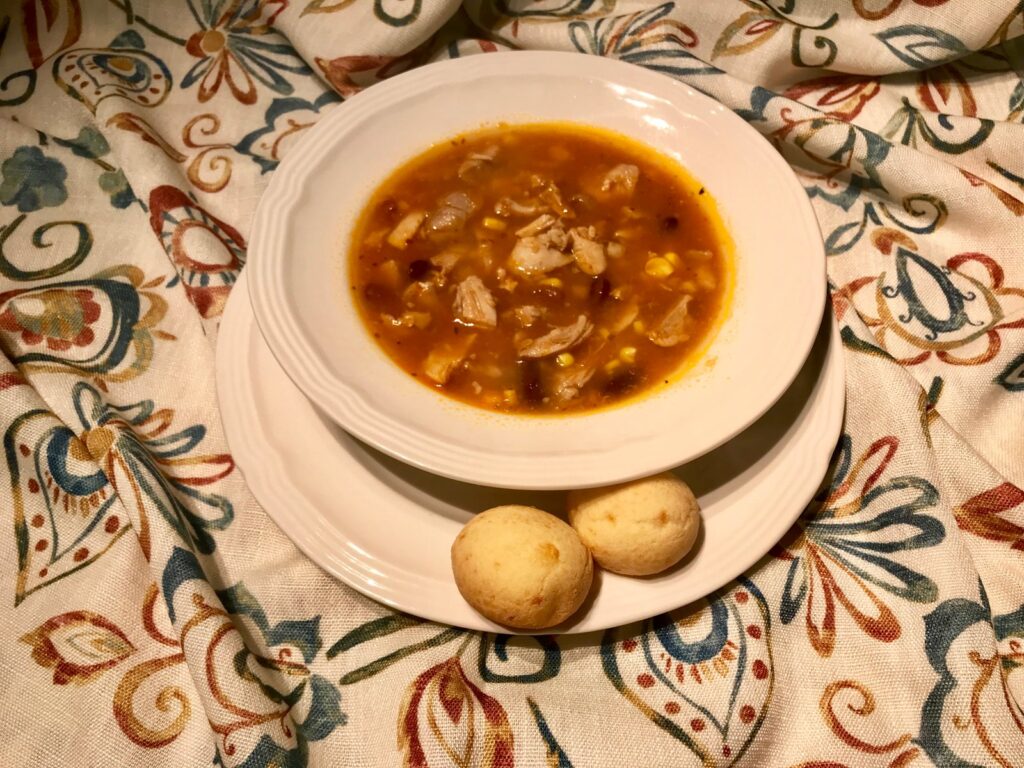
With all of the cold weather we have been having lately, I’ve been making lots of soup. It not only warms the stomach but also the house! I love this recipe but it’s not ours, we have to thank Laurie (one of Michelle’s colleagues) who found the recipe on Cooks Country. On a side note and a fun fact we learned that Laurie has diligently subscribed to Cooking Light magazine since its inception 40 years ago and was one of their first subscribers! The soup has just enough kick to warm you up on multiple fronts. Of course, you could adjust the spicy heat up or down depending on your preferences.

Begin by bringing six cups of chicken broth to a simmer in a large pot and add about a pound and a half of chicken thighs to poach for 15 minutes.

In a food processor, combine half of a large onion, a can of diced tomatoes (or Ro-tel tomatoes with you like things on the spicy side), half (or more) of a seeded jalapeno pepper, four cloves of garlic, one canned chipotle chili and a tablespoon of the adobo sauce it’s packed in, and a teaspoon each of salt, pepper, and cilantro. Pulse the whole thing until it is smooth and well pureed. If I had any tortilla chips in the house this is probably as far as I would have gone because it looked and tasted like a smooth salsa at this point.

Remove the chicken from the pot and set aside to cool. Pour the broth into a container to skim the fat off the top.

In the same pot, heat a tablespoon of oil and add the “salsa” to the pot. Let it simmer for five minutes or so to cook the “green-ness” out of it and allow the flavors to combine.

Skim the fat off the broth and add it back into the pot along with two cups of frozen corn and a can of rinsed and drained tri-blend beans (or kidney, pinto, or black beans). Allow the soup to come to a boil and then reduce the heat. Simmer for 15 minutes. Meanwhile, run a knife through the chicken to cut it into bite-sized pieces. Take the pot off the heat and add the chicken and two tablespoons of lime juice. Taste and adjust seasonings if needed (I added a little more salt).

Top the soup with diced avocado, slices of fresh or crispy tortilla, or a little cojita or queso fresco. We served it with pao de queijo, which are amazing gluten-free cheese rolls.

Mexican Cheese Soup

  • 6 c chicken broth
  • 1 1/2 pounds chicken thighs
  • 1/2 of a large onion
  • 1 t each salt, pepper, and cilantro
  • 1 can of diced tomatoes (get the kind with chilis or jalapeno if you like)
  • 1/2 jalapeno pepper, seeded
  • 4 cloves garlic
  • 1 canned chipotle pepper plus 1 T adobo sauce it’s packed in
  • 1 T oil
  • 2 c frozen corn
  • 1 can beans, any variety, drained and rinsed
  • 2 T lime juice
  • assorted toppings such as diced avocado, Mexican cheese, or tortilla strips

Bring chicken broth to a boil and add chicken. Simmer for 15 minutes until the chicken is done and there is no pink remaining.

In a food processor, combine onion, spices, tomatoes, garlic, and peppers and pulse until smooth.

Remove chicken from pot and set aside to cool. Pour broth into another container to skim fat once cooled. In the same pot, heat the oil and add the tomato mixture. Simmer for 15 minutes over medium heat to combine flavors.

After skimming fat from broth, add back to the pot along with the corn and beans. Bring to a simmer and cook for 15 minutes. Shred the chicken and add to the pot at the end of cooking along with the lime juice. Adjust seasonings if needed.

Let us know if you try this recipe or any other recipe we have posted! Tag us on Facebook or Instagram with the hashtag #cruisinwiththecolemans! We’d love to hear from you!

★ 25 years guiding ★ 48 U.S. states ★ 10 countries ★ 3,000+ Camino miles