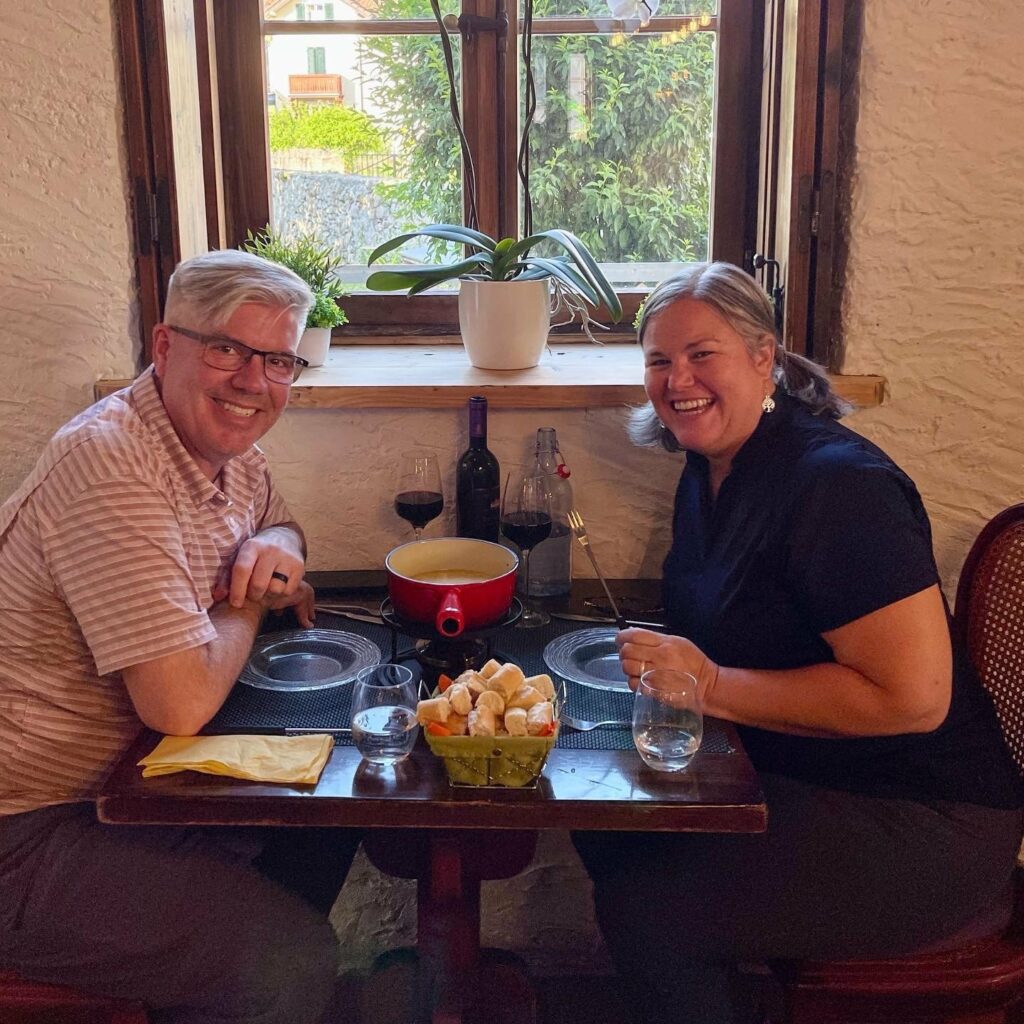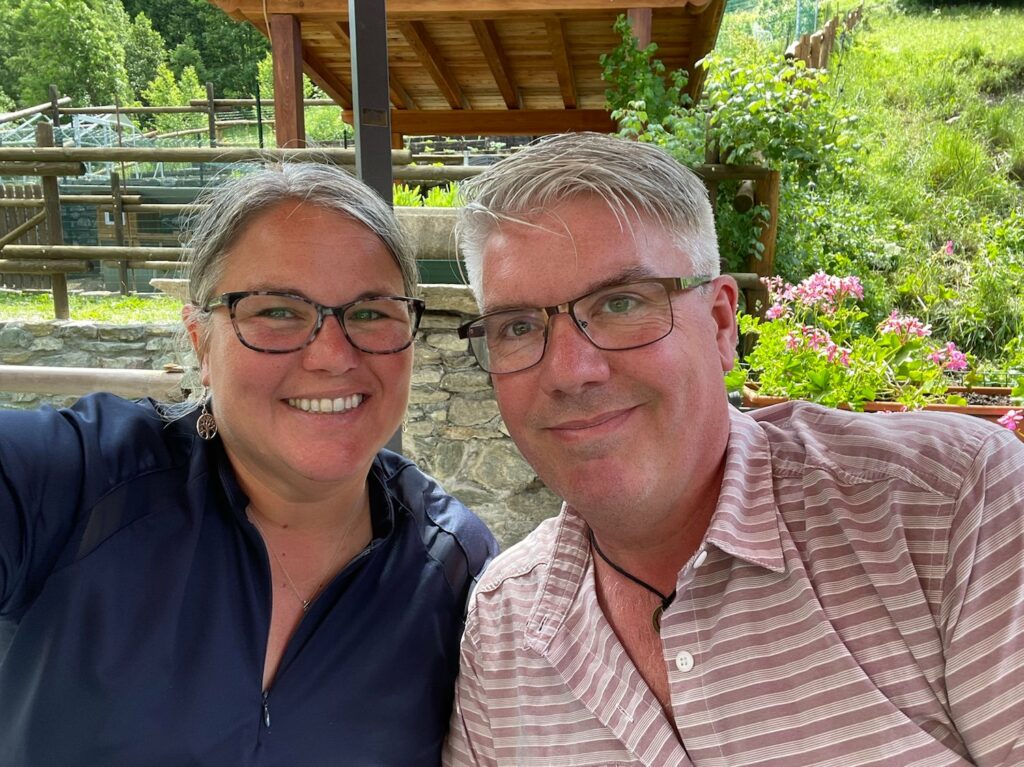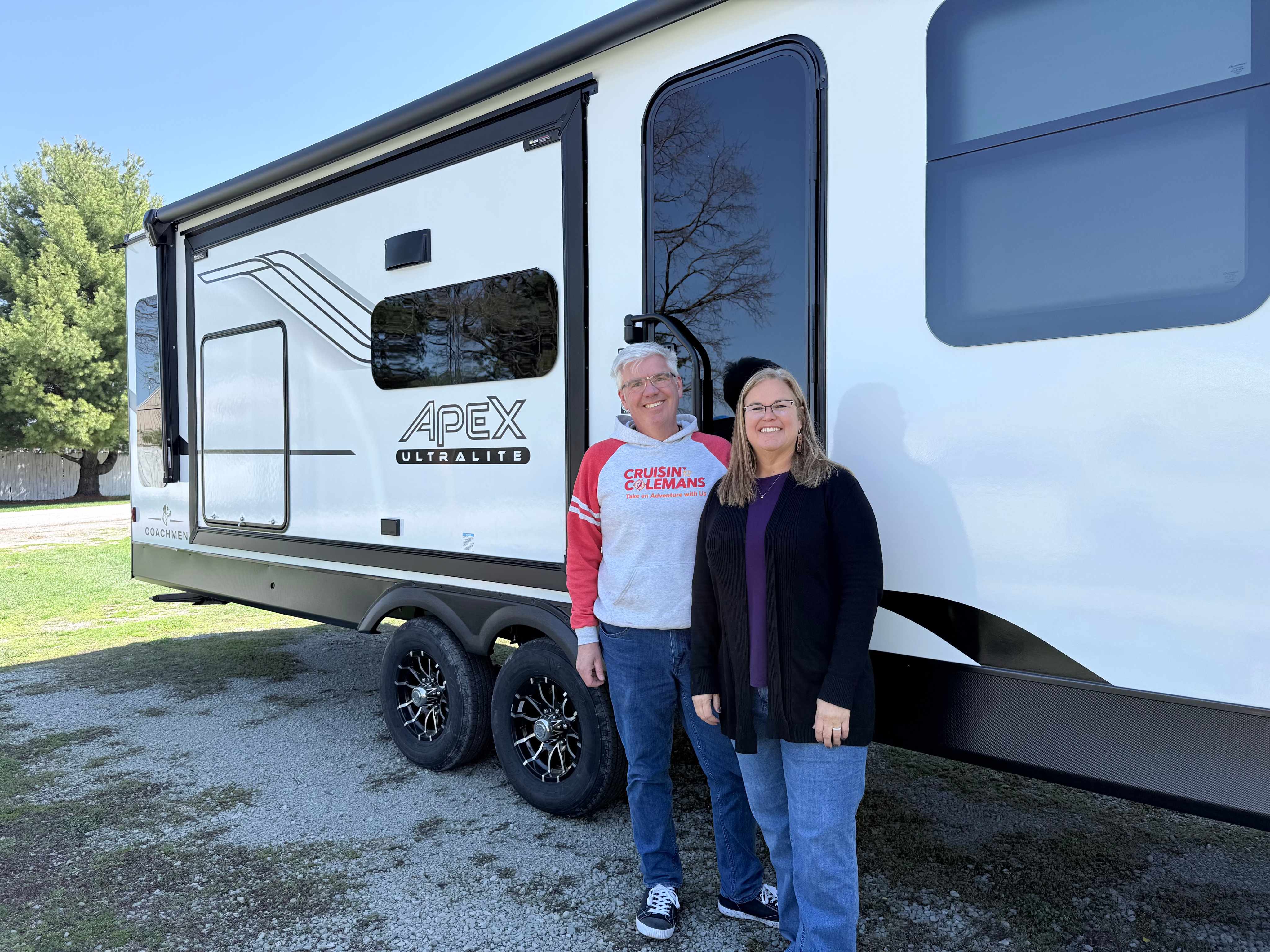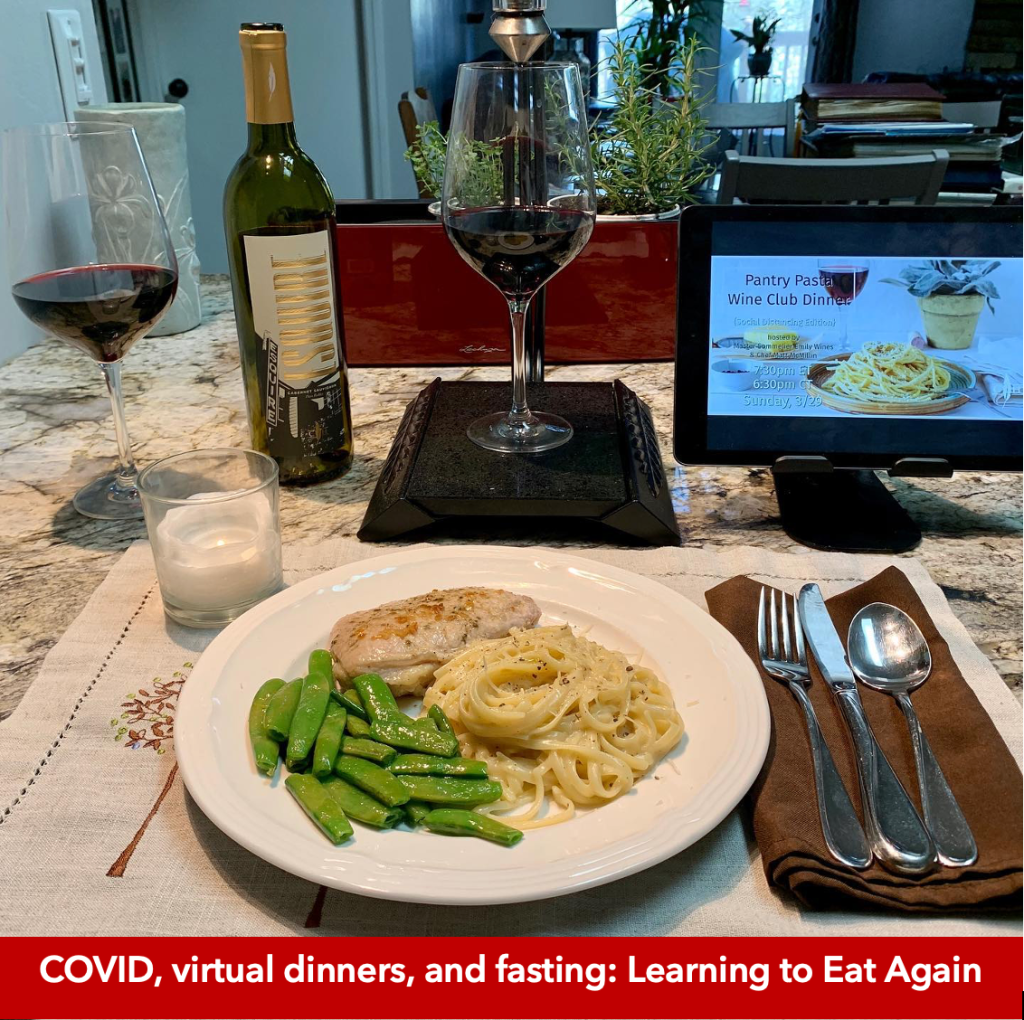
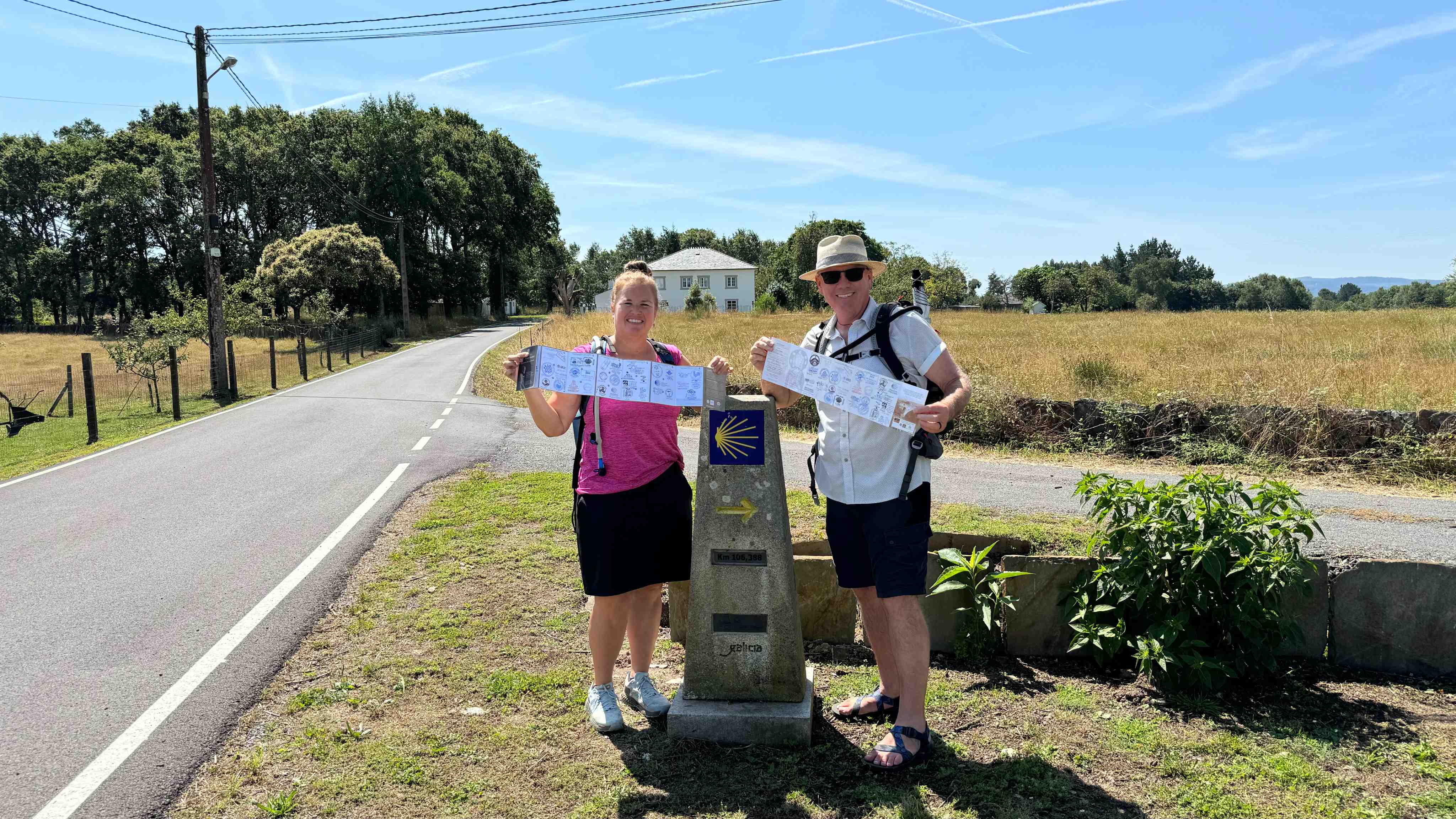
Oh how I wish we were the best of friends. The pastries, the pizza, the pasta, the bread, Lord have mercy, the bread. I want to have a relationship with these foods like no other relationship I have had before. Sorry, Brian but you get me.
Italy makes pizza right!
I don’t want to linger on this discussion because I made a decision many years ago that my life will not be defined by whether or not I eat gluten. But I do think it’s an important topic for those who care to understand how I manage my food allergy.
Let me take you back to our first pilgrimage in 2017 on the Camino Frances in Spain. I ate zero gluten the entire trip and, with regards to food, I was miserable. I hated missing out, I hated have to explain my food allergy to every sweet person trying to give food to a hungry pilgrim, but most of all I hated being defined by my food allergy.
In 2019 when we walked part of the Camino France and all of the Camino Portuguese, I decided food allergy be dammed, I am eating whatever I want. LOL My body said, “Oh you want to play that game, let me show you who’s really in charge.” Guess what? It’s not the mind, it’s the stomach. I paid a hefty price on that pilgrimage. I had breathing issues, anxiety, and the horrific, constant wheat belly. When I eat gluten, my belly protrudes and makes me look very round in the middle until is processes through my body at a snails pace as it impacts my breathing. I didn’t want to believe the gluten was to blame, denial was much easier to manage.
Fast forward to when we decided to go on another pilgrimage. I spent the year working with my doctor to ensure my heart and lungs were functioning well (since I developed breathing issues). I got a colonoscopy where my doctor did two different tests for celiac disease. He confirmed that I do not have celiac disease. Well, there’s a win!
I went to my allergy doctor, we decided to go ahead with a food allergy test. Guess what? Dang it, it was confirmed that I am allergic to wheat. Not the, “you will go into anaphylactic shock,” type of allergy but one step down, a moderate allergy. I already knew that but my mind needed the confirmation. Now what? I am going to Italy! I am eating the pasta! Ughh!! But I will not let my food allergy define me.
Oh the pasta!!
I did some research and found a gluten relief pill to help ease the pain my body goes through to process wheat. Click here to see what I use.* It’s not a perfect system, but as long as I take it before I eat wheat, my body processes it a bit faster. I still have a bit of breathing issue and my belly still protrudes some but it helps the wheat process faster.
On pilgrimage, the greatest problem is that we are at the mercy of those who are providing food for us. Some places we stay only have bread and coffee for breakfast as that is typical for Italians. I am not going to hike on coffee alone. See my blog, “I’m Hungry and I Don’t Want to Talk About It.” Therefore, I avoid gluten when I can, I take the preventative pill and eat it when I have to do so.
Life is a delicate balance of choices whether you have a food allergy or not. Sometimes we eat too much, drink too much, and that’s just life. My allergy will not define me, it’s just part of the consideration when I make choices. I can feel a life lesson in there, can you?
On this day, I found gluten free snacks! And a cappuccino with chocolate. 🥳
*We are a participant in the Amazon Services LLC Associates Program, an affiliate advertising program designed to provide a means for us to earn fees by linking to Amazon.com and affiliated sites.
Right now my biggest struggle is food. There never seems to be enough of it. The Hospice we stayed at last night included breakfast. Unfortunately that breakfast was a few day old piece of bread with butter/jelly and tea. Neither one of us could finish our bread because it wasn’t sitting right. We planned to have “second breakfast” at our first town 5 kilometers into our walk. Unfortunately, maybe because it’s Sunday, nothing was open. We hiked on to the next town where we found a bar. At the bar we could have cappuccino, liquor, or packaged muffins. We skipped the liquor. For a moment, I was ok.
We planned to stop for lunch in Etroubles but it was down pouring rain, thundering, and at times we had hail, so we pushed on another 3 km to our destination for the day. We stopped at our accommodation to shower and put our bags down but nobody was home. We tuck our bags into a corner, walked down the big hill to the one restaurant in town. It’s sure to be open because there are a ton of cars.
We approach only to see a handwritten sign on the door, chiuso, closed. Noooo!!! I am starving! A gentleman comes to the door to tell us they are having a family reunion today, “maybe we can come back about 8 p.m. for dinner.” It’s 2 p.m. now. Since it’s a tiny village we ask about our accommodation. He tells us that our host is his brother, he will get him. Thankfully his brother drives us back up the hill, settles us in, and tells us about a restaurant at the last town back if we want food. It’s a 25 minute walk, one way. He made some joke about wine but I wasn’t willing to listen. I smile politely. I’m hungry and I don’t want to talk about it.
Let’s talk about our hiking day! You know the saying, “What goes up, must come down!” And boy did we climb down. We descended just over 1,200 meters (4,100 feet) in 15.4 kilometers.
The scenery was just as stunning with wildflowers in abundance. We even saw a mountain goat frolicking up the mountain. Check out our TikTok videos for about the same glimpse of him that we had!
The rain was intense but didn’t last long. All in all it was another spectacular day on pilgrimage. I just wish there was more food. Ok, I guess I want to talk about it again. We have completed a pilgrimage in Spain, the Camino de Santiago, and in Portugal, the Camino Portuguese. There was always plenty of food. By looking at me, I will survive without food for a day, probably more, but I am not as much fun to be around, just ask Brian. Haha.
It’s 6:30 p.m., Brian and I are distracting ourselves with writing/video editing, social media, anything but food conversations. The owner of our accommodation comes home. We settle up the bill, arrange a time for breakfast, and ask if his parents are open for dinner. He says yes! We arrive and there are 5 pilgrims already eating and laughing! What? We are late for dinner! I guess they know what time, “maybe 8 p.m.” is code for in Italian.
Finally, an outstanding dinner!
Alas, we have an outstanding meal of homemade pasta, pork and potatoes, salad, wine, tiramisu, and homemade grappa. A meal literally sent down from the heavens. I am no longer withering away, my belly is full. We will both sleep well tonight! It’s our biggest day of hiking yet tomorrow and are guaranteed a farm fresh breakfast. Tomorrow is going to be a good eating day, I just know it.
I know some of you want me to talk about the gluten issue and I will. I am just not ready to talk about it yet. In short, I am avoiding gluten when I can, taking preventative measures when I can’t. The bottom line is “wheat belly” or not, I have to eat. And yes, you can see in some of our videos when I have the unfortunate “wheat belly.”
I really don’t want to tell you about our choices today but I am not going to worry about what you think. Our goal was 14.7 miles. We knew today was going to be tough for a couple of reasons.
First, as always, I am having foot issues again. UGH I am beyond irritated that I still have problems and my podiatrist will hear about it next week. This time it’s swelling on the foot I injured on our 2017 Camino and blisters on a couple of toes. Don’t get me started on shoes, I have tried them all and enough said on this issue. Next, it’s the 5th day in a row of massive training miles. We are exhausted. We thought a little bump this morning with our friend dropping us off 2 miles ahead of where we started would help, and it did, but that motivation didn’t last long.
By the time we got to our lunch stop after 7 miles of walking, we called it quits. I have no regrets. I took a nap, enjoyed wine, we walked a mile to dinner and a mile back. We walked 9 miles today. And, as a bonus, we had gorgeous weather to sit out and enjoy.
The Sycamore trees have been stunning all along & today the buttercups guided our way
Tomorrow will be our longest day yet at 15 miles. I am ok with calling an Uber. Having an escape plan makes everything a bit easier as we talk about in today’s YouTube video. I am excited about our lodging tomorrow but that’s for tomorrow’s blog post.
Today I will leave you with these photos from our dinner. We ate at a fabulous Italian restaurant with an impressive gluten free menu. It was as close to true Italian as we’re going to it. If you’re in Loveland, Ohio, gluten free or not, to to Rodi Italian Restaurant. Look at the photos and you’ll understand.
A dinner to fuel the soul from Italy. Now, that’s motivation!
Today’s totals: 9 miles walked, 2 without backpacks; 2 miles in a car thanks to our friend, Lance, and 5 miles in an Uber, thanks to Lavon. Money spent: Too much with an Air B&B, two meals, and wine. I’m going to leave it there.
Food is not in a pill. It’s not in a juice, a bar, a powder, a diet label, and it definitely is not in a pill. Food is real. It is crunchy, flavorful, chewy, colorful, and can bring people great joy. We need food to live and it is meant to be enjoyed. If you eat something because a diet plan tells you to eat it and it doesn’t bring you joy, I get it. I have been eating foods that I don’t enjoy for too long. Guilt and food describe my life in short. Until January 2019 when I decided to try eating without guilt.
Food is meant to be enjoyed.
I wish I could remove all guilt. Unlike other life experiences, guilt doesn’t do us any good. It makes some of us eat more. It can make us crave unhealthy food and drink. We think food/drinks will make us feel better, remove the guilt, but it does nothing but make us feel worse. This is the story of my entire life – eat, feel guilty, eat more, drink something to ignore the guilt, continue this never-ending cycle.
Disclaimer: We talk openly about food addiction and are well aware of our keenness for food. We continually work to redefine our food relationship. We don’t have an addiction to alcohol. We have traveled the world, and unlike in the US, most of the world takes a different view on alcohol. It’s ok to have a glass or two of alcohol with dinner, maybe have an occasional night with more. It’s not ok when your body craves it, can’t get enough of it, and you can’t stop drinking when you start. I lived with an alcoholic. It was painful to watch the destruction. I never wish that addiction on anyone. Brian and I love to enjoy good wine, creative cocktails, and we know our limits. We consciously take time off from alcohol. For example, we typically take 4-6 weeks off at the start of the year for a good cleanse. As of this post, we are on week 4 of “dry January,” we haven’t decided when we will start drinking again, and I promise, we will be talking more about alcohol in another post. For now, back to food!
When I found intermittent fasting (IF), the prison walls of guilt eating started to crumble. They still stand but there are huge cracks in my prison cell. To read about how my IF journey started, click here and read post one in this series. I don’t know if I will ever be paroled from guilt. I feel guilty for what comes out of my mouth, what goes into my mouth, and much more. If you don’t struggle with guilt, I wholeheartedly commend you. I am not here to talk to you about where my guilt comes from, my therapist holds the key to that web, but I do want to tell you about how the prison walls started cracking and the bars began to open. Though I haven’t always practiced IF “correctly,” I have seen I can eat one or two meals a day without my warden, guilt.
I vividly remember when I started IF in mid-January 2019 because I gave myself permission to eat whatever I wanted as long as I only ate one meal a day. I was in love with my new regimen. For the first time in my life, I ate whatever I wanted without guilt. It was like the warden let me have a taste of the great outdoors. Mind you, Brian had not started IF but he was thrilled when I would text him and ask him to bring home pizza. He was curious as to how I was eating our favorite foods for dinner and losing weight. I am confident it is why he so quickly jumped into practicing IF himself. Who wouldn’t? Since we were already denying ourselves wine because it was “dry January,” then pizza, tacos, and burgers were the perfect substitutes. Another Disclaimer: I am not a medical doctor, rather I am just sharing our journey. If you read the first two blogs in this series, you know that we haven’t practice IF “correctly,” and ultimately, we didn’t lose any long-term weight but we did maintain our weight which was, at the time, a major victory.
Something was working with this practice of intermittent fasting. I lost weight in the beginning, Brian did too. What we now understand is that it wasn’t our time for weight loss. First, we had much to learn about eating without guilt. We had to in essence give ourselves permission to just eat because we had been dieting since our marriage started. But let’s get back to 2019. February came too fast, we started to add wine back in with many evening meals. March and April came even faster and we got busy with Brian’s musical (something we produce together for Brian’s high school students). We loosened up the one meal a day and started having a snack and a meal. Then summer came. If you don’t know, we spend our summers adventuring either in our RV or on the Camino. In 2019 we walked the Camino which you can read about here. We planned to walk 10-15 miles a day so we worried that we needed to eat more. We still practiced IF but we only skipped breakfast. Further, we drank way too much of that beautiful Spanish wine and indulged in too many plates of mouthwatering Portuguese pastries. We were on a two-month holiday and it was wonderful.
However, once those habits changed to a wider eating window it was excruciating to go back to one meal a day. In fall 2019 we stuck with eating two meals a day and have been practicing that ever since. In 2020 we continued to fast for about 18 hours a day, eating lunch, snacks, and dinner in a 6-hour window. You would think it would lead to weight loss if you have read about intermittent fasting but you don’t yet know what we ate in that window. 🤣 I’m getting there.
For the most part, our previous weight loss success was by following Weight Watchers. We learned we should eat 6 or 7 times a day to “keep our metabolism up.” That’s a truckload of crap, people! A truckload of full-on crap! All that eating plan did was make me feel deprived, tired, and upset that I would only ever eat tiny, unsatisfying meals. The worst of it: Not only did we believe we needed 6-7 meals a day but we told others they did too. We told people breakfast is the most important meal of the day. More crap! I want to genuinely apologize to each person we fed that information to in the past. I am deeply sorry. Breakfast means to “break your fast.” It is not the most important meal of the day, that is just what cereal makers want us to believe. Read this blog on Dr. Jason Fung’s website, or this one on the calorie debacle, and then read his books (linked below).
Why do we still practice intermittent fasting if we haven’t lost weight? Because we both feel a thousand times better than we did on weight watchers or not following any eating plan at all. We eat real food. We eat food that feeds the soul. We eat food without guilt. In 2020 we tried eating Keto. It’s ok but I love bread. I already have to eat gluten-free for my gut health. I have been gluten-free since 2013 and my gut is much happier. Managing my PCOS and Hashimoto’s well means being gluten-free but that’s another story, for now, back to bread… mmmm! We lowered our carbs and were feeling good but we both refuse to ever go back to counting anything. We are not now, nor ever, going to count calories, carbs, fat, or anything. We want to eat (feasting), we want to not eat (fasting). That’s it. We never again want to agonize over anything or any number again. We did that for too long and we weren’t happy. But yes, we started settling into a decent low carb life, we were feeling good, and then COVID happened in late March 2020.
COVID cocktail hour while our Governor provided daily briefings
Here’s how the rest of 2020 eating looked: Open our eating window with a cocktail hour, eat lunch, continue the evening with more cocktails or wine, eat a hearty dinner, and maybe have a dessert. In our six-hour eating window, we enjoyed delicious food and mouth-watering drinks. We managed our feelings and isolation the only way we knew how – to eat and drink. But that’s ok. Our world was experiencing a major crisis, we were all coping. Ultimately our clothes got a bit tighter, we were putting a band-aid on our feelings, and the happy train left the station without us. Something was different though. We weren’t gaining weight as fast as we would have in the past. Every time we pulled back on the cocktails, cut out the snacks and dessert, tighten up our feasting window, our bodies said thank you and we dropped a couple of pounds back off. We didn’t miss the lesson here but summertime was upon us. We spent the summer in our RV traveling out West avoiding people as much as possible while still adventuring in our national parks. We continued our somewhat ridiculous eating and drinking in a six-hour window but because we were doing a lot of walking and hiking, our clothes loosened up a bit more. YAY! We finished our summer trip at pretty much the same weight that we had started it, how often can you say that after vacation? Especially one that is two months long. Not us.
Intermittent fasting was working, there is no doubt about it. However, both of our doctors reminded us that we needed to give our livers a break and be a bit more thoughtful about what we ate. My blood pressure was high, Brian was diagnosed as pre-diabetic. It was time to put on the brakes and rethink our priorities just in time for Christmas indulgences. It was time to start with the basics about IF again so we turned to audiobooks and podcasts while driving to Tennessee to spend a quiet holiday in the RV. We listened to Eve Mayer’s book, Life in the Fasting Lane. We listened to Dr. Fung’s podcast. We worked on setting S.M.A.R.T. goals, focused on reminding ourselves why we love IF, and figured out how to do it better.
I am learning to walk out of my guilt prison. I am learning to lose while winning!
The prison walls of guilt have been crumbling since we started IF in 2019. In order for them to be gone forever, I have to learn how to balance between eating what I want, eating what is good for me, and figuring out what I can live with forever. I have learned to eat without guilt but learning to eat well and lose weight is a process. I have learned how to maintain weight and that is our biggest win thus far on our two-year IF journey. A win I am proud of because I never maintained my weight before on any diet plan. I was never happy on any diet plan – period! Losing weight is easy when you are on a diet but maintaining that loss when you are living the rest of your life is an entirely different challenge. If you have followed our journey from the very beginning, you understand we intimately know the weight maintenance challenge. Learning to lose weight again, well that is our 2021 plan and we are set up for success. We’re not getting into the details of what’s happening yet because I need to see how much “sticks” before I can speak on it intelligently. However, I will tease you by saying something is working. As of this post, Brian and I are already down quite a bit of weight, our blood glucose numbers are better, my blood pressure is already normalizing, and our waists are smaller. I like looking in the mirror again – the biggest win of all so far. One day at a time. I am on the happy train and I have no intention of getting off again.
If you are thinking about starting intermittent fasting, or maybe you are already practicing if but not getting anywhere, I challenge you to read about it. Get the facts from those who have been there or are the experts.Do not just listen to me. Others have so much more to teach you.Do not follow my eating habits! Start with Dr. Fung’s book, The Ultimate Guide to Intermittent Fasting. It is life-changing. I am reading it again and I can’t believe how much I forgot or skipped over because I wasn’t ready for this change in 2019. He also wrote the books, The Obesity Code and The Diabetes Code. They are outstanding! I am also re-reading Gin Stephen’s books, Delay, Don’t Deny and Feast Without Fear. Gin put a new book out in 2020 that I can’t wait to dive into Fast. Feast. Repeat.
Come back next week when I talk about how this gym rat got fat again. 🤣 Last week I talked about out-running the yo-yo diet phenomenon with over-exercising. Next week I will talk about how I balance good exercise habits without guilt warden showing up when I don’t exercise “enough.” I promise I will talk about IF and our relationship with alcohol after that post; I am going to explore how wine is a metaphor for living well. Then we will reflect on what we have learned during our first two years practicing IF. Finally, at that point, I think I will be ready to talk about where we are in 2021. If you want me to talk about something specific related to our journey of living well and in good health, leave a comment or email me.
Thank you for coming along on this journey of self-reflection. Subscribe to our website to get notified when we post new blogs. I pray these blog posts help you on your own journey to good health and even better living. Ultimately we have one life to live.The goal should be to live it well.
To go back and re-read post #2 in this series, click here. To read post #4 in this series, click here.
*We are a participant in the Amazon Services LLC Associates Program, an affiliate advertising program designed to provide a means for us to earn fees by linking to Amazon.com and affiliated sites.
UPDATE: Check out our new how-to video to make Tarta de la Abuela Borracho here: https://youtu.be/gbQQPMR_Nf4
While walking across Spain and Portugal during the summers of 2017 and 2019, we were offered Tarta de la Abuela many times. It was always the same basic recipe, but with small variations such as vanilla, caramel, or even banana custard. We also ran into several abuelas (and more often abuelos) who would enjoy a little nip almost any time of the day, so we thought why not incorporate it into this delicious cake.
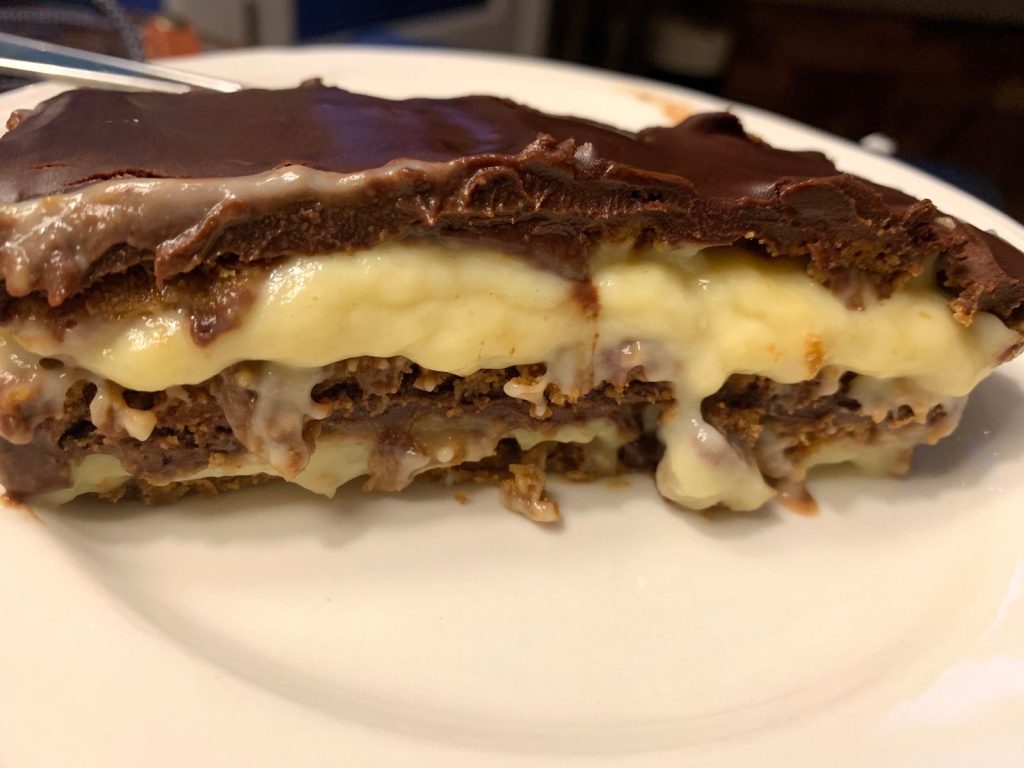
A Tarta de la Abuela that we were served in Pontevedra.
This cake is really a breeze to make and here in the States is often called an icebox cake. They’re not very common anymore, but I don’t know why. Let’s try to bring them back! If you want to simplify the recipe, you could always use instant pudding but grandma would not approve, plus the custard is actually really easy to make.
Everything you need for a pan of delicious cake.
Start by warming four cups of milk in a saucepan along with a stick of cinnamon. Before it starts boiling, remove the pan from the heat. Cover and let it stand until slightly cooled. If it is too hot when added to eggs in the next step, they will cook (not good). Remove the cinnamon stick and put 1 c of milk into a bowl.
In a small bowl, mix four egg yolks, a quarter cup of corn starch, and one cup of sugar. It will be a thick paste.
Begin combining the milk little by little, stirring constantly, with the egg mixture. Return to stove and heat, stirring frequently until the mixture is thickened and somewhat reduced. Keep the heat low so that the custard does not burn to the bottom of the pan. This custard should be thick.
The milk and egg mixture most be monitored closely so that it does not burn on the bottom of the pan. If you burn it, throw it out and start over.
The egg and sugar mixture.
Once the custard has your desired texture, remove from heat and allow to cool slightly then add a half cup of Orujo Tostada. Orujo is a traditional liqueur made from distilled grapes after they have been pressed for winemaking. The result is Spanish white lightening. It is often flavored and served as a digestive after dinner. The most popular flavors are an herbal and a coffee flavor, but one store we visited had more than twenty flavors available! You probably won’t be able to get Orujo in the U.S. so substitute caramel vodka or even butterscotch schnapps.
Cream and butter
Chocolate chips added to make ganache
Finished ganache
To make the ganache layer, heat a half cup of cream and four tablespoons of butter in another saucepan until it starts to steam a little. Remove from heat and add one cup of chocolate chips. Stir until thoroughly melted and combined.
At assemble the cake, begin by soaking several cookies in the bowl of milk and transfer to a loaf pan. Don’t soak them too long or they will break apart.
Who doesn’t love to dip cookies in milk?
Cover the cookies with a layer of half of the custard. Put another layer of milk-soaked cookies. Top with half of the chocolate ganache. Repeat with cookies, the remainder of the custard, and the fourth layer of cookies.
Layer one
Add more cookies
The final layer
And finally, add the last layer of chocolate custard. Cover with plastic wrap and refrigerate for at least 2 hours or overnight. By allowing the cake to sit, the cookies will absorb some of the liquid from the custard and become soft and cake-like. The photos in this post are of a half recipe so the layers are a little thinner.
The smaller the pan, the thicker the final layers will be.
Tarta de la Abuela Borracho (Drunken Grandma’s Cake)
4 cups milk
1 cinnamon stick
2-3 packages of gluten free graham crackers (or shortbread style cookies)
1 cup sugar
1/4 cup cornstarch
4 egg yolks
1/2 cup caramel liqueur
1 cup dark chocolate chips
4 T butter
1/2 cup cream or half and half
Warm the milk in a saucepan with the cinnamon. Before it starts boiling remove from the heat. Cover and let it stand until slightly cooled. If it is too hot when added to eggs, they will cook (not good).
Remove the cinnamon stick and put 1 c of milk into a bowl.
Mix the egg yolks, the corn starch and the sugar in a bowl. It will be a thick paste.
Start adding the milk little by little mixing constantly with the rest of the ingredients. Return to stove and heat, stirring frequently until the mixture is thickened and somewhat reduced. Keep the heat low so that the custard does not burn to the bottom of the pan. This custard should be thick.
Once the custard has your desired texture, remove from heat and allow to cool slightly then add the liqueur.
Heat cream and butter in another saucepan until it starts to steam a little. Remove from heat and add chocolate chips. Stir until thoroughly melted and combined.
To assemble the cake:
Begin by soaking several cookies in the bowl of milk and transfer to a loaf pan. Don’t soak them too long or they will break apart.
Cover the cookies with a layer of half of the custard.
Put another layer of milk-soaked cookies.
Top with half of chocolate ganache.
Repeat with cookies, remainder of the custard, and a four layer of cookies.
And finally, add the last layer of chocolate custard. Cover with cling film and refrigerate for at least 2 hours or overnight.
We love pizza! I will put almost anything on a pizza: BBQ chicken, ham and pineapple, caramelized apples and oatmeal, or seafood. But one of our favorite pizza toppings is taco and if you’ve never had a taco pizza you are missing out. Other than the crust, there is nothing in this recipe that would include gluten, but always check your store-bought seasonings and sauces to be sure, some may have gluten hidden in the ingredient list.
Start with the pizza crust. If you don’t have gluten issues, use your favorite store bought crust or make your own. After lots of research, for the best gluten-free pizza crust, we have discovered two options. We love the Bob’s Red Mill pizza crust mix that you can buy here but if you want a real treat, try this recipe from MeaningfulEats.com. It is quick and easy to make and works well with any gluten-free flour blend. Do what you need to get your crust ready and start to brown a pound of ground beef in a skillet.
Drain the hamburger and add a packet of taco seasoning (warning: some brands do contain wheat as a thickener) and a quarter cup of water. Mix let most of the water evaporate out. Set aside to cool.
Pre-bake the crust to get it mostly done. Raise the oven temperature to 480º. In a bowl, combine a can of refried beans, a half a can of crushed tomatoes, and one cup of taco sauce. Add one teaspoon each of garlic powder, oregano, and marjoram. If the sauce seems to think to spread, add a little more tomato or taco sauce.
Spread the bean mixture on the pre-baked crust. Any sauce that is left over (you should have about a cup) makes a great dip for tortilla chips!
Top the sauce with one cup of shredded mozzarella cheese, the taco meat, and another cup of cheddar or Mexican blend cheese.
Bake in the oven for 10 to 15 minutes until the cheese is melted and bubbly (mine got a little overdone, oops).
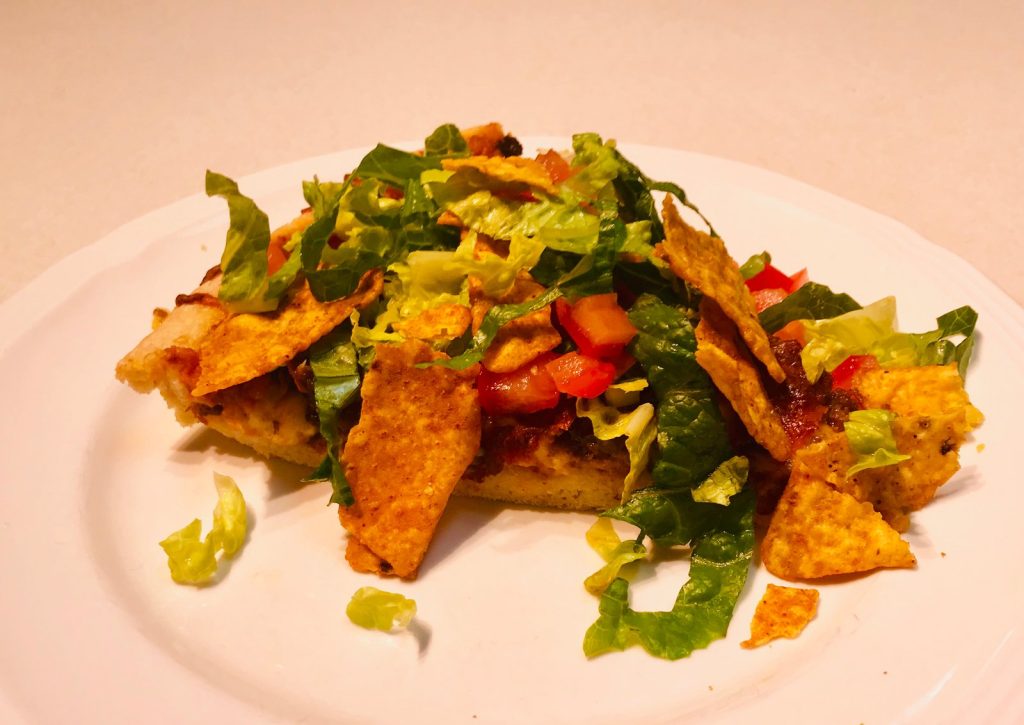
Top with shredded lettuce, diced tomatoes, and any other taco toppings that you enjoy. The most important topping is crushed taco Doritos. Slice and enjoy
Taco Pizza
Pizza dough (gluten free mix, your favorite recipe, or store bought)
1 pound ground beef
1 packet of taco seasoning
1 can of refried beans
1 cup of crushed tomatoes or tomato sauce
1 cup of taco sauce
1 tsp each garlic powder, oregano, and marjoram
1 cup of shredded mozzarella cheese
1 cup of shredded cheddar or Mexican blend cheese
shredded lettuce
diced tomatoes
sour cream
Taco Doritos
Other taco toppings that you enjoy
Prepare the pizza crust as needed and prebake it according to directions. It should be almost done.
Brown the ground beef in a skillet. Add the taco seasoning and about 1/2 cup of water. Cook until thickened. Set aside to cool.
Mix the beans, tomato sauce, and taco sauce together in a bowl. Add the seasonings and combine.
Spread the sauce on the crust. Top with mozzarella cheese, taco meat, and finish with the cheddar cheese.
Bake at 480º for about 10 to 12 minutes or until the cheese is bubbly or the desired amount of brown. Top with lettuce, tomatoes, and crushed Doritos.
Does it pizza? What would like to see on a pizza as an unusual topping? Maybe we’ll create a special pizza just for you! Leave a comment below to let us know. Also, make sure you subscribe for email notifications each time we post a new blog. If you want to follow our upcoming Camino, check out Cruisin with theColemans on Instagram and YouTube!
You may not know this about me but I love food. I mean that I REALLY love food. Any time we travel, I spend a decent amount of time looking for local specialties and the best places to eat. That does not mean that we spend a lot of money on food. Yes, sometimes we will go to a fancy restaurant and drop a couple of Benjamins for a really nice dinner but some of our favorite and most memorable meals have been at dives that don’t know who Zagat is. With that in mind, my first Monday morning post that isn’t a recipe of the week is going to cover my favorite subject… FOOD!
Some of the most frequently asked questions we hear about the Camino deal with food. Do you have to carry your food? What’s the food like? How expensive is food? What if I have dietary concerns? What if I’m a picky eater? I hope to answer all of those questions here and assure you that you will not starve while walking on the Camino de Santiago, no matter how picky or restrictive your diet is.
First off, Michelle and I both try to live a relatively healthy lifestyle. We like to eat fresh, non-processed food as much as possible. We try to avoid excess sugar, but we will eat an occasional dessert and we both share a love of wine and cocktails. Michelle must eat gluten-free because of her Hashimoto’s disease (an autoimmune thyroid disease).
Going into the Camino, we knew that we were not going to be worried about counting calories. While walking 13 plus miles per day in the extreme heat that we were going to be burning plenty of them. One day I did do my best guess at tracking calories because I was curious and came up with over 3000. That said, we came back from Spain at nearly the same weight that we left home. The challenge was adjusting to not eating as much food as we had been used to while on the Camino and we each gained weight upon our return.
Upon arriving in Madrid after a long overnight flight, we were both starving. Once we navigated the Madrid subway and made our way to the Atocha train station it was time to find some food. We had done a little research ahead of time and new that there was a counter service fast food place that had gluten-free breakfast items. After a little searching, Michelle had a chocolate croissant and egg and cheese sandwich and I had a taste of my first bocadillo (not gluten-free). Our first meal was a success
Chocolate croissant, egg and cheese sandwich (both gluten-free), and breakfast bocadillo (not gluten-free) at the Atocha train station.
Finding food on the Camino is rarely a problem. Most days pilgrims pass through several villages and there is almost always at least one bar or cafe, and usually, several options are within feet of the marked path. Many albergues offer a pilgrim’s meal at dinner time for a small additional charge (€5-10). Before talking about dinner though, let discuss meals in Spain and how that fits into the pilgrim’s schedule.
Our first pilgrim’s meal in St. Jean Pied-de-Port
Breakfast in Spain is usually the smallest meal of the day and rarely consists of much more than toast (tostada) with butter and jam, pastries, and cafe con leche (espresso with steamed milk). Michelle sometimes was able to get rice cakes but often had to make do with a little fruit or an egg. Among the pilgrims we know, this is called “first breakfast” and you’ve probably already guessed that means “second breakfast” can’t be far behind. First breakfast was onfton included in the price of lodging.
First breakfast at a bed and breakfast in SJPdP.Gluten-free breakfast option, if you’re lucky
Once we got through the Pyrenees, Spain was getting record high temperatures and in order to beat the heat, we were often leaving our albergue before 6 am. As a result, we needed to purchase breakfast the night before since most places to eat didn’t open until 6:30 or 7:00 a.m. Our breakfast of choice became a snickers bar and Monster as we walked in the dark. Not the best choice, but it helped in a pinch and we have a few ideas to help us when we are back on the Camino this June 2019.
After walking 5-8 km, most mornings we would come to our first village of the day and usually would run into a group of pilgrims sitting outside a bar or cafe eating second breakfast. Choices of food would range from tortilla and bocadillo to a more traditional “American” breakfast of fried eggs and bacon. We often spent less than €10 for second breakfast with two Coke Zero.
Lunch in Spain can be tricky for Americans. Lunch is typically the largest meal of the day and is often eaten at home but for pilgrims, everything closes down around 2 p.m. and doesn’t reopen until after 5 p.m. for siesta. If you arrive at your final destination for the day during that time, you will often not be able to find food because EVERYTHING is closed. We would typically get a similar meal to our second breakfast or if we were lucky, some tapas. Often by this time of the day, we would enjoy some amazing Spanish wine or beer if we were within the last 5k of our walk. The price here was often about the same as second breakfast, around €10 including wine.
Hundreds of options are available when it comes to tapas
Many tapas are regional and a specialty of the house
Don’t be put off by food sitting out on the counter, it is fresh and safe to eat
One of the few times we found a gluten-free bocadillo!
Patatas bravas (center) are fried potatoes drizzled with aioli and a spicy red bravas sauce
Gluten-free pizza was a rare treat
Once we were done for the day, it was time to check into our albergue, hand wash our laundry, shower, and take a little nap. We were usually pretty hungry at this point and would often get a snack. Our go-to became a bottle of wine and Doritos for €5-8. So our not-so-processed lifestyle had gone out the window, but when you’re hungry you’ll eat anything!
Wine is often less expensive than soda. We often saw 750 ml bottles in the mercado for less than €1
Dinner in Spain is often not served until 8 pm or later, long after most pilgrims have crashed into bed. Luckily, along the Camino, most villages work hard to serve the needs of pilgrims and dinner is available after 5 pm. When an albergue offers a communal meal it is usually at a set time and if you miss it, there’s no food for you. Fortunately, there is never a shortage of bars and restaurants to serve every food need for the average pilgrim. We ate a wide variety of regional and local specialties from ranging from €8 to much higher. The most economical dinner option is the pilgrim’s meal or menú del día. This dinner was usually three courses and included wine or bottled water (learn to ask for “agua del grifo” or tap water). The first course could be soup, salad, or even pasta. The second course was usually some kind of meat with fried potatoes. The final course would consist of dessert. I was always sure to ask for “especialidad de la casa” or the house special. I was able to try such unusual dishes as tuna ragu, garlic soup, home-made cheeses, and even chicken curry. We did spend a little more on dinner many nights with our total usually coming in at about €20-30 for two bringing our food total for the day to under €60 per day for two people. If you want to know more about our Camino budget, check out Michelle’s post here.
A first course, ensalada mixta
First course of garlic soup and mixed salad
First course of Pulpo (octopus) and mixed salad
Second course of bisteca (steak)
Second courses in a “fancy” restaurant- goat shank and hamburger (minus the bun)
Second course – pork medallions and roasted chicken
Second course of Swedish meatballs and BBQ ribs
Second course of chicken wings
An odd meal – Michelle’s fried eggs and chorizo and my fried chicken sandwich with tortilla chips (not something we would see outside of a Mexican restaurant usually)
Pot de creme dessert course
Dessert course of brownie and ice cream and apple custard
Dessert course – Ice cream cake and a layered cake
Dessert course of flan and ice cream
Dessert course – helado (ice cream) and house special that was similar to tiramisu
The communal dinner at Orrison was one of the best we ate
Pealla for five but the cook forgot to add the meat
Pealla and a mystery stew
Paella
Spanish food IS NOT Mexican food but we did find a few Mexican restaurants in big cities
There are a couple of foods that I have to mention because they are too amazing to leave out. Once in Galicia, seafood is found nearly everywhere, is the freshest that I’ve every eaten, and very inexpensive by American standards
Scallops are the symbol of the Camino and usually served grilled with heir roe
Pulpo (octopus) is boiled and then grilled and topped with olive oil and paprica
Yes, we ate these! Barnacles are a delicacy and more expensive than most meals. This appetizer platter was about €20.
Many restaurants, bars, and even hotels will often serve wine or other alcoholic beverage that they make in house. Orujo, Patxaran, and Vermouth are popular regionally, make for a nice aperitif, and were served after dinner gratis in some places!
Sometimes you just need to eat something familiar and in larger cities, you may run across American fast food. We saw KFC, Burger King, McDonald’s but only stopped once because they had gluten-free buns!
We never cooked our own meals, but many pilgrims do. Markets, supermarkets, and even farmer’s markets are prevalent but be warned, in smaller villages most are closed during siesta and on Sundays. This is a great way to save money and get to know other pilgrims.
Meat, dairy, and produce trucks make regular deliveries to small villages
If you have special dietary concerns, most restaurants will work with you to accommodate our restrictions. Make sure you learn the names of your allergies in Spanish so you can communicate with the server. Vegetarians will probably have the greatest difficulty as Spaniards love their meat, but we did run across many vegetarians who said they were far from starving. Michelle did not have too many problems eating “sin gluten” and only got sick once during our entire time in Spain from cross contamination.
Tarta de Santiago is a staple of the Camino and this almond cake is naturally gluten-free when made properly. Often in bars it isn’t.
Never pass up an opportunity to eat a communal dinner, we met wonderful friends and had a great time, even when the food was only mediocre.
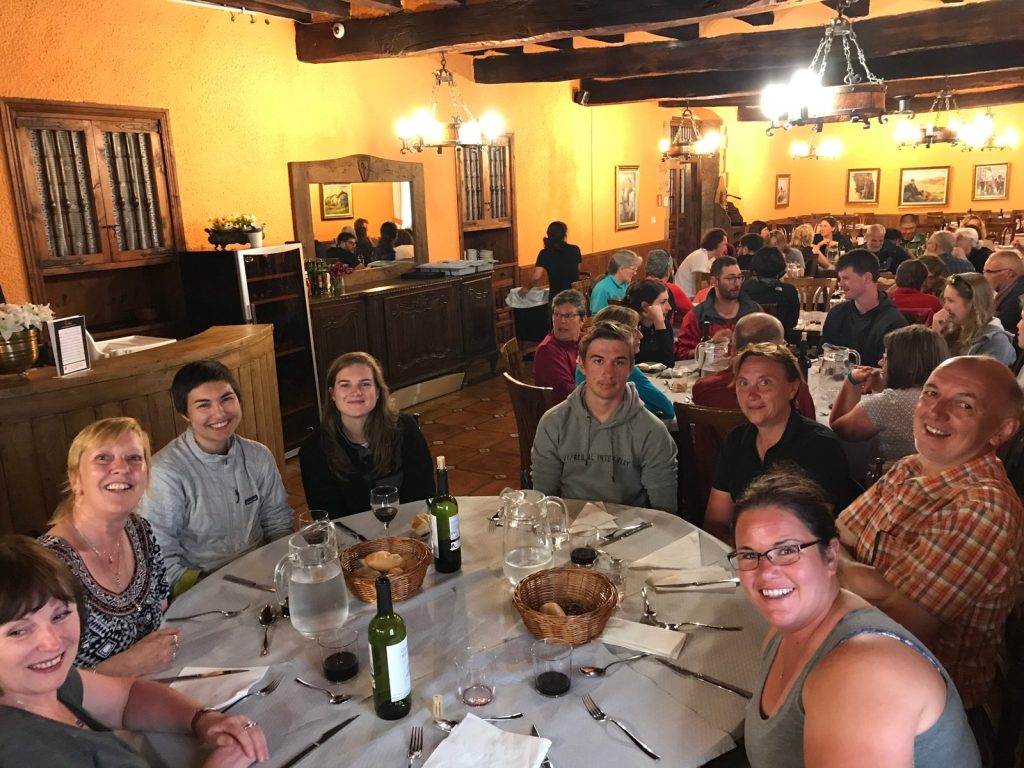
Communal dinner in Roncesvalles – the food wasn’t the best but the company was fantiastic
Finally, I can’t recommend enough to use common sense when eating in Spain, just as you would anywhere in the states. If an establishment looks dirty or seedy, don’t go in or leave. We never had any problems and NEVER felt unsafe while in Spain, but there were times we decided not to go into a bar or down a certain street because it didn’t look like our scene. Another thing to be wary of is looking for fresh food. We often didn’t go into places because they had a sign like this outside. All of the food pictured is premade, frozen food that is just reheated. Food is so inexpensive in Spain, why waste your time eating a frozen meal?
If you have additional questions about food or any other subjects on the Camino, let us know in the comments below. If you’ve been, what was your favorite meal?
Yep, you read that correctly, the recipe of the week is becoming the recipe of the month so that we can focus on bringing you more content in other areas, such as Camino planning and recaps of some of our best previous adventures.
With all of the cold weather we have been having lately, I’ve been making lots of soup. It not only warms the stomach but also the house! I love this recipe but it’s not ours, we have to thank Laurie (one of Michelle’s colleagues) who found the recipe on Cooks Country. On a side note and a fun fact we learned that Laurie has diligently subscribed to Cooking Light magazine since its inception 40 years ago and was one of their first subscribers! The soup has just enough kick to warm you up on multiple fronts. Of course, you could adjust the spicy heat up or down depending on your preferences.
Begin by bringing six cups of chicken broth to a simmer in a large pot and add about a pound and a half of chicken thighs to poach for 15 minutes.
In a food processor, combine half of a large onion, a can of diced tomatoes (or Ro-tel tomatoes with you like things on the spicy side), half (or more) of a seeded jalapeno pepper, four cloves of garlic, one canned chipotle chili and a tablespoon of the adobo sauce it’s packed in, and a teaspoon each of salt, pepper, and cilantro. Pulse the whole thing until it is smooth and well pureed. If I had any tortilla chips in the house this is probably as far as I would have gone because it looked and tasted like a smooth salsa at this point.
Remove the chicken from the pot and set aside to cool. Pour the broth into a container to skim the fat off the top.
In the same pot, heat a tablespoon of oil and add the “salsa” to the pot. Let it simmer for five minutes or so to cook the “green-ness” out of it and allow the flavors to combine.
Skim the fat off the broth and add it back into the pot along with two cups of frozen corn and a can of rinsed and drained tri-blend beans (or kidney, pinto, or black beans). Allow the soup to come to a boil and then reduce the heat. Simmer for 15 minutes. Meanwhile, run a knife through the chicken to cut it into bite-sized pieces. Take the pot off the heat and add the chicken and two tablespoons of lime juice. Taste and adjust seasonings if needed (I added a little more salt).
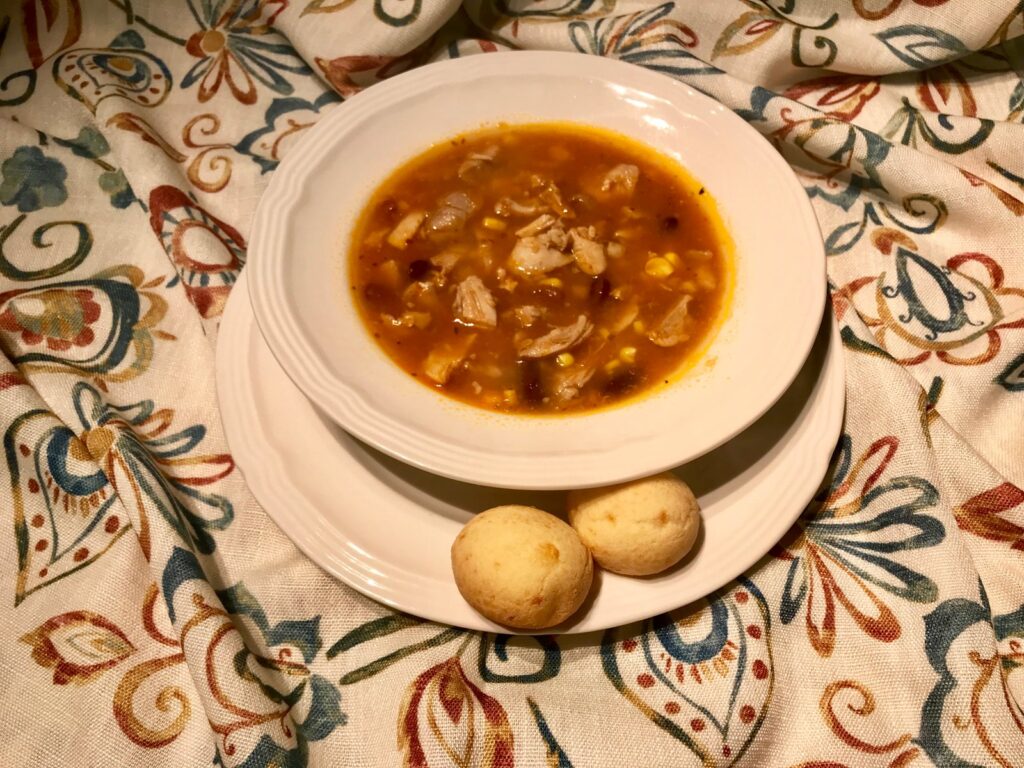
Top the soup with diced avocado, slices of fresh or crispy tortilla, or a little cojita or queso fresco. We served it with pao de queijo, which are amazing gluten-free cheese rolls.
Mexican Cheese Soup
6 c chicken broth
1 1/2 pounds chicken thighs
1/2 of a large onion
1 t each salt, pepper, and cilantro
1 can of diced tomatoes (get the kind with chilis or jalapeno if you like)
1/2 jalapeno pepper, seeded
4 cloves garlic
1 canned chipotle pepper plus 1 T adobo sauce it’s packed in
1 T oil
2 c frozen corn
1 can beans, any variety, drained and rinsed
2 T lime juice
assorted toppings such as diced avocado, Mexican cheese, or tortilla strips
Bring chicken broth to a boil and add chicken. Simmer for 15 minutes until the chicken is done and there is no pink remaining.
In a food processor, combine onion, spices, tomatoes, garlic, and peppers and pulse until smooth.
Remove chicken from pot and set aside to cool. Pour broth into another container to skim fat once cooled. In the same pot, heat the oil and add the tomato mixture. Simmer for 15 minutes over medium heat to combine flavors.
After skimming fat from broth, add back to the pot along with the corn and beans. Bring to a simmer and cook for 15 minutes. Shred the chicken and add to the pot at the end of cooking along with the lime juice. Adjust seasonings if needed.
Let us know if you try this recipe or any other recipe we have posted! Tag us on Facebook or Instagram with the hashtag #cruisinwiththecolemans! We’d love to hear from you!
When living a gluten-free lifestyle, whether by choice or necessity, there are many foods that you assume you may never be able to eat again. While restaurants have become more knowledgeable about gluten-free options over the last five years, it is still common to be offered a salad or a burger with no bun as the only option on a “gluten-friendly” menu. Most grocery stores have progressively stocked a variety of manufacturers but the choices are limited. You have to go to a specialty or high-end stores if you want choices.
Some foods are a real rarity in the gluten-free marketplace. Lasagne noodles are one of them. Gluten-free noodles range from “you can’t tell the difference” to “cardboard or sticks” and aside from penne, spaghetti, and elbows, there are virtually no other pasta shapes readily available so we adapt and improvise.
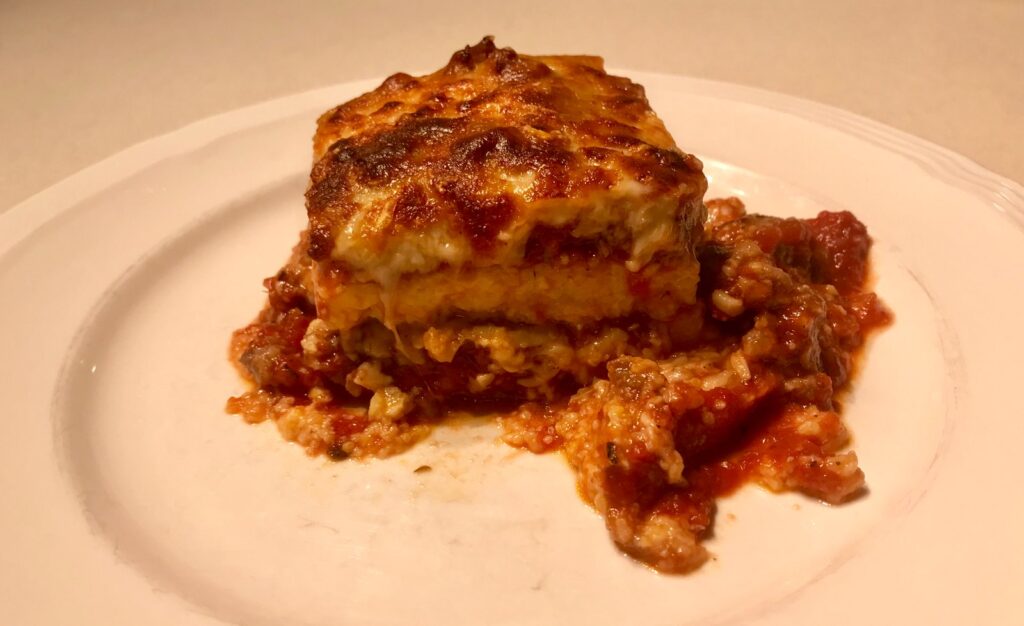
This polenta lasagne came out of one such improvisation. If you don’t know polenta, it is the Italian version of ground cornmeal, fancy grits, if you will. You can find it in several different spots in the store. There is often a fancy imported variety in the Italian aisle that runs about $10 a pound, but if you look in the aisle with breakfast grains like oatmeal you can find both grits and polenta for under $4 a pound. There two different types, a fine white corn or hominy meal often marketed as grits and coarser yellow corn meal which is more commonly marketed as polenta. There is a slight difference in flavor but they are basically interchangeable (as long as you’re not cooking for food snobs). When you chill cooked polenta (or grits) it turns into a solid cake-like mass that can be cut into slices and used in a variety of ways (try it on the grill with some olive oil, salt, pepper, and parmesan). We love Bob’s Red Mill brand.
For the lasagna, cook the grits at least an hour before you plan to assemble the lasagna but the night before is even better. In a saucepan, heat two and a half cups of half and half and two and a half cups of chicken broth to a simmer. Turn down the heat and add half a teaspoon of salt and slowly whisk in one and a quarter cups of polenta. The polenta is likely to lump together, so make sure that the liquid is moving when you add it and keep stirring with the whisk until it is fully incorporated. Cook on low for about fifteen minutes until the liquid is fully absorbed and the polenta is smooth and creamy. Stir frequently to keep it from sticking to the bottom and scorching. Remove from the heat, add half a cup of grated parmesan cheese, and stir well to incorporate. Let the polenta cool slightly while you prepare the pan.
Cut a piece of parchment paper about four inches longer than your 9×9 brownie pan. Fold the edges over so the paper will lay in the bottom of the pan and crease the corners to make a liner. Pour the still hot polenta into the pan and use a spatula to spread it evenly. Cover with plastic wrap pressed down onto the surface of the polenta, otherwise, it will get a rubbery skin on the top, and place in the refrigerator to cool for at least one hour, but overnight is better.
In a sauté pan, brown one pound of Italian sausage with the casings removed. While it is cooking remove the polenta from the pan. Using a long serrated knife, cut the polenta in half, making what are essentially two large lasagna noodles.
In the same pan the polenta cooled in, pour about half a cup of marinara and place one piece of polenta on top.
Add the rest of the marinara sauce to the sausage. Now layer just as you would a traditional lasagna. I don’t use a layer of ricotta because the polenta is already pretty creamy once reheated. Pour half of the meat mixture over polenta and top with a half cup of mozzarella cheese. Top with the second slice of polenta, the rest of the meat mixture and the remaining cup and a half of cheese.
Place the pan on a foil lined cookie sheet because it will bubble over, and place in a 350º oven for one hour. Cut into nine servings and serve with a healthy salad and some Chianti.
Polenta Lasagna
2 1/2 cups half and half
2 1/2 cups chicken broth
1/2 t salt
1 1/4 cup polenta
1/2 c grated parmesan
1 lb Italian sausage, casings removed
1 jar of marinara sauce (or your favorite spaghetti sauce)
2 cups shredded mozzarella cheese
Bring broth and half and half to a simmer. Add salt and whisk in polenta. Cook for 15 minutes, stirring frequently to keep from sticking or scorching. Remove from heat and stir in parmesan cheese.
Line a 9×9 pan with parchment paper and spread polenta all the way into the edges. Cover with plastic wrap and cool overnight or at least one hour in the refrigerator.
Once cooled and very firm, slice polenta into two sheets with a long serrated knife.
Remove casings from sausage and brown in a sauté pan. Pour 1/2 cup of marinara sauce into the same pan the polenta cooled in and add the remaining sauce to the sausage. In the pan, layer one slice of polenta, half the sausage mixture, and 1/2 cup of mozzarella cheese. Top with the second slice of polenta, remaining sauce, and remaining cheese.
Place the pan on a lined cookie sheet and bake at 350º for one hour. Makes 9 servings.
One of our goals in the coming year as we travel is to find local specialties and convert them into both gluten-free and when possible, healthier meals. While on the Gulf Coast over Christmas, we got to eat quite a bit of seafood and it was delicious. Almost every restaurant we went to offered a sailor’s platter, captain’s platter, or even an admiral’s platter. The more expensive the restaurant, the higher the rank of the platter!
Unfortunately, finding gluten-free fried fish was not possible in the Fort Myer’s area. If you know of someplace, comment below because we’re going back next year and want to check it out.
After our last fishing misadventure, we decided to try again. Michelle’s requirement was that we spent some of our time fishing and some of our time searching for dolphin and manatee. Captain John at Conway Charters did not disappoint. After meeting him at a local marina, he took us out on his boat to search the canals and creeks for some manatee. With his knowledge, it didn’t take to long and our first goal was checked off with this 6-8 foot long male manatee.
Next goal our list: catch some fish. We didn’t have much luck on this day – the fish just weren’t biting. We did manage to bring in two sheepsheads, and as they say, any day on the water is a good day. We did complete our third goal also, seeing some dolphin on our return to the marina, but enough about that, let’s cook up some fish!
Luckily for me, Captain John filleted the fish we caught. If you’re not lucky enough to have fresh fish, look for a firm fish that has thicker fillets at the store. Cod works well, as would catfish. You will need about a quarter pound per person and about the same amount of peeled, deveined shrimp. You could also look for clams, scallops, or any other seafood that looks good at the store.
Begin by preparing you breading station. In a bowl, combine about one cup of half and half with two teaspoons apple cider vinegar and stir well. The vinegar will curdle the milk and create buttermilk after sitting for about ten minutes. In another bowl, you will need about two cups of cornbread mix such as Krusteaz Honey Cornbread. In the final bowl, combine 1 cup of gluten-free flour blend with 2 teaspoons of Tony Chachere’s Creole Seasoning. If you don’t like things too spicy you could use Old Bay instead. If you want some extra kick, add a little hot sauce to the buttermilk. Make sure that the seafood is mostly dry. I put it in the fridge uncovered for about thirty minutes while I was getting everything else ready to go.
Left to right: Cornmeal mix, buttermilk, seasoned flour, seafood
Pour about 3-4 inches of canola or peanut oil into a deep pot and heat over high heat until the oil reaches 265º. You want to keep the oil between 265º-300º while you are cooking. If the oil is too cool the breading will soak up too much oil and get soggy; too hot and things will burn before they cook through. Continuously monitor the oil temperature and adjust the heat accordingly.
Toss several pieces of fish into the flour mixture to coat and set on the edges of the bowl with your right hand (this is your “dry hand” and should only go into the two flour bowls). Using your left hand (the “wet hand” that should only go into the buttermilk bowl), drag the fish one piece at a time through the buttermilk and set them into the cornmeal bowl. Using your right hand, bury the pieces of fish under the cornmeal.
I know, I’m using the wrong hand in the buttermilk in the photo above. Trust me, you will make less of a mess if you keep one hand dry and the other wet, but it can be difficult in the heat of the moment! Carefully place pieces of fish into the hot oil by holding them just into the oil and releasing so that you don’t splash oil. The oil should bubble but not pot. If at any point the oil is smoking, it is too hot. If you get a lot of popping, the fish is too wet.
Once you have about 5-6 pieces of fish in the pot, begin the process again with the next batch. The fish should cook 5-6 minutes until it reaches your desired color. Remove the fish from the oil and place onto a cooling rack placed over a cookie sheet so the excess oil can drain off. Check your oil temperature and continue until you run out of seafood.
BONUS: take the remain cornmeal mixture and add the remaining milk to it along with 1/4 cup of finely diced onion. Stir together and add more half and half until you get a thick spoonable batter. Drop teaspoons of batter into the oil to make hushpuppies!
Once all of the seafood is cooked prepared, make your dipping sauces. For tartar sauce, combine 1 cup of mayo with 2 tablespoons of pickle relish and a 1/2 teaspoon of lemon juice. For the shrimp, I like a sweet chili sauce using 1/2 cup of sweet and sour sauce combined with a tablespoon of hot chili paste (from the Thai aisle at the store). For traditional cocktail sauce, use 1/2 cup of chili sauce (usually near the seafood) combined with 1-2 teaspoons of ground horseradish from the condiment aisle. Be careful with store bought cocktail sauces, some have soy sauce added and are not gluten-free!
We almost never eat fried food, but it is a nice treat from time to time and I was surprised at how little oil was actually absorbed into the food. I used a whole bottle of oil to cook and when I was done and poured the cooled oil back into the bottle to throw away (never reuse oil that you’ve cooked fish in) there was only about an inch missing from the bottle, and part of that was on the bottom of the cookie sheet that I had used as a drip pan.
We served our Cruiser’s Platter with coleslaw and a glass of Pine Island Breeze. What’s your favorite seafood treat or side dish? Leave us a comment below and let us know!
Cruiser’s Platter (Gluten-free Fried Shrimp and Fish) with Hushpuppies and dipping suaces
For the seafood:
1/4 pound per person of assorted seafood such as cod, peeled shrimp, scallops, etc.
1 c half and half
2 t apple cider vinegar
1 box of Krusteaz Gluten-free Honey Cornbread mix
1 c Gluten-free Flour blend
2 t Tony Chachere’s Creole seasoning (or similar)
canola or peanut oil
1/4 c finely diced onion
For the dipping sauces
1/2 c mayo
2 T sweet pickle relish
1/2 t lemon juice
1/2 c sweet and sour sauce
1 T hot chili paste
1/2 c chili sauce
1-2 t ground horseradish
Lay out the seafood on plates and refrigerate without covering so that it dries out a bit.
Begin by combining half and half with vinegar to let it curdle. Prepare the remaining breading stations by pouring cornmeal mix in one bowl and combining flour and seasoning in another. Meanwhile heat oil to 365º.
Dip pieces of seafood into flour, shake off, drag through buttermilk, and cover with cornmeal. Carefully lower each piece into the oil without splashing. Cook 5-6 pieces at a time for about 5 minutes or until the desired color has been reached.
Combine remaining cornmeal mix with onion and remaining buttermilk. Add more half and half if needed to create a spoonable batter. Drop by the teaspoonful into the oil to make hushpuppies.
For tartar sauce, combine 1 cup of mayo with 2 tablespoons of pickle relish and a 1/2 teaspoon of lemon juice. For the sweet chili sauce, combine sweet and sour sauce with hot chili paste. For traditional cocktail sauce, add ground horseradish to the chili sauce.
★ 25 years guiding★ 48 U.S. states★ 10 countries★ 3,000+ Camino miles
RV tips, travel inspiration, and updates on the trips we're planning — delivered to your inbox each month.
Questions about this trip?
Send us an inquiry.
Tell us what you'd like to know about this trip and we'll get right back to you.
Know before you go
Activity Level.
Every Cruisin' with the Colemans trip comes with an activity level so you know, before you lace up, roughly how hard the walking will be. Think of it as the overall rhythm of the trip — a few days might push a little past it and a few will feel gentler, but it's an honest read on what your legs are signing up for.
Nobody knows your body better than you do. We're all for a good challenge, but pick a level that matches your current fitness and trail experience and the whole walk gets more fun. Not sure where you land? Reach out — we've walked every one of these ourselves and we're always happy to talk it through.
Grades
EasyEasy0–8 km (0–5 miles)
Gentle, mostly flat days on well-kept, easy-to-follow paths. Ideal if you're new to multi-day walking or simply want a relaxed pace with plenty of time to soak it all in.
Easy – ModerateEasy–Moderate8–16 km (5–10 miles)
A little more distance over mixed ground — mostly maintained trails, quiet lanes, and the occasional gentle climb. A good fit if you're reasonably active and ready for a few longer stretches.
ModerateModerate16–20 km (10–12 miles)
Fuller days on varied, sometimes rugged terrain with regular ups and downs. Great for steady hikers in good shape, or determined first-timers chasing a real sense of accomplishment.
Moderate – StrenuousModerate–Strenuous20–24 km (12–15 miles)
Long days with sustained, often steep climbs and descents on rough trail. You'll want solid fitness; a few exposed spots call for a head for heights, and navigation can get trickier when the weather turns.
StrenuousStrenuous24–28 km (15–17 miles)
Big days on demanding, often remote mountain terrain — serious distance and elevation for experienced, fit hikers. Expect rough footing, the odd exposed or aided section, and higher altitude on some routes.
ExtremeExtreme+28 km (+17 miles)
Our toughest walking, built for very fit, very experienced hikers. Rugged, sometimes remote mountain terrain with scrambling, exposure, and aided sections — plus altitude, weather, and navigation that all add to the challenge.
Where you rest
Accommodations Levels.
Where you sleep is part of the story, so we hand-pick locally run places that welcome you like an old friend. The level shifts a little from trip to trip depending on the route, but the goal never does: a clean, comfortable, genuinely local stay at the end of every walking day.
Most nights you'll land in friendly, independent or family-run hotels, guest houses, and B&Bs chosen for their charm and the little touches that feel like home. Some trips lean a touch more luxurious; others, especially in the remote stretches, mean simpler refuges or huts. Either way, we've picked each one to help you rest up and wake ready for the trail.
Basic – A Place to Rest Your HeadBasic
Mountain huts, refuges, and simple B&Bs. Ensuite rooms aren't a given, and you may share a dorm with fellow walkers — but what you trade in polish you more than gain back in camaraderie and a big, rustic welcome.
Classic – Charming Without the FrillsClassic
Locally owned B&Bs, guest houses, and small inns that feel like a home away from home — usually family-run, cozy or freshly kept, and well placed for the next day's walk. A warm welcome comes as standard.
Comfort – A Little More...ComfortableComfort
Characterful, locally owned hotels and B&Bs with the little extras that make a stay feel special — décor rooted in the region, the occasional spot to unwind, and sometimes a kitchen worth lingering over.
In Style – For Those who Want to Treat ThemselvesIn Style
First-class stays in boutique hotels, vineyards, and country manors — often in the best seats in the house, from hilltop towns to the water's edge, with standout service and, now and then, a truly memorable table.
Mixed – Boutique Hotels to Mountain Huts, all in One TripMixed
One trip, a bit of everything. You might bed down in Classic or Comfort rooms through the towns and villages, then a refuge or other Basic spot up in the mountains where that's all there is — an honest, memorable mix that matches the journey.