
From Travel Blog/Vloggers to Tour Guides

When we started this blog in 2018, we had a long-term goal of leading groups* on adventure travel. Initially, we envisioned this goal for after retirement. However, the time has now come for us to pursue it. We have been inspired and are ready to lean into this new direction. But before I share more about that, let me provide some background on our story.   When we started this blog in 2018, we had a long-term goal of leading groups on adventure travel. Initially, we envisioned this goal for after retirement. However, the time has now come for us to pursue it. We have been inspired and are ready to lean into this new direction. But before I share more about that, let me provide some background on our story.  Brian and I used to lead sedentary lifestyles. When we met and got married, we both weighed over 300 pounds. Although we both enjoyed traveling, we never imagined the adventures we’d had since then. The photo from the mud run (above) was a huge leap for us. We used to joke, “If we’re running, it must be because something bad is happening—like a bear is chasing us!” Haha! We started walking our neighborhood because we had put on even more weight after a year of dating and planning a wedding. I remember when the scale surpassed 300 pounds. I was mortified and needed a change. I was extremely fortunate to be with a man who was up for any crazy idea I had. We started walking our neighborhood, which led to fad diets but a bit of hope that change was possible. This hope led to trying more realistic diets; we did Weight Watchers and transitioned from walking to hiking in local parks.  By 2012, we had both lost over 100 pounds. We spent our time tent camping and hiking epic trails all over the country. Our passion for travel had always been present, but we fully committed to planning significant trips, taking advantage of our ability as teachers to travel for a couple of months at a time.

June 2017 – the moment that changed us forever

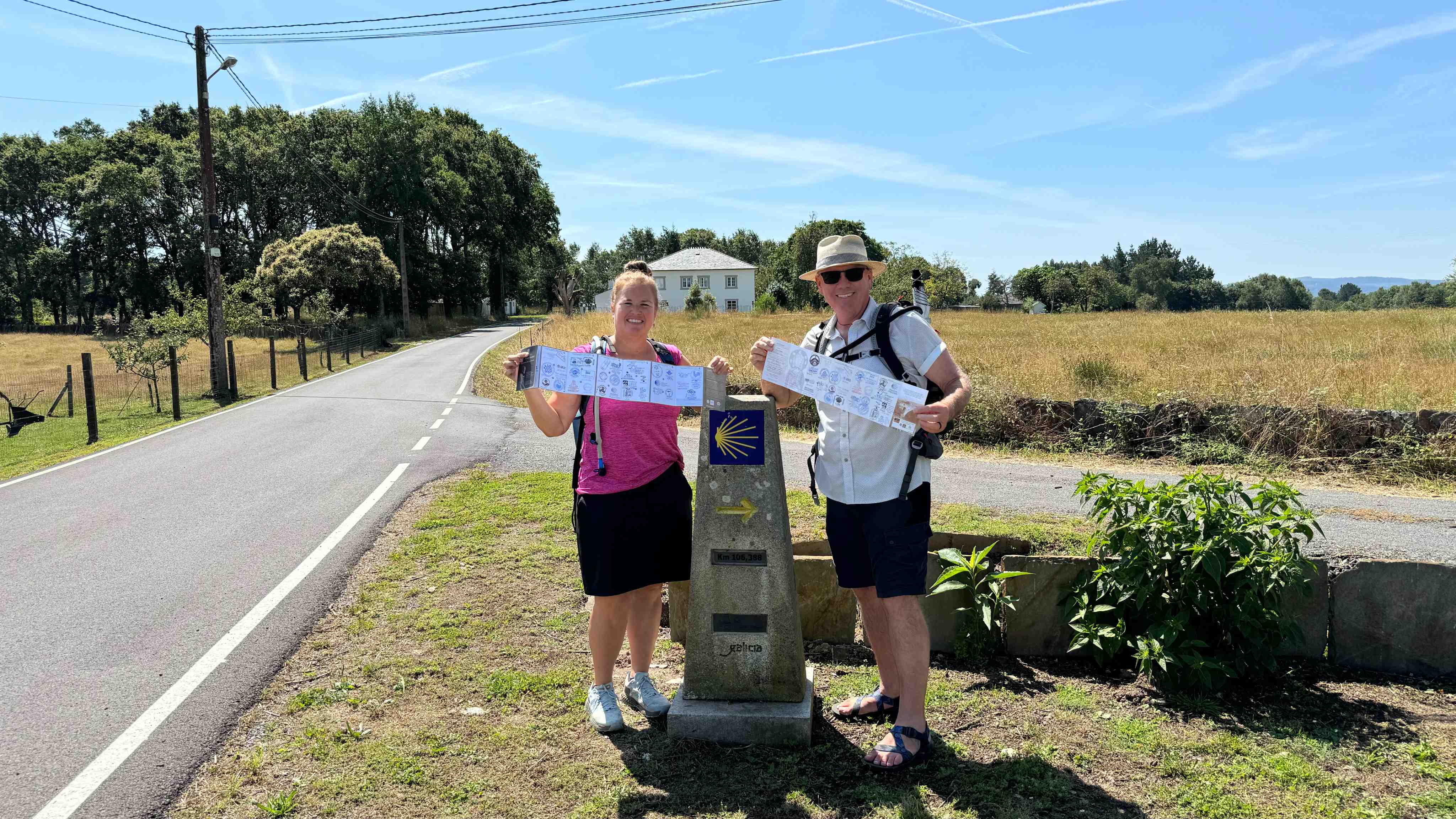
In 2017, we embarked on our first Camino de Santiago, backpacking 500 miles across Spain from St. Jean Pied de Port in France to Santiago de Compostela and continuing on to Finisterre. This experience was life-changing, igniting a passion for travel that grew in ways we never anticipated. In fact, the lessons we learned on that first Camino are still unfolding for us. Less than a week after completing the Camino, we purchased an RV for more travel adventures. Since then, we have RV’d over 50,000 miles through 36 states. We have walked five more Caminos, including the Camino Portuguese, the Camino del Norte, and the Via Francigena.  In 2018, during our first major RV road trip through Ohio, Michigan, Canada, and New York, we launched this blog. We also established our brand, Cruisin’ with the Colemans, because we anticipated that one day—though a long time from now—we would lead group trips. Given our background as teachers and experience leading groups, this felt like a natural progression for us. We have taken students abroad, on cruises, and to New York City, so pursuing this long-term goal seemed like a perfect fit. Foreward to now, Brian is only a couple of years from retirement, and my retirement date depends on our financial stability. But more importantly, we have typically made our summer plans by this time of the year. It’s not for a lack of trying, but nothing felt right. This week, we were honored to host Bill Bennett and his beautiful wife, Jennifer Cluff. We had an outstanding time talking about Camino, travel, and our mutual interests. By the last day, on our last drive together, during a conversation about destinations we should explore, Jennifer asked why we were not leading groups. Our answer has always been, “Because we are waiting until we retire.” I need to reflect on what I just typed. I realized that my previous statement is the complete opposite of everything we stand for. It’s a revelation for me. We’re not about waiting for retirement but about taking action and starting now. Ok, back on track. Our travel plans for 2025 are taking shape, and it is time for you to join us on our first group travel experience*. This will be a 12-day trip walking the Camino de Santiago from Samos to Santiago de Compostela, where you can walk the full 120 kilometers from Sarria to Santiago to earn a Compostela.

Finalized trip details can be found in this more recent blog.

Here is what you can expect on this trip from us:

  • You will have the option to walk all day, every day. If you don’t want to earn the Compostela, you can walk part of the day with less mileage. If you want to bike, okay, we have you covered (this will not earn you a Compostela). You don’t have to walk at all. There will be plenty to do for people of varying physical abilities.
  • The walk will be about 17-25 kilometers or 10-15 miles per day; you can do as much or as little as you want
  • Light continental breakfast, typically coffee and a pastry
  • Communal dinner every night, including multiple courses and wine
  • Private or semi-private (with another group member) rooms that fit your needs. If you want to save a bit of money here, we can work with you on the other types of room/bed accommodations
  • Daily luggage transfer, so all you have to worry about is carrying a light pack with just your snacks and water
  • Transfer to/from Santiago airport at the start of the trip
  • Daytime transfer if you need to skip a part of the walk or just don’t want to walk that much in a day
  • Rest day at the beginning of the trip in Samos to explore the Monastery of San Xulián de Samos, built in the sixth century
  • Rest day near the end of the trip in Santiago de Compostela
  • On the rest day in Santiago, we will explore the Cathedral and do a rooftop tour of the church
  • Enjoy a traditional guiemada ceremony after dinner in Santiago de Compostela
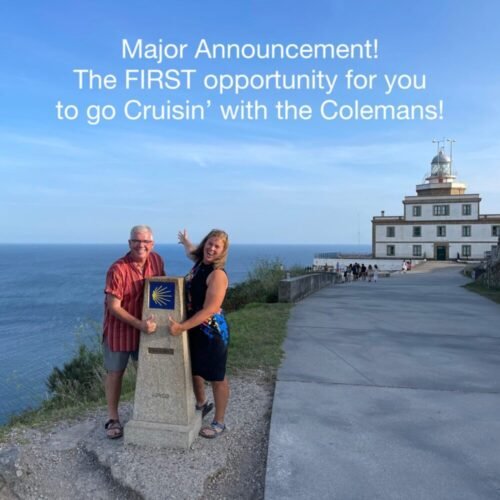
  • Group bus trip to Finisterre to walk to the lighthouse for sunset and celebratory dinner
  • Transfer back to Santiago de Compostela for the end of the trip
  • Advance support for planning your trip 
  • Camino 101 Zoom sessions to get ready and get familiar with those you will be traveling with
  • Help to make travel arrangements to/from Spain, including suggested flights from the US to Spain
  • Credential, pilgrim shell, and travel wallet to carry your pilgrim credential and passport
  • Thumb drive of photos and completed summary videos of your trip
Celebratory Dinner at Cape Finisterre

When is this happening? July 2025, shortly after the 4th of July holiday. The trip will be 12 days, so with your travel days, you are well within a solid two-week vacation. We will have a lot more details very soon.

How much will this cost? We will have details about the final cost of the trip very soon. Your only additional costs will be airfare to/from Spain, lunch, snacks, and personal equipment. We aim to keep this trip around $3,000 per person. From our research, we feel quite good about that number, but we need just a bit more time for a solid number. A deposit of $500 will be due shortly after the trip announcement. We are limiting participation to 12 people. A payment plan will be arranged, with the total amount due 10 days before departure.

This trip will not include:

  • Church or museum admissions outside of Santiago
  • Lunches and snacks
  • Travel insurance (but you are required to show proof of personal medical and travel insurance)
  • Transportation to and from Santiago
  • Personal equipment, such as backpacks, hiking poles, etc.

What’s the next step? Honestly, be ready to make a deposit. We expect the 12 slots will fill fast. We anticipate making the complete announcement next week. We have a few details to implement to ensure the highest quality trip possible. If you go Cruisin’ with the Colemans, you are going in style!  Thank you for following this blog adventure to the end. Our goal remains the same—we want to inspire you to take adventures, but even more so, we want you to take an adventure with us this year!!

Do you have questions? Do you want to make a deposit? Do you want me to know that you are considering making a deposit? Whatever your questions, our email address is cruisinwiththecolemans@gmail.com—we would love to hear from you!

*We are not certified travel agents, but we are experienced travelers and educators with over 25 years of leading group experiences. We organize travel experiences to destinations we know well from our own journeys. However, we do not claim to be experts on the various cultures or locations we visit. We may hire a local expert to enhance your travel experience if available.

You can subscribe to our email list right here. We promise not to spam you and will not share your email with anyone!


My Favorite Things: Eating on the Camino de Santiago

You may not know this about me but I love food. I mean that I REALLY love food. Any time we travel, I spend a decent amount of time looking for local specialties and the best places to eat. That does not mean that we spend a lot of money on food. Yes, sometimes we will go to a fancy restaurant and drop a couple of Benjamins for a really nice dinner but some of our favorite and most memorable meals have been at dives that don’t know who Zagat is. With that in mind, my first Monday morning post that isn’t a recipe of the week is going to cover my favorite subject… FOOD!

Some of the most frequently asked questions we hear about the Camino deal with food. Do you have to carry your food? What’s the food like? How expensive is food? What if I have dietary concerns? What if I’m a picky eater? I hope to answer all of those questions here and assure you that you will not starve while walking on the Camino de Santiago, no matter how picky or restrictive your diet is.

First off, Michelle and I both try to live a relatively healthy lifestyle. We like to eat fresh, non-processed food as much as possible. We try to avoid excess sugar, but we will eat an occasional dessert and we both share a love of wine and cocktails. Michelle must eat gluten-free because of her Hashimoto’s disease (an autoimmune thyroid disease).

Going into the Camino, we knew that we were not going to be worried about counting calories. While walking 13 plus miles per day in the extreme heat that we were going to be burning plenty of them. One day I did do my best guess at tracking calories because I was curious and came up with over 3000. That said, we came back from Spain at nearly the same weight that we left home. The challenge was adjusting to not eating as much food as we had been used to while on the Camino and we each gained weight upon our return.

Upon arriving in Madrid after a long overnight flight, we were both starving. Once we navigated the Madrid subway and made our way to the Atocha train station it was time to find some food. We had done a little research ahead of time and new that there was a counter service fast food place that had gluten-free breakfast items. After a little searching, Michelle had a chocolate croissant and egg and cheese sandwich and I had a taste of my first bocadillo (not gluten-free). Our first meal was a success

Chocolate croissant, egg and cheese sandwich (both gluten-free), and breakfast bocadillo (not gluten-free) at the Atocha train station.

Finding food on the Camino is rarely a problem. Most days pilgrims pass through several villages and there is almost always at least one bar or cafe, and usually, several options are within feet of the marked path. Many albergues offer a pilgrim’s meal at dinner time for a small additional charge (€5-10). Before talking about dinner though, let discuss meals in Spain and how that fits into the pilgrim’s schedule.

Our first pilgrim’s meal in St. Jean Pied-de-Port

Breakfast in Spain is usually the smallest meal of the day and rarely consists of much more than toast (tostada) with butter and jam, pastries, and cafe con leche (espresso with steamed milk). Michelle sometimes was able to get rice cakes but often had to make do with a little fruit or an egg. Among the pilgrims we know, this is called “first breakfast” and you’ve probably already guessed that means “second breakfast” can’t be far behind. First breakfast was onfton included in the price of lodging.

First breakfast at a bed and breakfast in SJPdP.
Gluten-free breakfast option, if you’re lucky

Once we got through the Pyrenees, Spain was getting record high temperatures and in order to beat the heat, we were often leaving our albergue before 6 am. As a result, we needed to purchase breakfast the night before since most places to eat didn’t open until 6:30 or 7:00 a.m. Our breakfast of choice became a snickers bar and Monster as we walked in the dark. Not the best choice, but it helped in a pinch and we have a few ideas to help us when we are back on the Camino this June 2019.

After walking 5-8 km, most mornings we would come to our first village of the day and usually would run into a group of pilgrims sitting outside a bar or cafe eating second breakfast. Choices of food would range from tortilla and bocadillo to a more traditional “American” breakfast of fried eggs and bacon. We often spent less than €10 for second breakfast with two Coke Zero.

Lunch in Spain can be tricky for Americans. Lunch is typically the largest meal of the day and is often eaten at home but for pilgrims, everything closes down around 2 p.m. and doesn’t reopen until after 5 p.m. for siesta. If you arrive at your final destination for the day during that time, you will often not be able to find food because EVERYTHING is closed. We would typically get a similar meal to our second breakfast or if we were lucky, some tapas. Often by this time of the day, we would enjoy some amazing Spanish wine or beer if we were within the last 5k of our walk. The price here was often about the same as second breakfast, around €10 including wine.

Once we were done for the day, it was time to check into our albergue, hand wash our laundry, shower, and take a little nap. We were usually pretty hungry at this point and would often get a snack. Our go-to became a bottle of wine and Doritos for €5-8. So our not-so-processed lifestyle had gone out the window, but when you’re hungry you’ll eat anything!

Wine is often less expensive than soda. We often saw 750 ml bottles in the mercado for less than €1

Dinner in Spain is often not served until 8 pm or later, long after most pilgrims have crashed into bed. Luckily, along the Camino, most villages work hard to serve the needs of pilgrims and dinner is available after 5 pm. When an albergue offers a communal meal it is usually at a set time and if you miss it, there’s no food for you. Fortunately, there is never a shortage of bars and restaurants to serve every food need for the average pilgrim. We ate a wide variety of regional and local specialties from ranging from €8 to much higher. The most economical dinner option is the pilgrim’s meal or menú del día. This dinner was usually three courses and included wine or bottled water (learn to ask for “agua del grifo” or tap water). The first course could be soup, salad, or even pasta. The second course was usually some kind of meat with fried potatoes. The final course would consist of dessert. I was always sure to ask for “especialidad de la casa” or the house special. I was able to try such unusual dishes as tuna ragu, garlic soup, home-made cheeses, and even chicken curry. We did spend a little more on dinner many nights with our total usually coming in at about €20-30 for two bringing our food total for the day to under €60 per day for two people. If you want to know more about our Camino budget, check out Michelle’s post here.

There are a couple of foods that I have to mention because they are too amazing to leave out. Once in Galicia, seafood is found nearly everywhere, is the freshest that I’ve every eaten, and very inexpensive by American standards

Many restaurants, bars, and even hotels will often serve wine or other alcoholic beverage that they make in house. Orujo, Patxaran, and Vermouth are popular regionally, make for a nice aperitif, and were served after dinner gratis in some places!

Sometimes you just need to eat something familiar and in larger cities, you may run across American fast food. We saw KFC, Burger King, McDonald’s but only stopped once because they had gluten-free buns!

We never cooked our own meals, but many pilgrims do. Markets, supermarkets, and even farmer’s markets are prevalent but be warned, in smaller villages most are closed during siesta and on Sundays. This is a great way to save money and get to know other pilgrims.

If you have special dietary concerns, most restaurants will work with you to accommodate our restrictions. Make sure you learn the names of your allergies in Spanish so you can communicate with the server. Vegetarians will probably have the greatest difficulty as Spaniards love their meat, but we did run across many vegetarians who said they were far from starving. Michelle did not have too many problems eating “sin gluten” and only got sick once during our entire time in Spain from cross contamination.

Tarta de Santiago is a staple of the Camino and this almond cake is naturally gluten-free when made properly. Often in bars it isn’t.

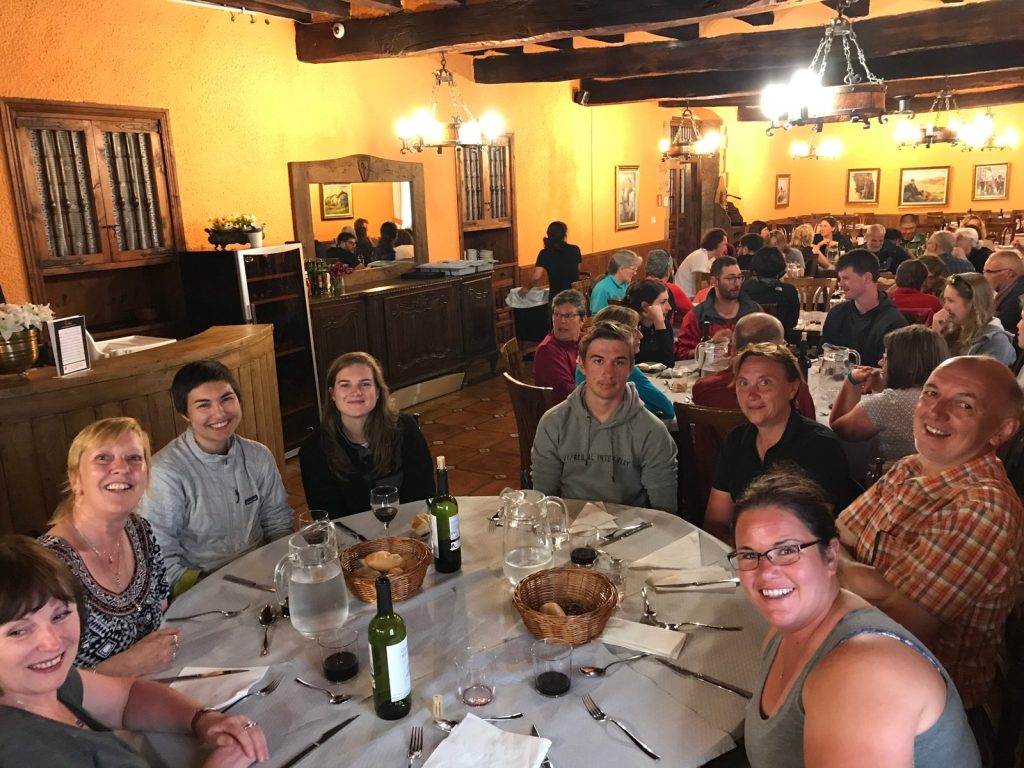
Never pass up an opportunity to eat a communal dinner, we met wonderful friends and had a great time, even when the food was only mediocre.

Communal dinner in Roncesvalles – the food wasn’t the best but the company was fantiastic

Finally, I can’t recommend enough to use common sense when eating in Spain, just as you would anywhere in the states. If an establishment looks dirty or seedy, don’t go in or leave. We never had any problems and NEVER felt unsafe while in Spain, but there were times we decided not to go into a bar or down a certain street because it didn’t look like our scene. Another thing to be wary of is looking for fresh food. We often didn’t go into places because they had a sign like this outside. All of the food pictured is premade, frozen food that is just reheated. Food is so inexpensive in Spain, why waste your time eating a frozen meal?

If you have additional questions about food or any other subjects on the Camino, let us know in the comments below. If you’ve been, what was your favorite meal?

★ 25 years guiding ★ 48 U.S. states ★ 10 countries ★ 3,000+ Camino miles